Are Snail Teeth the Strongest Natural Material?
Yes, snail teeth—specifically those of limpets—are considered the strongest natural material known to science. Withstanding forces stronger than spider silk or Kevlar, these microscopic marvels help limpets scrape algae off hard rock surfaces, setting an unexpected benchmark for biomaterial resilience. When you consider that these tiny marine creatures have evolved teeth stronger than most engineered materials, it becomes clear why scientists are so fascinated by their composition.
TL;DR: Snail Teeth—Biological Marvels Hardened by Evolution
- Snail teeth—especially limpet teeth—are composed of goethite fibers embedded in a protein matrix, producing immense tensile strength.
- They outperform spider silk and mimic industrial materials in strength and flexibility.
- Snail teeth form through a process of biomineralization, where specific proteins guide the deposition of minerals over time.
- Understanding their formation opens doors in advanced biomaterials research and potential applications in engineering and biomedicine.
- The strength of snail teeth offers clues about the evolutionary pressures marine creatures faced in abrasive environments.
Introduction to Biomaterials and Snail Teeth
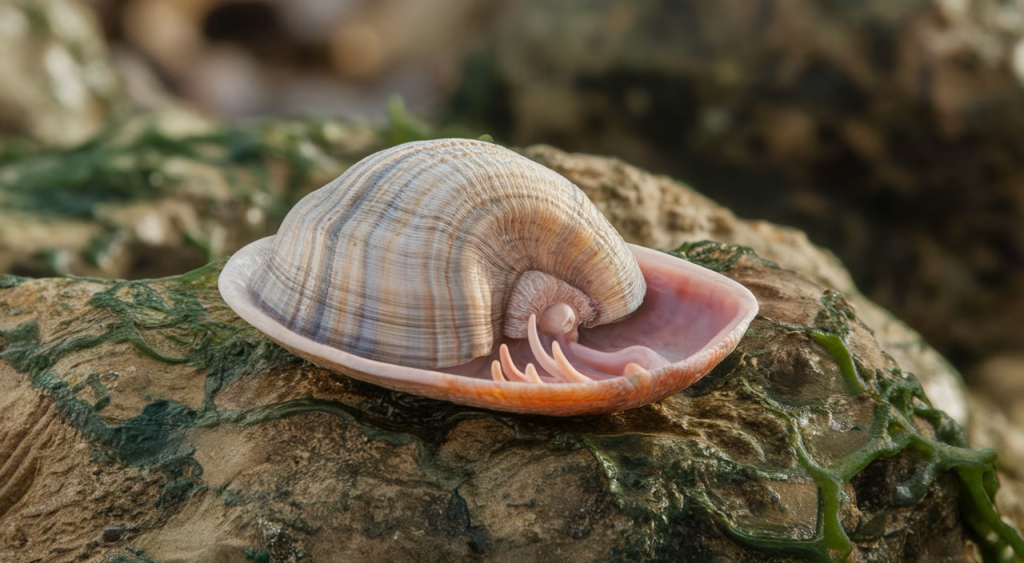
Biomaterials are materials that interact with biological systems—the building blocks of shells, bones, and, as it turns out, teeth. Among these, you might not expect snail teeth to stand out. But nature has a way of surprising us. Limpets, a type of marine snail, sport teeth that are so strong, they surpass the performance of many cutting-edge synthetic materials.
Imagine harvesting algae all day, scraping your teeth against solid rock underwater. For limpets, that’s daily life, and they’ve evolved the necessary tools to match: ultra-durable teeth capable of resisting intense wear and high stress. This remarkable adaptation showcases how marine creatures develop extraordinary solutions to environmental challenges.
These teeth are composed of iron oxide-based minerals arranged with atomic precision, making them astonishingly resilient. Understanding how are snail teeth formed and function has huge implications—not just biologically, but for technology and material science as well.
The Formation Process of Snail Teeth
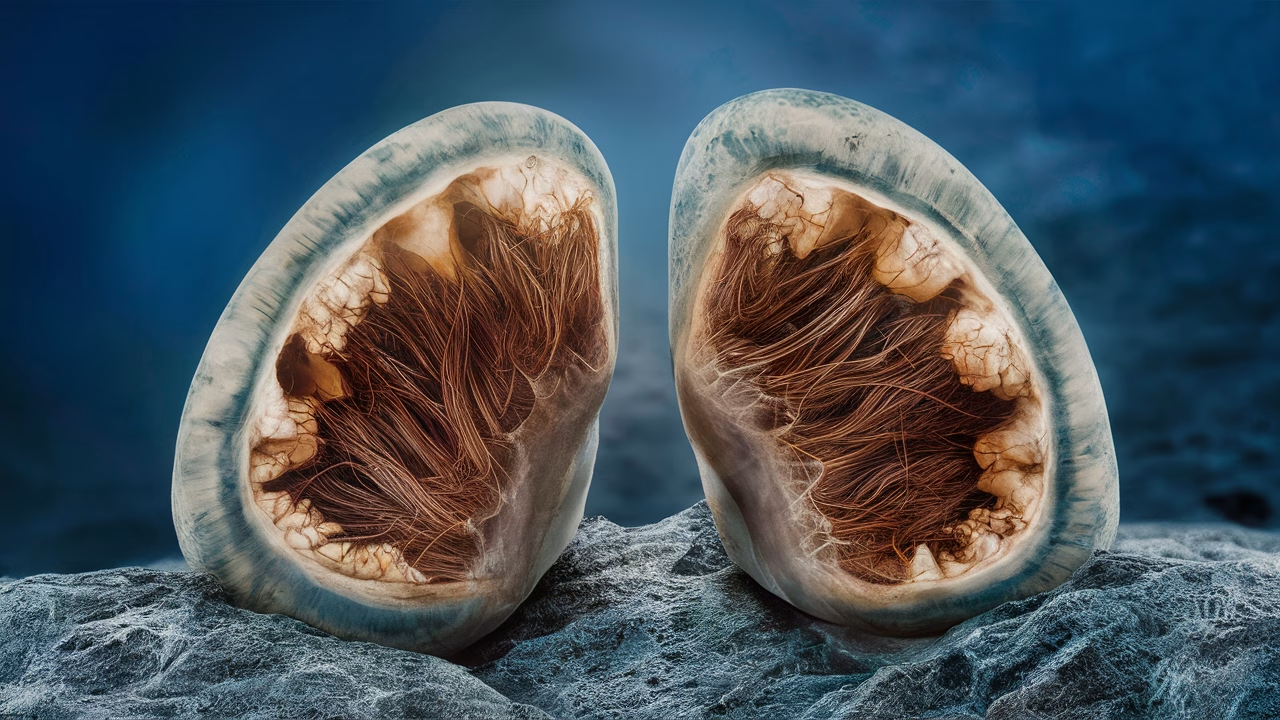
So, how are snail teeth formed? The science behind it is known as the biomineralization process. This involves the organism’s ability to deposit minerals into an organic matrix, crafting complex composite materials at room temperature and neutral pH levels—something we still struggle to recreate in the lab.
In limpet teeth, formation occurs within a structure called a radula—a ribbon-like conveyor belt holding rows upon rows of teeth. As older teeth wear down from constant scraping, new ones are continuously produced at the back and move forward over time. This continuous replacement system ensures limpets never run out of their essential tools.
Each limpet tooth is composed primarily of goethite (an iron oxyhydroxide mineral), interlaced with chitin-based proteins. The arrangement is similar to reinforced concrete, where iron-rich nanofibers act as rebar and the protein matrix serves as cement. This design provides both exceptional strength and slight flexibility—a combination that makes these teeth the strongest natural material we know.
Interestingly, each tooth’s size remains microscopic—about 100 microns wide—but its strength exceeds that of many engineered materials. This perfect balance of composition and structure grants it extraordinary durability under harsh marine conditions.
Comparing Snail Teeth to Human Teeth
When we compare snail teeth to human teeth, the differences are striking and illuminate why these tiny marine creatures have captured scientists’ attention. Our teeth, formed mostly from enamel and dentin, are hard and excellent at handling compressive forces from chewing. However, they are more brittle and less resistant to repetitive wear than limpet teeth.
Here’s a comparative table highlighting the key differences between these remarkable biological structures:
| Property | Limpet Teeth | Human Teeth |
|---|---|---|
| Primary Material | Goethite Fibers | Calcium Phosphate (Hydroxyapatite) |
| Mineralization Process | Protein-templated biomineralization | Ameloblast-mediated biomineralization |
| Tensile Strength | Up to 5.0 GPa | 0.5–0.7 GPa |
| Function | Scraping hard rock surfaces | Chewing food, speech |
In essence, our teeth are optimized for biological communication and varied food processing. Limpet teeth, however, are all about brute survival—scraping, gripping, and resisting erosive forces in the relentless ocean surf. This specialized function has driven their evolution toward becoming the strongest natural material on Earth.
Implications and Applications in Biomaterials Research
You might wonder: “What are the applications of studying snail teeth?” The answer reveals a frontier of innovation in advanced material science and biomaterials research.
Researchers are examining how we can replicate the hierarchical structures and mineral-protein interfaces found in snail teeth to develop better synthetic alternatives. These discoveries could revolutionize multiple industries:
- Industrial Cutting Tools: More sustainable and durable tool tips based on limpet tooth-strength composites that maintain sharpness longer.
- Biomedical Implants: Designing bone replacements or dental ceramics that more closely mimic natural durability and stress distribution.
- Wear-resistant Coatings: Technologies informed by how limpet teeth reduce friction while maintaining hardness could lead to new classes of eco-friendly, erosion-resistant coatings.
- Biodegradable Materials: Understanding nature’s low-impact fabrication strategies inspires greener manufacturing processes that could replace current energy-intensive methods.
In practice, you’ll see these concepts appearing in more resilient prosthetics, stronger yet lighter composites, and clever nanostructured surfaces that mimic the durability these marine creatures have perfected over millions of years.
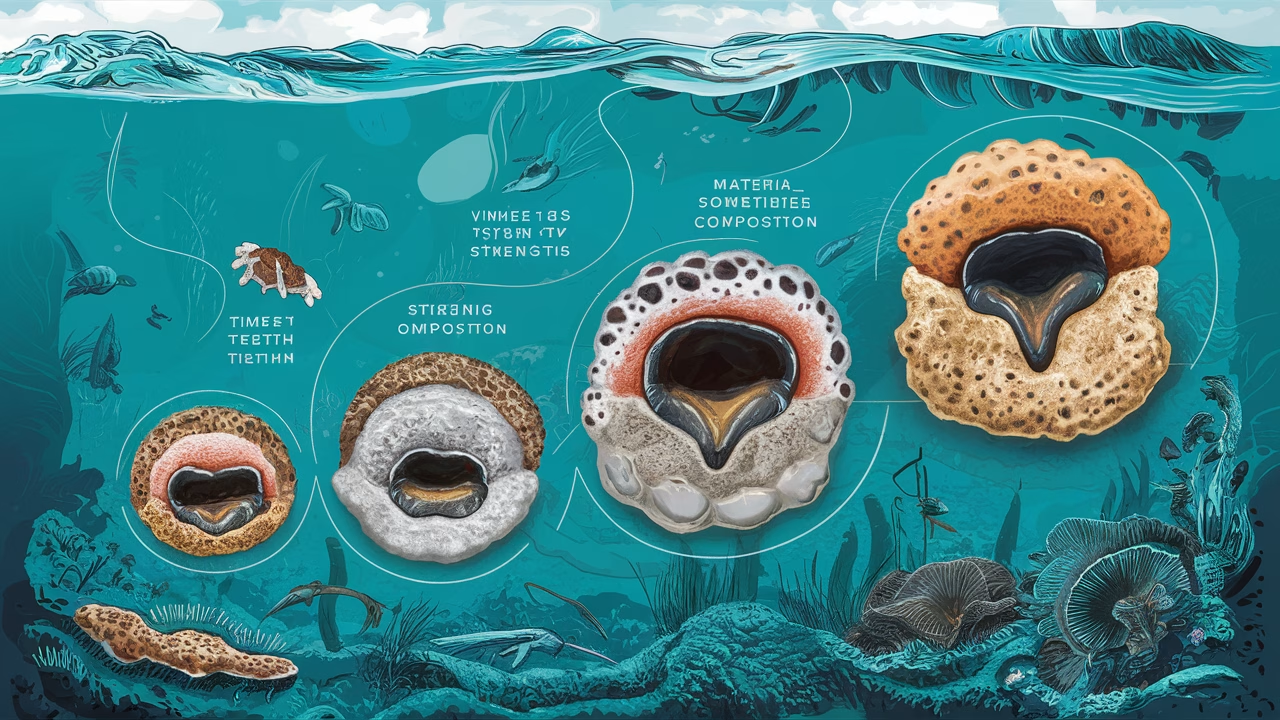
Evolutionary Insights into Limpet Teeth Strength
What drove these marine creatures to develop such formidable mouth tools? The answer lies in evolutionary survival tactics within harsh intertidal zones where few organisms can thrive.
Over millions of years, limpets needed to grip slippery surfaces and extract every nutrient from algae firmly attached to rock. Their evolution favored tooth composition that could scrape continuously without significant wear. Every generation fine-tuned the balance between mineralization volume, structural arrangement, and replacement cycle efficiency.
Here’s a fascinating fact: The evolution of limpet teeth strength didn’t just optimize for hardness—it also perfected fatigue resistance, something even diamonds lack. This means limpet teeth maintain peak performance over countless scrape cycles, not just one-off force resistance. This evolutionary achievement makes them truly the strongest natural material for sustained use.
Understanding this evolutionary feat gives us a roadmap to replicate similarly elegant solutions in man-made materials—ones that resist fatigue, potentially self-heal, and remain lightweight and resource-efficient.
Final Thoughts
Snail teeth, especially those of limpets, showcase nature’s genius on a microscopic scale. Their design—guided by millions of years of evolution—challenges our assumptions about strength, wear-resistance, and materials science. More than just a fascinating biological curiosity, they offer practical blueprints for engineering the next generation of biomaterials.
If you’re interested in marine biology, evolution, or high-tech innovation, keep watching developments in snail teeth research. These tiny tools from marine creatures just might shape the cutting-edge materials and technologies of tomorrow, proving once again that nature often holds the keys to our most challenging engineering problems.
FAQ
- Are snail teeth the strongest material?
Yes, limpet teeth are among the strongest known natural materials, with tensile strengths rivaling or exceeding man-made options like Kevlar. - How do limpet teeth stay sharp?
They are continually replaced through a conveyor-belt-like radula system inside the limpet’s mouth. As older teeth wear, new ones move forward. - Can human teeth be engineered to be like snail teeth?
While currently improbable for human biology, the principles behind limpet teeth formation inspire bioengineering of tooth implants and prosthetic materials. - What are goethite fibers?
Goethite is an iron-based mineral. Its nanometric presence in limpet teeth gives them their unusual strength and flexibility. - Are all snail teeth the same?
No. Different species have different dentitions suited to their diet and environment. Limpet teeth are the most studied due to their mechanical extremity. - Where can I see limpet teeth under a microscope?
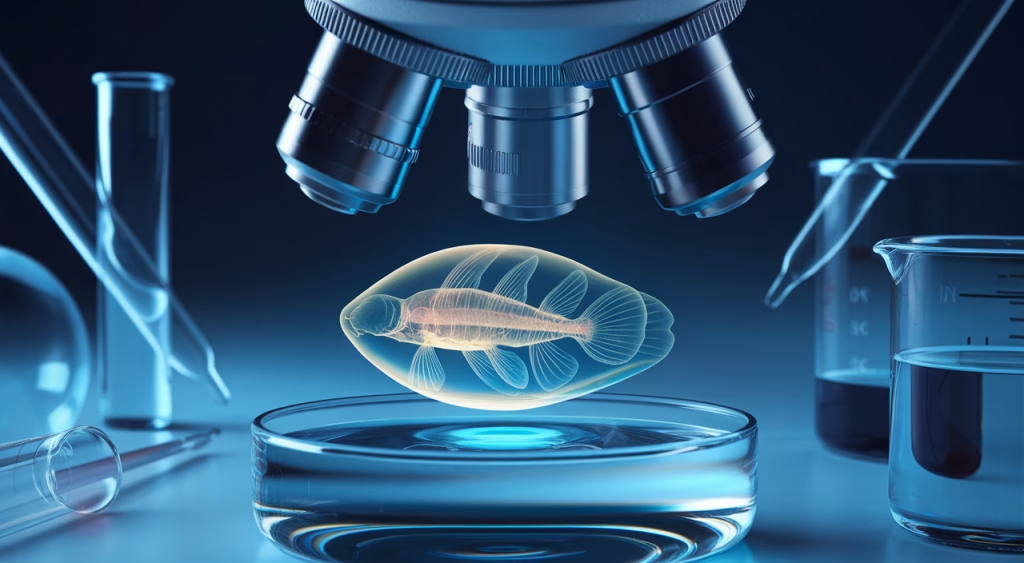
Academic marine biology or materials science labs with SEM microscopes often showcase these as part of biomaterials curriculum.