Are pangolin scales really made of keratin — like human nails?
Yes, pangolin scales are composed entirely of keratin, the same tough protein found in our fingernails and hair. But while human nails grow in predictable sheets at your fingertips, pangolin scales spiral in intricate armor, designed for defense, survival, and ecological interaction. Understanding the keratin content in pangolins reveals why these remarkable creatures have survived millions of years — and why they’re now critically endangered.
TL;DR — What You Need to Know About Pangolin Scales and Keratin
- Pangolin scales are made of keratin — just like your nails and hair.
- Keratin composition grants the scales strength, flexibility, and durability, ideal for defense against predators.
- The keratin content in pangolins is unique for its dense layering, covering nearly 20% of their body mass.
- Pangolin ecology is shaped by their armored biology — they roll into a ball to protect themselves.
- Wildlife trafficking and illegal trade of keratin-rich scales are threatening pangolin populations.
- Conservation of pangolins is critical to maintaining biodiversity and ecosystem balance.
What are Pangolin Scales Made of?
Imagine a pinecone covered with shimmering olive-toned tiles — that’s a pangolin. Beneath the earthy exterior lies a wonder of biological engineering: scales composed not of mineral like a turtle’s shell but of keratin. This fibrous protein is the same robust material that gives your nails their bend-resistant toughness or your hair its tensile strength.
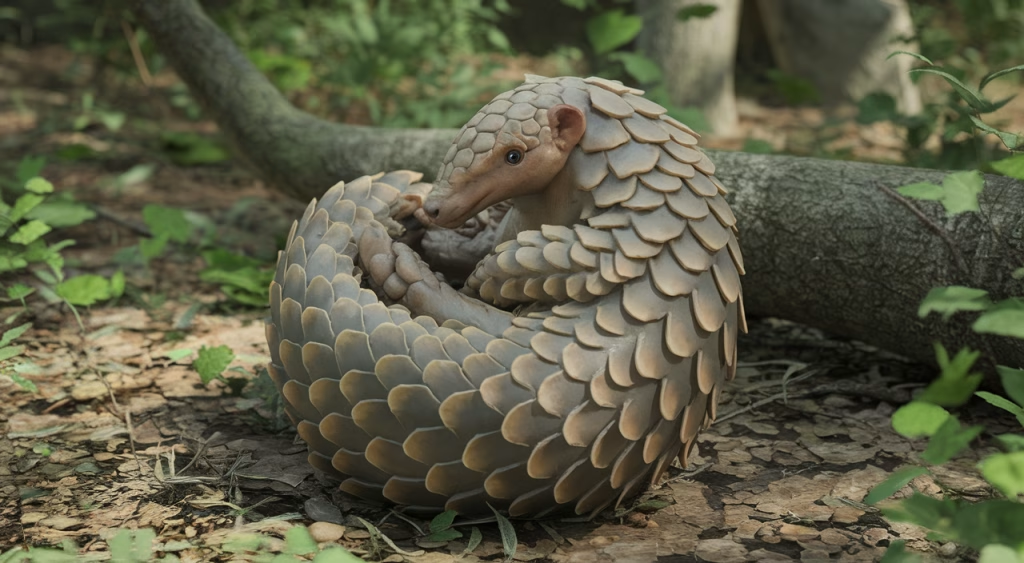
Each pangolin scale forms from tightly interwoven strands of keratin. They emerge from the skin just like fingernails do, growing over time and hardening into overlapping shields. These aren’t lifeless exteriors — they’re living proof of evolutionary brilliance. The keratin composition in pangolin scales is so sophisticated that when threatened, the pangolin curls into a ball, relying fully on these keratin scales to repel predator claws, teeth, and even bites.
Comparative Protein Breakdown of Keratinous Structures
| Structure | Main Component | Keratin Type | Protection Use |
|---|---|---|---|
| Pangolin scale | Keratin | Alpha & Beta | Defense from predators |
| Human nail | Keratin | Primarily Alpha | Minimal — protective sheathing |
| Rhino horn | Keratin | Compact Beta | Battle & display |
| Bird beak | Keratin | Beta-rich | Feeding adaptation |
The Keratin Connection: How Pangolin Scales Compare to Human Nails
You clip your nails. Pangolins shed their scales. It’s a strange but true kinship. While our keratinous features exist mainly for aesthetics and light protection, pangolin scales must serve a much deadlier function — stopping predators like lions in their tracks. That’s a tall order for a material we trim at the salon.
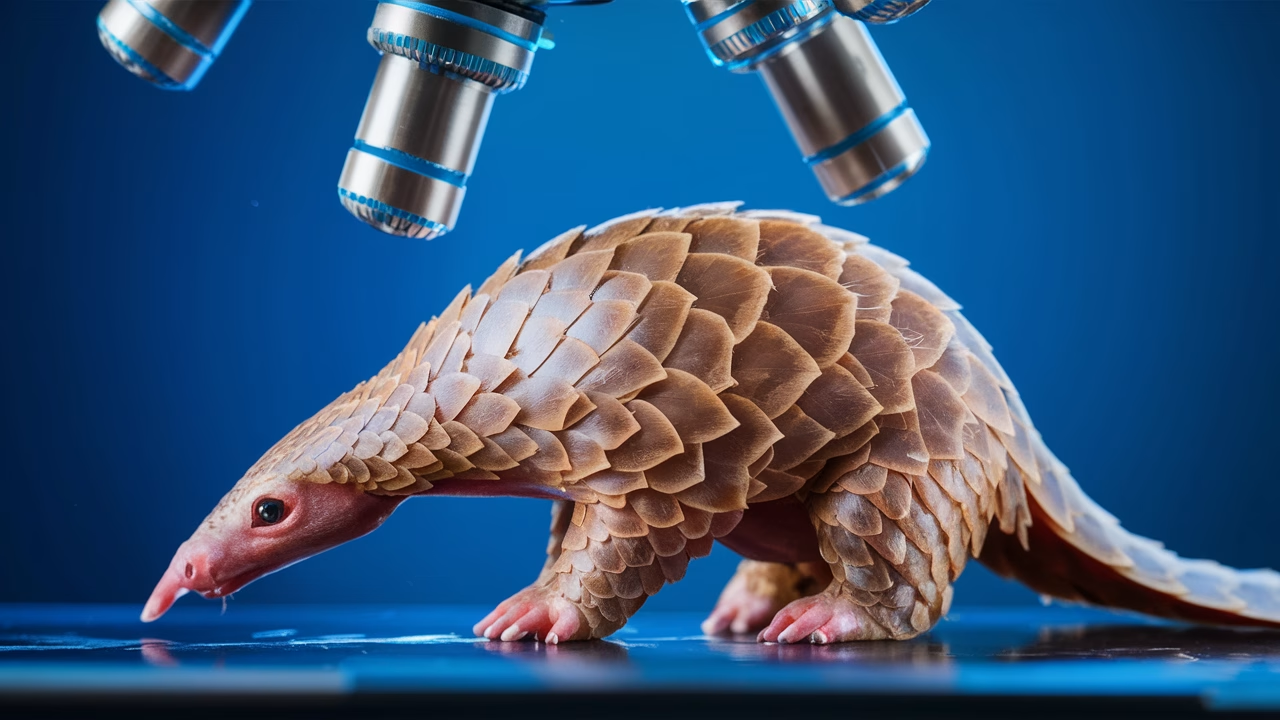
What separates pangolin scales from human nails? It’s the density and layering of beta-keratin proteins. Unlike human fingernails, pangolin scales have a more crystalline microstructure within their keratin composition. This means better impact absorption and a natural ability to dull the force of teeth or claws. Researchers estimate that up to 85% of a pangolin’s keratin structure is dedicated to defensive qualities, compared to the 10–15% structure-supporting keratin in human nails.
And have you ever wondered why you can’t feel your nails being clipped? Pangolins don’t feel pain in their scales either — because the scales themselves are technically extensions of the skin, made of dead keratinized cells layered for hardness. The keratin content in pangolins serves as nature’s perfect armor system.
In essence, the same biological language — keratin — has been used to write two very different evolutionary strategies: delicate fingers for us, natural scale-armored tanks for them.
The Importance of Keratin in Pangolin Ecology
To understand the role these keratin scales play in pangolin ecology, we need to zoom out — not just to the scale, but to the ecosystem. Pangolins are not just armored oddities. They’re ecosystem engineers. Their ability to rip into termite mounds with their claws and snouts helps manage insect populations, aerate soil, and indirectly nourish plant life. And guess what allows them to do this vital ecological work safely? Their keratin scales.
In natural habitats spanning Africa and Asia, pangolins live solitary, nocturnal lives, often burrowing or climbing quietly. But the presence of aggressive predators, from big cats to birds of prey, makes survival tricky. Without their keratin armor, they’d be easy prey. It’s their keratin composition that allows them to move undetected until danger arrives. When it does, they curl into a perfect sphere, turning into something few jaws can penetrate.
This keratin-based defense is vital to their place in the food web. Pangolin survival ensures that their insectivorous habits continue, controlling populations of ants and termites naturally. Their scales, therefore, are not just shields — they are keystones in ecological regulation and pangolin ecology.
Threats to Pangolins and Their Keratin-Rich Scales
Now for the grim truth: pangolins are the most trafficked mammal in the world. Why? Because of their keratin scales.
Even though science proves these scales have no true medicinal value to humans, myths persist — particularly in the illegal wildlife trade — that keratin from pangolins can cure ailments or boost vitality. This demand drives brutal poaching practices, removing pangolins from the wild at alarming rates. The conservation of pangolins has become a defining issue in wildlife protection circles and keratin and wildlife conservation efforts globally.
Pangolins are especially vulnerable due to their solitary behavior and low reproductive rates. A female pangolin births just a single pup per year, making population recovery exceptionally slow. The scales, containing keratin and little else, are often stockpiled, sold, and exported illegally, making enforcement complex and dangerous for conservation of pangolins.
Top Threats to Pangolin Survival Worldwide
| Threat | Impact Level | How It Harms |
|---|---|---|
| Illegal wildlife trade | High | Scales harvested for black market medicine |
| Habitat destruction | Medium | Forests cleared, burrows destroyed |
| Slow reproduction | High | Low birth rates reduce population rebound |
| Climate change | Medium | Alters food source and living zones |
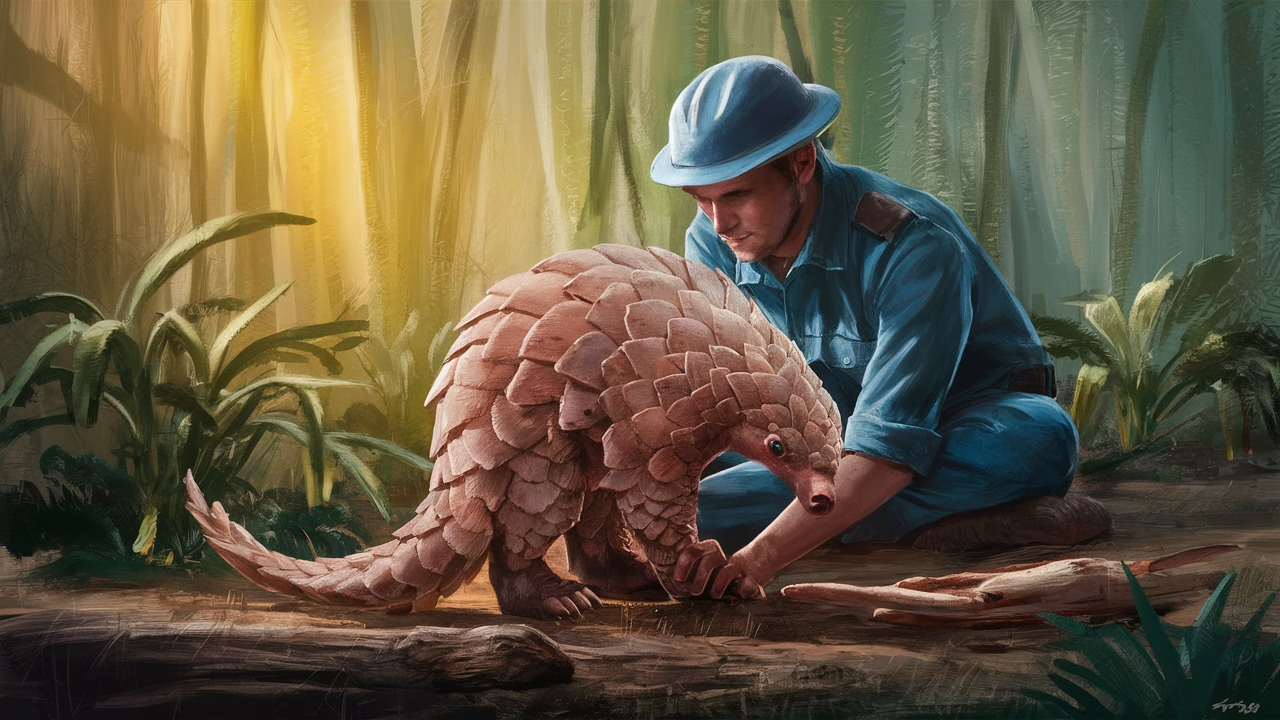
Conservation Efforts to Protect Pangolin Populations
Despite facing grim odds, all is not lost for pangolin conservation. Around the globe, passionate conservationists, scientists, and governments are joining forces to save pangolins. Laws banning the international trade in pangolin scales have tightened. Smuggling routes are being uncovered, and public education campaigns are debunking the false beliefs about keratin’s ‘healing powers.’
In the realm of keratin and wildlife conservation, pangolins are a flagship species — much like rhinos and elephants — whose survival signals broader ecosystem health. Protective legislation, such as up-listing all pangolin species to CITES Appendix I, has made their international trade illegal. But enforcement remains a challenge for conservation of pangolins worldwide.
More importantly, sanctuaries and rescue centers are rehabilitating victims of trafficking. They nourish, treat, and release pangolins back into the wild — often fitted with location trackers to monitor adaptation. Eco-tourism initiatives also provide alternative livelihoods, shifting value from harvest to habitat protection in support of pangolin ecology.
Here’s what often works in keratin and wildlife conservation: localized education, community involvement, and equipping rangers with the tools they need to identify and intervene in illegal trade. These efforts are yielding results, but momentum needs your awareness and support.
Final Thoughts on Keratin, Pangolins, and Conservation
Pangolins are armored enigmas, protected by nothing but keratin — the same humble biomaterial found in your nails. Yet, their keratin scales tell a far more epic story: one of pangolin ecology, evolution, and the precarious line between survival and extinction.
The keratin composition that makes pangolin scales so effective also makes them targets. Understanding and protecting this keratin content in pangolins isn’t just about saving a species — it’s about defending the balance of ecosystems. In a world where the value of a creature is too often measured in market price rather than ecological worth, pangolins remind us: biology is beautiful, and conservation of pangolins is possible — if we act wisely, and soon.
Frequently Asked Questions
- Are pangolin scales made of keratin?
Yes, pangolin scales are made entirely of keratin, the same protein found in human nails and hair. - What is the function of keratin in pangolins?
Certain types of keratin provide toughness and flexibility, helping protect pangolins from predators. - How do pangolin scales help with conservation awareness?
The high-profile poaching of pangolins has galvanized global conservation efforts around wildlife trafficking and education. - Is there any medicinal use for pangolin keratin?
No. Scientifically, keratin has no proven medicinal properties. Uses are rooted in cultural myths. - Can pangolins survive without their scales?
No. Without their keratin armor, they would be vulnerable to predators and environmental stress. - How can I help with pangolin conservation?
Support certified wildlife organizations, spread awareness, and report illegal wildlife trade when noticed. - How are pangolin scales harvested?
Illegally. Pangolins are often killed and the scales removed by poachers to be sold on the black market.