Why Does the Blue Glaucus Float Upside Down and Eat Venomous Jellyfish?
Because it’s evolved to master survival in one of the planet’s harshest habitats—the open ocean. The blue glaucus stores venom from jellyfish it hunts, floats belly-up for camouflage, and thrives in the nutrient-light pelagic zone by flipping the script on being a small, soft-bodied sea slug.
TL;DR: Quick Facts About the Blue Glaucus’s Diet and Behavior
- Species: Glaucus atlanticus (commonly known as the blue glaucus)
- Habitat: Pelagic zone—open ocean, floating with ocean currents
- Diet: Specializes in consuming venomous jellyfish, like the Portuguese man o’ war
- Behavior: Floats upside down using surface tension and an air bubble in its stomach
- Adaptation: Absorbs jellyfish venom and repurposes it for its own defense
- Camouflage: Dark blue back blends with the ocean depths when viewed from above; silvery belly mimics sunlight when seen from below
The Blue Glaucus: A Unique Marine Creature
A. Introduction to the Blue Glaucus
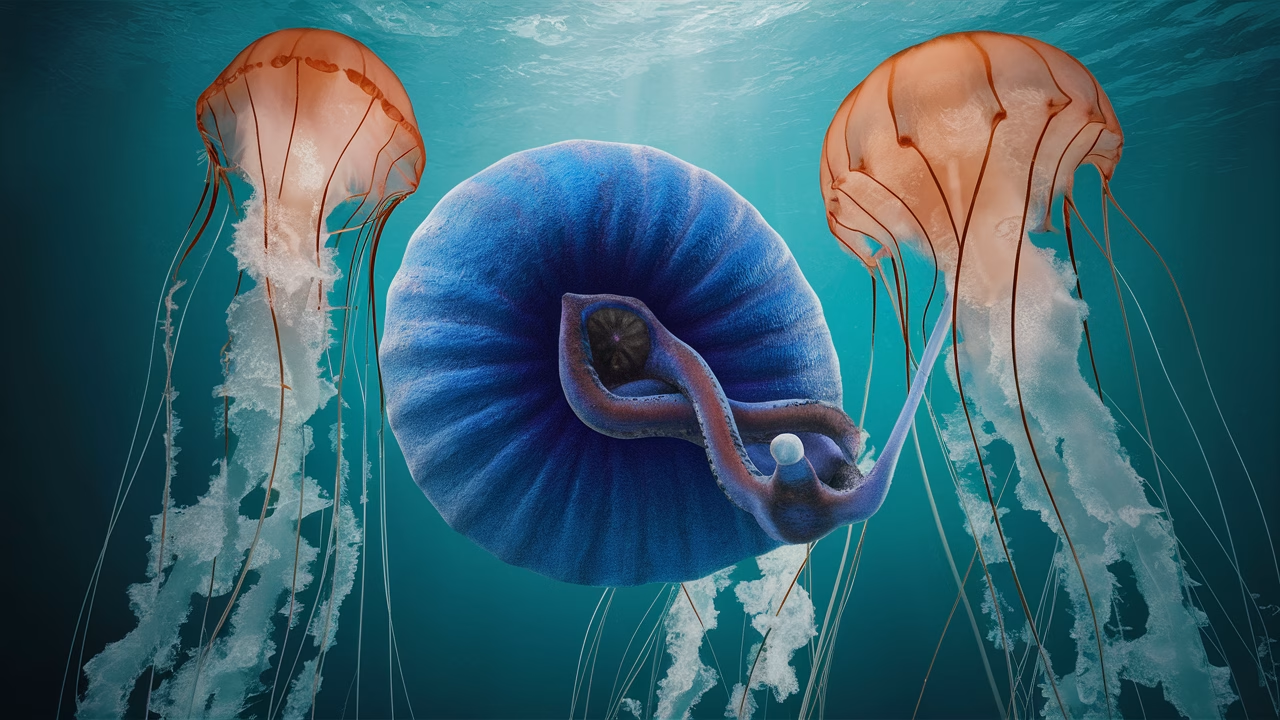
The blue glaucus (Glaucus atlanticus) is a type of pelagic sea slug that looks more like a fantasy creature than a real animal. With its neon blue coloration, dragon-like appendages, and wing-like fins, it seems sculpted by myth. But this remarkable nudibranch is very real—and incredibly specialized for life in the open ocean.
Despite its delicate appearance, the blue glaucus is a formidable predator. Measuring just 3 to 5 centimeters in length, it floats in the vast blue of the pelagic zone, surviving where few marine creatures can. Why does it appear upside-down? Because this unique orientation provides the perfect camouflage strategy for open ocean survival.
B. Habitat and Behavior
Unlike coral reef dwellers or benthic mollusks, the blue glaucus lives exclusively in the pelagic zone—the open ocean where there are no rocks, no coral, and no sea bottom for security. It maintains its position at the ocean surface using a specialized gas-filled sac in its stomach.
Ocean currents and surface winds largely determine where this sea slug travels, though it can make subtle adjustments by controlling its buoyancy. Since the blue glaucus isn’t strong enough to swim against currents, it essentially sails through these marine deserts, following the flow of the open ocean.
Feeding Habits of Blue Glaucus
A. Diet of the Upside-Down Sea Slug
Here’s where the blue glaucus truly shines as nature’s ultimate predator. This tiny sea slug feeds primarily on venomous jellyfish that most marine animals avoid entirely. Its favorite prey is the Portuguese man o’ war (Physalia physalis), whose venomous tentacles can deliver painful stings to humans and paralyze fish. Yet the blue glaucus consumes these dangerous jellyfish with remarkable efficiency.
The blue glaucus diet also includes:
- Blue buttons (Porpita porpita)
- By-the-wind sailors (Velella velella)
- Occasionally, other pelagic sea slugs when jellyfish are scarce
B. Predatory Techniques
Without limbs, complex eyes, or traditional hunting tools, how does the blue glaucus capture such dangerous prey? The sea slug uses its muscular foot to grip jellyfish tentacles and systematically consumes them piece by piece. But here’s the truly fascinating part—it selectively absorbs the venomous nematocysts (stinging cells) and stores them in specialized sacs called cnidosacs within its cerata (feathery body extensions).
Through this incredible adaptation, the blue glaucus becomes armed with concentrated venom borrowed from its prey. The stored venom often becomes more potent in the sea slug than it was in the original jellyfish, making the blue glaucus a surprisingly dangerous predator despite its small size.
Adaptations for Survival
A. Camouflage and Defense Mechanisms
The blue glaucus’s upside-down floating position is a masterclass in marine camouflage. While most sea creatures orient with their backs facing up, the blue glaucus floats with its vibrant blue dorsal side facing downward toward the ocean depths. This positioning allows its deep blue coloration to blend seamlessly with the dark water below when viewed from above.
Meanwhile, its silvery ventral surface faces upward, camouflaging against the bright, sunlit surface when viewed by predators from below. This adaptation, called countershading, is perfectly evolved for the blue glaucus’s inverted pelagic lifestyle.
The sea slug’s striking blue coloration also serves as aposematic warning to potential predators, advertising its dangerous nature while simultaneously providing camouflage in the open ocean environment.
B. Reproductive Strategies
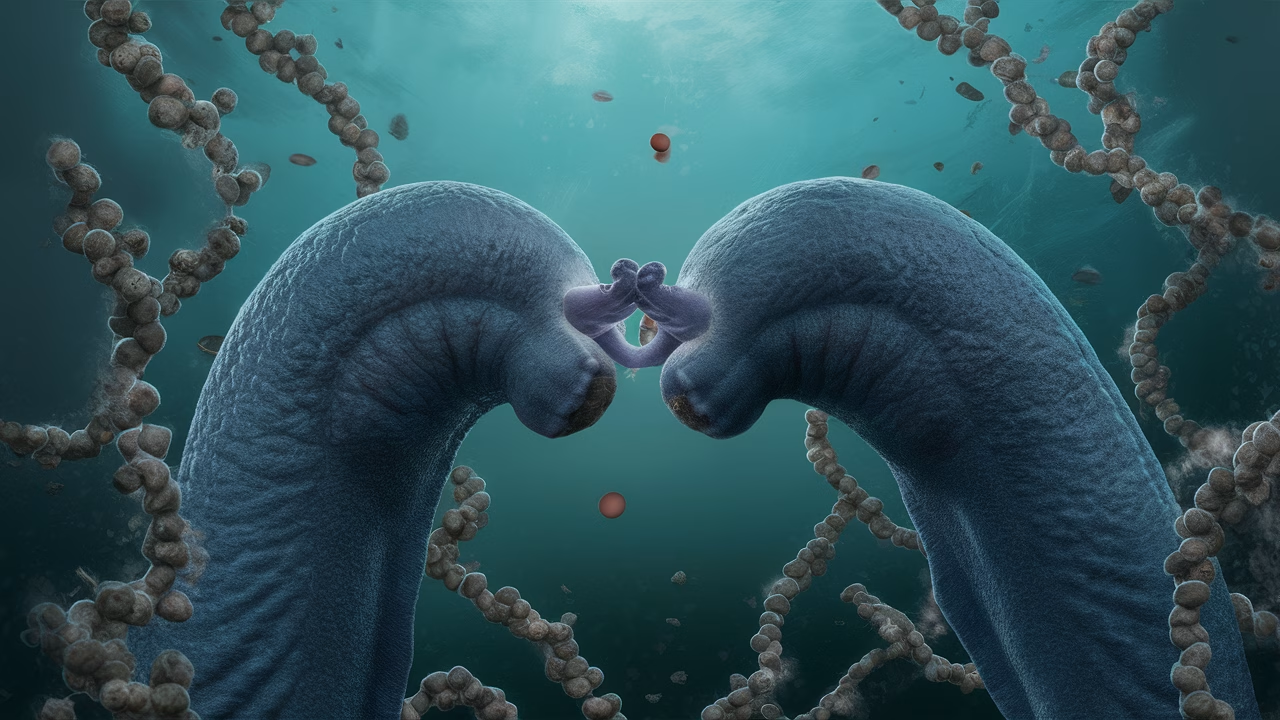
Like many nudibranchs, blue glaucus individuals are hermaphrodites, possessing both male and female reproductive organs. During mating, two blue glaucus must carefully align side by side to avoid triggering each other’s defensive stinging cells—a delicate dance between potentially lethal partners.
After successful mating, they produce long, gelatinous egg strings that drift freely through the pelagic zone. This reproductive strategy maximizes the chances that offspring will encounter suitable jellyfish prey patches in the vast, unpredictable open ocean environment.
How Does the Blue Glaucus Compare to Other Sea Creatures?
| Trait | Blue Glaucus | Typical Sea Slug | Jellyfish |
|---|---|---|---|
| Habitat | Pelagic zone (open ocean) | Coral reefs or seafloor | Pelagic and coastal |
| Camouflage | Countershading | Blend with reef rocks | Transparency |
| Defense | Stolen nematocysts | Toxic secretions or cryptic coloration | Own stinging tentacles |
| Mobility | Drifts with currents | Slow crawling | Pulsating motion / currents |
| Reproduction | Hermaphroditic, egg strings | Hermaphroditic, egg ribbons | Gonochoric, external fertilization |
Final Thoughts: The Tiny Sea Slug That Masters Giants
The blue glaucus represents one of nature’s most remarkable success stories—a tiny sea slug that has evolved to thrive in the vast, challenging pelagic zone by turning its prey’s weapons into its own defense system. It floats upside-down in a world where conventional orientation means little, powered by ingenuity and the concentrated venom of dangerous jellyfish.
Whether you’re a marine biology enthusiast, student, diver, or simply someone captivated by ocean mysteries, we hope this exploration of Glaucus atlanticus has revealed the incredible adaptations that allow small creatures to succeed in Earth’s largest habitat. The next time you feel overwhelmed by challenges, remember the blue glaucus: proof that intelligence, adaptation, and courage can triumph over size and conventional approaches.
Frequently Asked Questions About Blue Glaucus
- Do blue glaucus eat jellyfish?
Yes, venomous jellyfish like the Portuguese man o’ war are their primary food source in the pelagic zone. - Are blue glaucus dangerous to humans?
Yes, they can deliver painful stings if handled because they concentrate and store potent nematocysts from their jellyfish prey. - Can I keep a blue glaucus as a pet?
No, these sea slugs require specific open ocean conditions and a live jellyfish diet that cannot be replicated in captivity. - Where are blue glaucus commonly found?
Their pelagic lifestyle carries them across tropical and temperate waters worldwide, often washing up on coasts of Australia, South Africa, and occasionally the U.S. - How do they reproduce?
Blue glaucus are hermaphrodites that mate side-by-side and lay floating egg strings in the open ocean. - Why is the blue glaucus upside-down?
This orientation provides optimal countershading camouflage—blue back blends with deep water from above, silver belly matches sunlight from below. - How does the blue glaucus use jellyfish venom?
It selectively absorbs and concentrates venom from prey jellyfish, storing it in specialized cells for more potent defensive stings.