How does the African crested rat’s poison defense actually work?
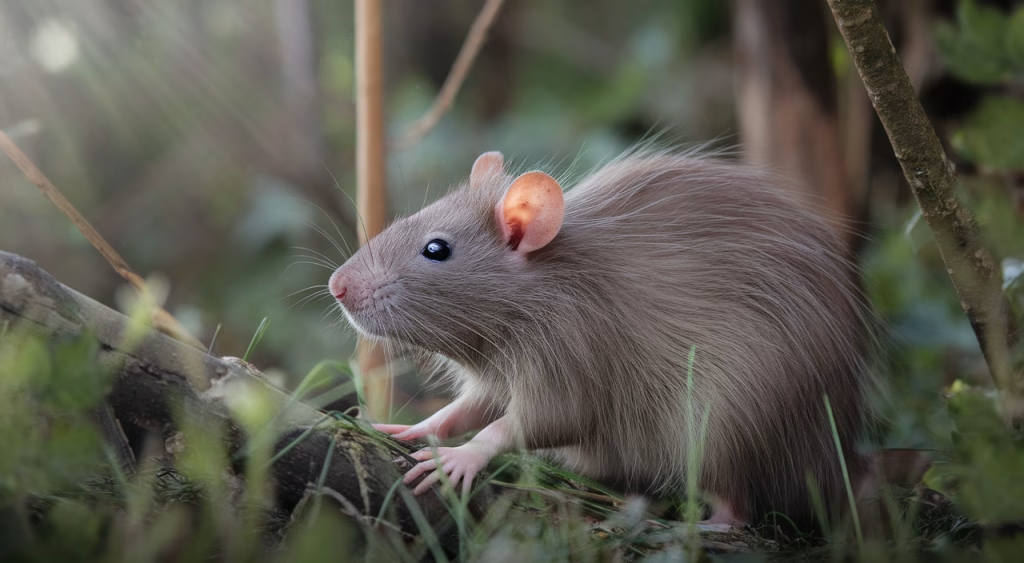
The African crested rat—or maned rat—doesn’t produce its own poison like a venomous snake or spider would. Instead, it borrows nature’s recipe by gnawing on the toxic bark of the Acokanthera tree, absorbing the deadly compounds into specialized fur on its flanks. When a predator takes a bite, the African crested rat poison can be fatal within minutes.
TL;DR: The Maned Rat’s Deadly Fur Weapon
- Nature’s Borrowed Poison: The African crested rat chews the bark of Acokanthera, a plant known for its cardiac glycosides—compounds so toxic they can kill elephants.
- Specialized Fur Storage: The rat has sponge-like fur on its sides that soaks in the plant toxin, making it lethal to predators who make contact or take a bite.
- Unique Among Mammals: This rodent is one of the very few mammals to deploy poison as a defense, making it an unparalleled case in toxic defense mechanisms in wildlife.
- Conservation Warnings: Despite its evolutionary prowess, habitat destruction and human misunderstanding place this species at risk.
Introduction to the African Crested Rat
Meet the African crested rat (Lophiomys imhausi), an unlikely harbinger of lethality in Africa’s mammalian biodiversity. Measuring about 14 to 18 inches, this brushy-tailed rodent with a bristled mane may look like little more than a mop with whiskers. Yet, beneath its cute exterior hides a biochemical arsenal that rivals some of the deadliest toxins in nature. Known locally in Swahili as “matonyoka”—”the animal that makes dogs sneeze”—this rodent belongs to a curious class of poisonous mammals.
While some poisonous amphibians and reptiles manufacture their toxins internally, the African crested rat takes a different approach. It accumulates toxicity from an external source and stores it in uniquely adapted fur. This places it squarely in the fascinating field of convergent evolution and biochemical mimicry.
The Evolution of Poisonous Defense Mechanisms
Evolution has a peculiar sense of innovation. From porcupines with armor-like quills to frogs that exude skin poisons, defensive adaptations are nature’s way of leveling the playing field between predators and prey. Yet, mammals rarely venture into biochemical warfare—making the African crested rat an evolutionary anomaly worth closer inspection.
For context, most rodent species rely on speed, nocturnality, or social colony living to avoid being eaten. Some may bite or urinate to create scent markers or confusion. But the maned rat rises above the fray. Its development of chemically treated fur exemplifies a high-risk, high-reward strategy: one that likely evolved over thousands of years of ecological pressure.
Understanding the Toxic Fur of the African Crested Rat
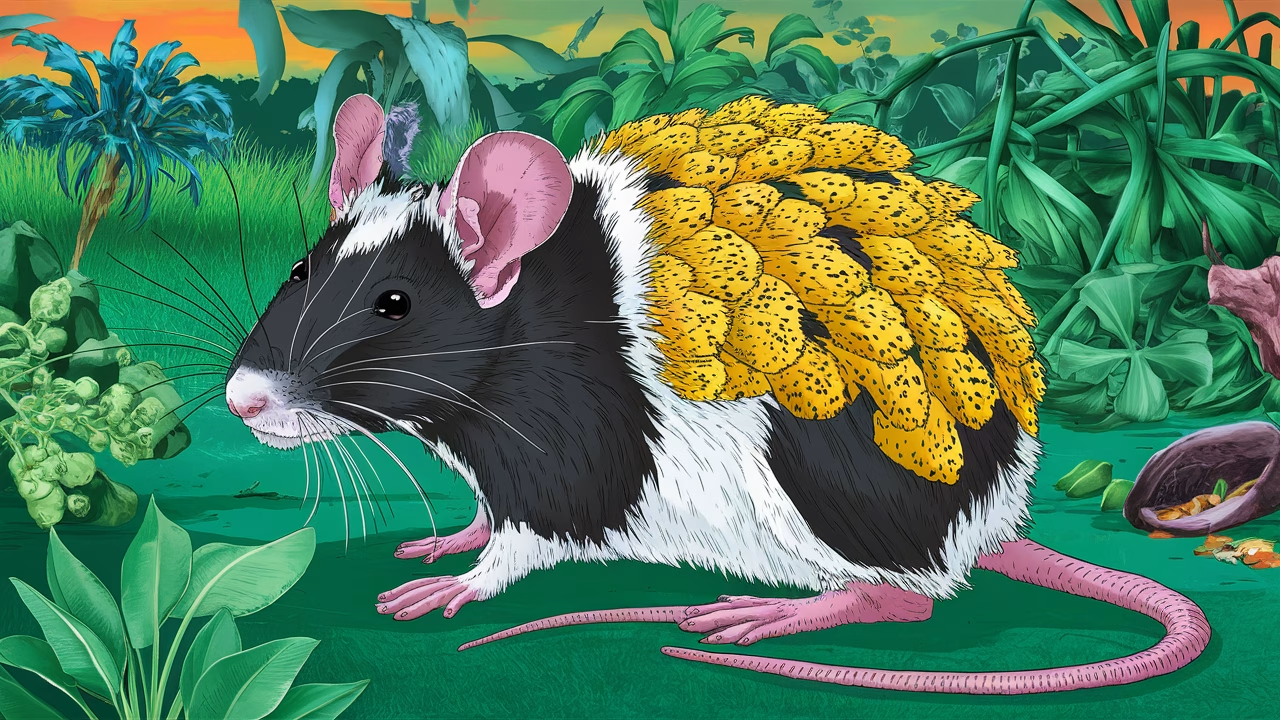
This isn’t your average fur coat. The African crested rat’s flanks host long, shaggy hair that hides a band of sponge-like, fibrous fur. These are specialized structures, unlike any seen in other mammals. When the rat chews on Acokanthera bark—used by local hunters to tip arrows—it then licks this fur, so the African crested rat poison soaks in. The compound in question? Ouabain, a cardiac glycoside that can halt a heartbeat in minutes.
You might ask, “Wouldn’t that kill the rat itself?” Here’s where the biology gets even more interesting. Studies show that the rat avoids swallowing the toxin and likely has enzymes in its mouth that neutralize the poison’s effects internally. This remarkable feature lets the rat weaponize venom external to its body system without becoming a casualty.
How Does the Poison Work?
Ouabain acts by inhibiting the sodium-potassium pump (Na+/K+ ATPase) in heart muscle cells. This causes a false flood of calcium within those cells, resulting in cardiac arrest at sufficiently high doses. If a predator bites the rat’s side and punctures the soaked fur, the poison gets into their mouth or bloodstream—leading to distress, paralysis, or death. In most cases, predators spit it out before lethal consequences occur—but the learned experience is enough to prevent future attacks. This toxic defense mechanism represents nature’s version of chemical deterrence.
Implications for Conservation Efforts
Given its narrow distribution in East Africa, particularly around Kenya and parts of Tanzania, the African crested rat faces an uncertain future. While not currently classified as endangered, habitat degradation and deforestation have fragmented its natural territories. Compounding this, many locals regard it with suspicion or hostility due to its toxic reputation.
Conservationists argue that like any keystone specialist, this rodent plays unique roles in ecosystem balance. It controls plant growth through foraging and avoids competition with less chemically inclined species. Protecting the African crested rat means safeguarding a lineage of biochemical evolution that could even have pharmaceutical implications if studied properly.
Comparing Toxicity Levels in African Rodents
Let’s take a moment to place the African crested rat in its broader familial context. Of the thousands of rodent species globally, only a very few are considered poisonous. In Africa, it’s virtually alone in its league.
| Rodent Species | Toxic Trait | Poison Source |
|---|---|---|
| African Crested Rat | Poisoned Fur | Acokanthera plant |
| European Mole Rat | Mild venomous bite (controversial) | Salivary proteins |
| Hutia | Non-toxic | N/A |
Human Interaction and Threats to the Species
Preserving the Unique Biological Traits of African Rodents
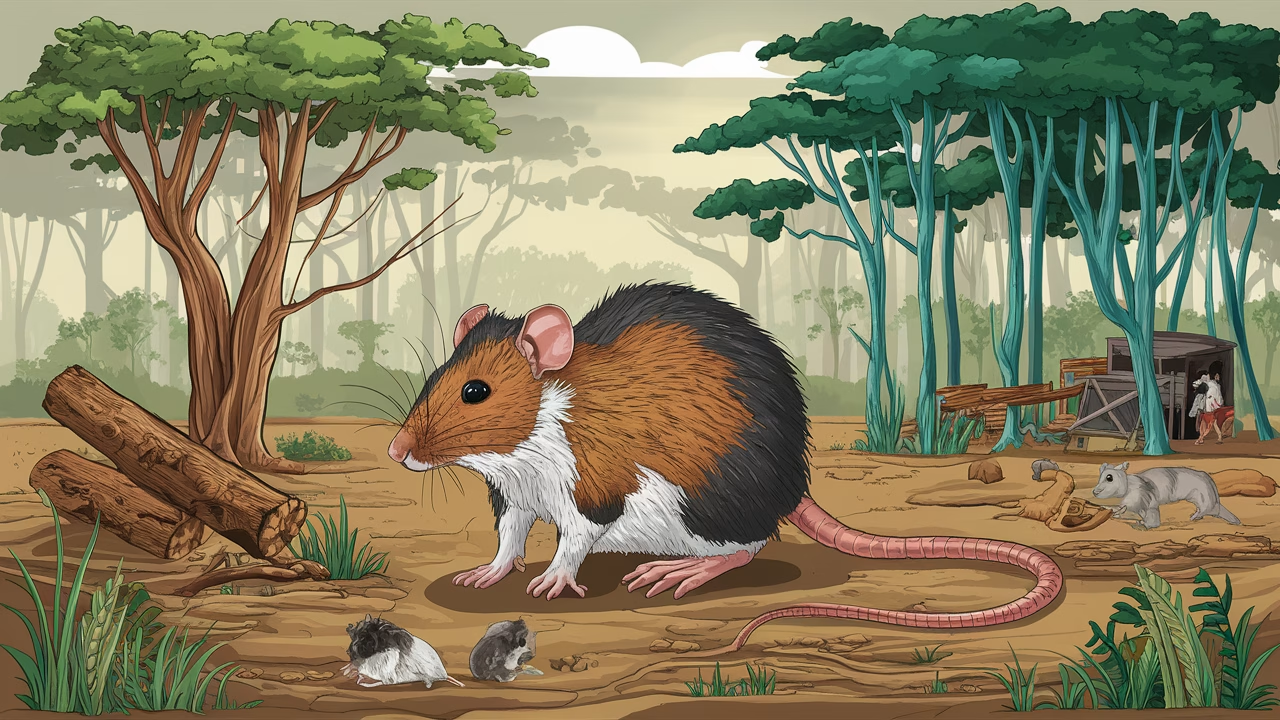
Poor public awareness and folklore often work against the African crested rat. In some communities, they are believed to be cursed or demon-inflicted. Combine that with growing human encroachment on their forested habitats, and we have a conservation dilemma. Here’s what often happens: forests are cleared for farmland, the maned rat wanders into village boundaries, and is either killed outright or driven off. These patterns have long-term effects on biodiversity.
Thankfully, several wildlife institutions in Kenya and Tanzania are now monitoring these populations more closely. Researchers are particularly interested in whether the poison resistance seen in this rodent could lead to new insights in cardiac medicine. Protective legislation, ecological education, and cross-cultural outreach are essential if we hope to preserve this rare mammal.
Final Thoughts: A Creature Worth Protecting
By exploring the secret life of the African crested rat, we’re reminded how survival in the wild often takes mysterious, yet brilliant forms. Poisonous fur? It sounds like a mythical trait, yet nature beat us to it—refining the design through millennia of trial and error. As researchers, educators, or admirers of the natural world, it’s up to us to appreciate and share these wonders responsibly. Let’s not allow this rodent’s potent secret to disappear with the forests it calls home.
Frequently Asked Questions
- How does a maned rat’s poison defense work?
The rat chews Acokanthera bark, applies the toxic saliva to its side fur, deterring predators with lethal cardiac glycosides. - Is the African crested rat venomous or poisonous?
It is poisonous – not venomous. The toxin does not require a bite to activate but affects those who ingest or bite it. - Can the African crested rat hurt humans?
In theory, yes—but only if ingested. Handling it with bare hands doesn’t pose an immediate threat. - Where does this rat live?
It inhabits woodland areas across Kenya, Tanzania, and parts of Ethiopia, preferring rocky habitats with vegetation. - What predators has it deterred?
Studies suggest dogs, genets, and even hyenas have recoiled or fallen ill after attacking one. - What can we learn from this toxin?
Cardiac glycosides like ouabain may eventually inspire heart-related treatments—if studied responsibly. - Is the maned rat endangered?
Currently, it is not classified as such, but growing habitat loss is a looming threat.