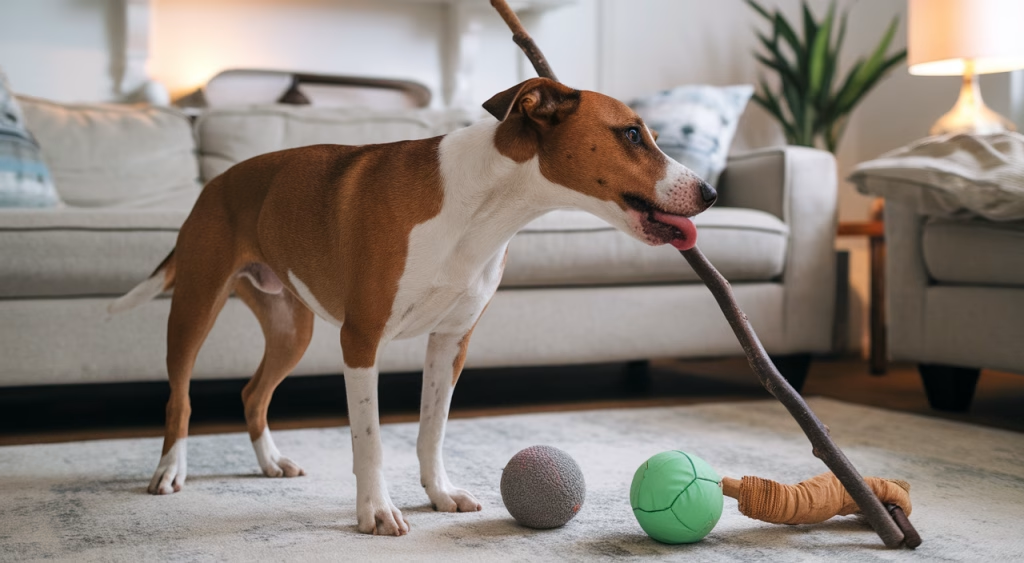
Why Does My Dog Lick Everything, Even Thin Air?
Because licking is your dog’s way of understanding, exploring, and soothing themselves—whether they’re tasting salt on your skin, bonding with their pack, or signaling emotional distress, it’s all part of an incredibly nuanced behavioral system.
- Licking is rooted in evolutionary behavior—used for bonding, communication, and submission within dog packs
- Dogs lick humans for the ‘salty goodness’ on our skin and to gather chemical cues about us
- Furniture licking can indicate taste-seeking or self-soothing habits
- Air licking may be related to scent detection, over-stimulation, or neurological issues
- Compulsive licking could point to anxiety, boredom, or undiagnosed pain
- Tongue contact provides sensory feedback and emotional regulation for dogs
- Dog saliva contains enzymes that may help clean and heal minor wounds—instinctively triggered behavior
The Science Behind Dog Licking Behavior
When it comes to **dog licking behavior**, there’s a world of meaning hidden in each swipe of the tongue. Unlike humans who primarily use hands and vision to interact with their environment, dogs explore the world largely through their noses and mouths—which includes licking.
Licking offers dogs essential **sensory feedback**. Special receptors on their tongue detect flavors and chemical signals. Think of every lick as your pup’s version of reading a book or checking their notifications.
| Reason | Explanation |
|---|---|
| Sensory Exploration | Taste buds and receptors gather data from objects and people |
| Social Communication | Licking strengthens **social bonds** within the pack |
| Comfort Behavior | Endorphins released through licking help reduce anxiety |
Dogs also have roughly 1,700 **taste buds** (compared to a human’s 9,000), focusing more on meat, fat, and—yes—salt. After a sweaty workout or morning snooze, your dog sees you as a walking salt lick. That **salty goodness** is irresistible.
Why Dogs Lick Humans and Furniture
Ever wake up to a full face-projectile-tongue “kiss” from your dog? That’s no coincidence. Humans emit sweat and oils during sleep, leaving behind an invisible salt crust that your pup finds delicious.
But it’s not just about taste. Dogs also lick you to get information. Their tongues carry specialized receptors that can detect pheromones and scent residues—like whether you’ve been near another animal or what you had for lunch.
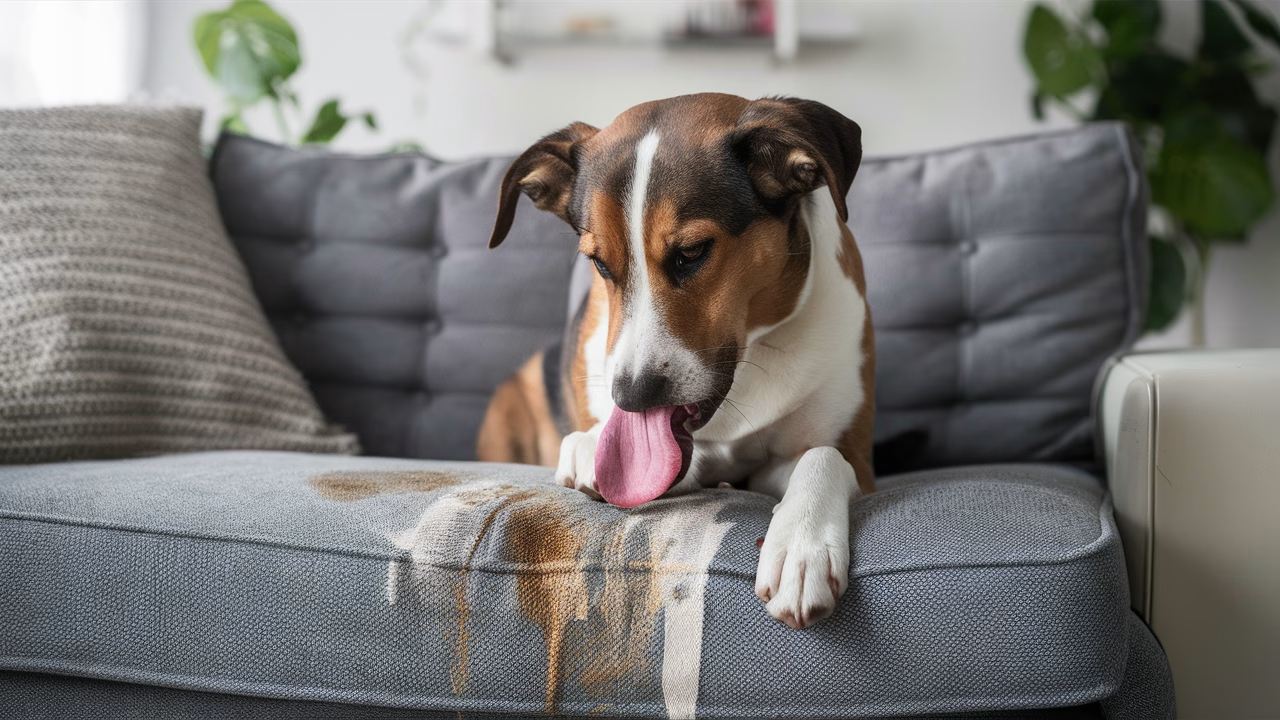
**Furniture licking**, though less flattering, is just as telling. Your couch is a buffet of aromas and textures: from snack crumbs to skin oils to fabric softener. Dogs often use **furniture licking** as a self-soothing strategy, especially when dealing with stress or boredom.
- Comfort-triggered licking: Helps relieve stress like thumb-sucking in toddlers
- Leftover flavors: Pizza grease, lotion, or even traces of your pet shampoo
- Attention-seeking: Repetitive licking may be to draw your reaction
Understanding Air Licking in Dogs: Psychology and Causes
**Air licking**—where your dog sticks out its tongue toward nothing visible—might seem bizarre, but it’s surprisingly common. Often, it’s a result of scent sampling. Dogs possess a vomeronasal organ (also called Jacobson’s organ) that helps them detect pheromones and other airborne chemicals. When your dog licks the air, they’re capturing scent particles to analyze.
**Air licking** can also look similar to what behaviorists call fly-snapping syndrome, a neurological behavior where dogs appear to bite at invisible objects. This may signal:
- Stress or overstimulation
- Seizure activity (rare but serious)
- Compulsive tendencies seen in anxious breeds
What does this mean for you? Pay attention to context. If your dog engages in **air licking** after smelling something unusual, it’s likely investigative. If they do it obsessively or out of the blue, it might be time to speak with a vet.
Compulsive Licking: When Dog Licking Behavior Signs of Anxiety Appear
Not all licking is harmless. When licking becomes repetitive, excessive, or interferes with daily life, it’s likely moved into the realm of **compulsive licking**. This is where we see links with anxiety, physical pain, or environmental stressors.
- Constantly licking paws—even when there’s no debris or injury?
- Obsessively licking walls or the floor?
- Appears irritable or restless when prevented from licking?
These could be **dog licking behavior signs of anxiety**.
| Trigger | Solution |
|---|---|
| Anxiety | Behavior modification, calming routines, vet evaluation |
| Boredom | More exercise, mental stimulation, rotating toys |
| Medical Pain | Vet checkup to rule out internal discomfort or skin issues |
So, **how to stop dog compulsive licking?** Start by increasing engagement: puzzle feeders, brisk walks, scent games. If the problem persists, consult an animal behaviorist or vet for a tailored plan and potential medical workup.
Evolution of Dog Licking Behavior: From Wolves to Modern Companions
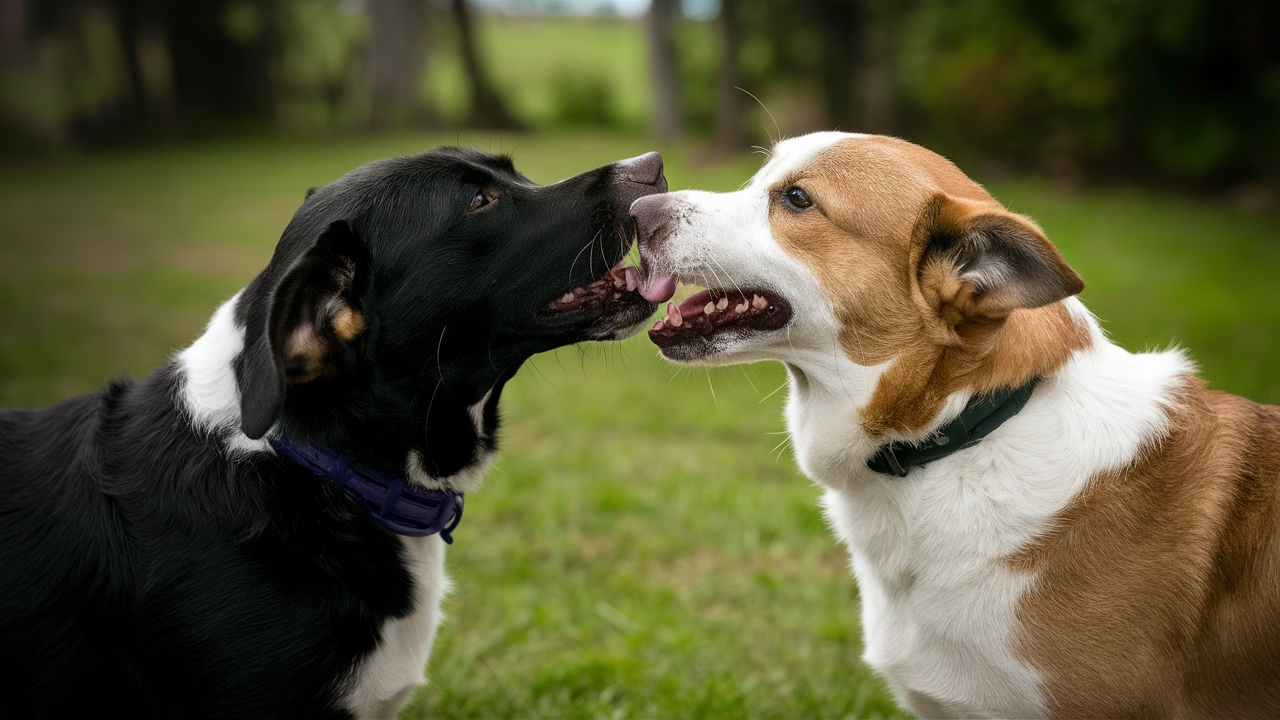
The **evolution of dog licking behavior** isn’t a modern invention—it’s an ancient behavior derived from wolves, the ancestors of domestic dogs. In wild packs, wolves would lick each other’s muzzles to reaffirm **social bonds**, show submission, and greet higher-ranking members. This behavior helped preserve **pack hierarchy** and harmony.
When your pup licks your hand or face, they’re mimicking this instinctual act of pack bonding and submission. You, in their eyes, are the alpha—or at least a beloved packmate.
Licking maintains:
- Social bonds — Facilitates trust among family groups
- Pack hierarchy — Submission to higher-status members
- Ritualized behavior — Occurs during greetings or reunions
Healing Dog Wounds with Saliva: Natural Powers
“Lick your wounds” isn’t just metaphor—it carries real biological weight for dogs. Studies suggest dog saliva contains proteins and enzymes with antibacterial and antifungal properties.
When dogs sustain minor injuries, self-licking often helps by removing debris and stimulating tissue regeneration. **Healing dog wounds with saliva** involves several key enzymes:
| Enzyme | Function |
|---|---|
| Lysozyme | Breaks down bacterial cell walls |
| Peroxidase | Reduces microbial growth |
| Nitrate Reductase | Supports oral hygiene & pH balance |
However, human skin isn’t adapted for animal saliva. While licking may assist in **healing wounds**, it’s not recommended for human wounds or prolonged dog self-care. If injuries persist or look inflamed, a vet visit is essential.
Hoatzin Chick Wing Claws: The Remarkable Evolutionary Adaptation for Survival
Frequently Asked Questions
Why does my dog lick the floor constantly?
Floor licking may be a sign of boredom, anxiety, or smell/taste residuals. If it’s persistent, rule out gastrointestinal discomfort or nutritional deficiencies with your vet.
When should I worry about my dog licking too much?
If licking is focused and repetitive (e.g., same object, limb, or space), and interferes with normal activity, consider it a red flag. It could signal anxiety, allergies, or pain that needs addressing.
Does dog saliva really heal wounds?
It can help clean minor wounds due to enzymes like lysozyme, but it’s not sterile. Excess licking can actually reopen wounds and cause infection—so restraint and vet care are key.
Is air licking a medical issue?
Not always. Sometimes it’s sensory exploration. But frequent **air licking** might point to seizure disorders or anxiety—especially if paired with other erratic behaviors.
Why does my dog lick one spot on its body nonstop?
Persistent body licking could stem from skin irritation, allergies, or embedded debris. It can also become **compulsive licking**. Have your vet check for underlying conditions.
Can I train my dog to stop licking me?
Yes, positive reinforcement training can redirect the behavior. Provide an alternative, like a toy or chew, and reward for choosing it over licking.
Do dogs understand that licking comforts humans?
They don’t exactly think, “this comforts you,” but they associate licking with bonding, attention, and reassurance, which humans tend to reinforce—creating mutual emotional comfort.