How does the Dumbo Octopus use its flap ear-like fins to move?
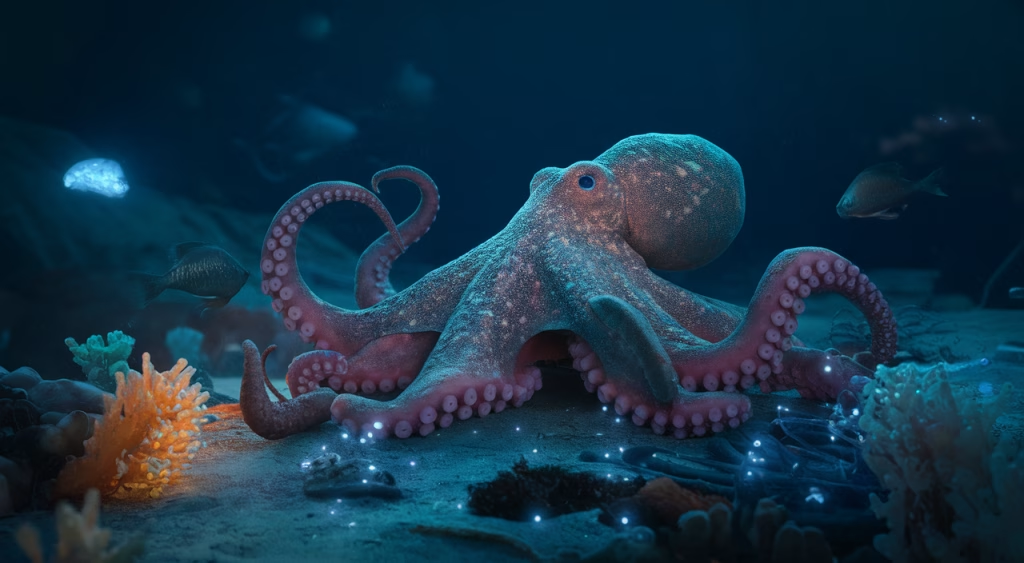
The Dumbo Octopus uses its unique flap ear-like fins not just for charm but as a precise and energy-efficient propulsion mechanism. These fins work in concert with jet propulsion and arms to give this deep-sea cephalopod an astonishing agility in pitch-black waters.
TL;DR: Quick Facts About the Enigmatic Dumbo Octopus
- Species Name: Grimpoteuthis, commonly known as the Dumbo Octopus
- Key Feature: Flap ear-like fins used for movement
- Habitat: Deep-sea regions, typically 3,000–7,000 meters below ocean surface
- Movement: Combination of fin undulation and jet propulsion
- Conservation Status: Not well-assessed due to habitat inaccessibility
The Enigmatic Dumbo Octopus: Master of the Deep Sea
With a name seemingly borrowed from a children’s fairytale, the Dumbo Octopus (Grimpoteuthis) is a real-life marvel residing in the darkest, most pressurized corners of our planet — the ocean’s abyssal zone. As marine biologists study these creatures, we’ve become captivated by organisms that thrive where light and warmth do not exist — and few do this more gracefully than the Dumbo Octopus.
What sets this deep-sea cephalopod apart at first glance are its ‘ears’ — fins that flap like those of Disney’s famous elephant Dumbo. But these aren’t just for show. These flap ear-like fins are an evolutionary masterpiece designed for effective locomotion in ocean depths with challenges most organisms would find insurmountable. Below, we’ll explore the many ways this quirky cephalopod defies expectations and earns its “enigmatic” title.
Understanding the Unique Features of Deep-Sea Creatures
Why do marine biologists and oceanographers get so thrilled about the Dumbo Octopus? Because its morphology written in subtle curves and biological innovation is like a whispered message from nature’s deep vaults. Each aspect of the Dumbo Octopus is tailor-made to serve survival hundreds of atmospheres below sea level in the deep sea. Its gelatinous body isn’t merely soft — it’s a deliberate adaptation to handle the immense pressures of ocean depths.
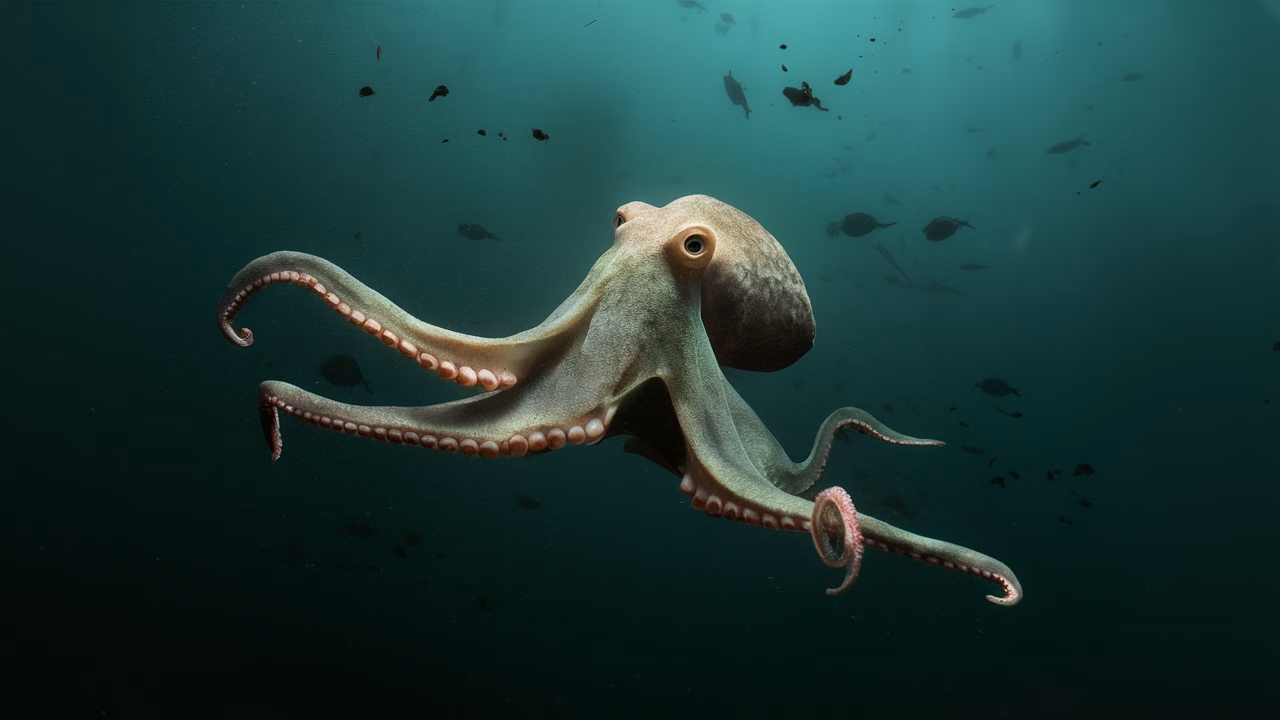
Measuring around 20-30 centimeters, though sometimes up to 1.8 meters, this deep-sea cephalopod’s skin is semitransparent and can shimmer in hues of pink, white, and brown — perfect camouflage in dim waters. Unlike its shallow cousins such as the common octopus, the Dumbo Octopus has internal U-shaped shells giving it buoyant lift, and the telltale flap ear-like fins that move gently — as if flying underwater through ocean depths.
Flap Ear-Like Fins: A Revolutionary Deep Sea Propulsion Mechanism
The Dumbo Octopus’s most iconic trait — its flap ear-like fins — serve as a primary means of locomotion in the deep sea. But why would an octopus grow fins in the first place?
In the lightless ocean depths, energy conservation is everything for deep-sea creatures. Propelling by just jet bursts would consume too much energy, especially since food is scarce. Instead, these uniquely evolved flap ear-like fins move in elegant undulations — like a slow ballet — allowing graceful, silent, and energy-efficient movement through the deep sea. It’s like watching a feather navigate through syrup.
The fins articulate from above the eyes and are connected to muscles that contract rhythmically, propelling the Dumbo Octopus upward, forward, or sideways through ocean depths. But it doesn’t stop there. When needed, this deep-sea cephalopod uses jet propulsion from its siphon and pulls itself with arm strokes — a three-mode transportation system unparalleled among octopuses in marine biology.
| Propulsion Method | Advantages | When Used |
|---|---|---|
| Flap Ear-like Fins | Low energy use, graceful movement | General cruising or hovering |
| Jet Propulsion | Quick bursts, escape response | Predator evasion |
| Arm Crawl | Precise movement along ocean floor | Feeding or maneuvering |
Deep Sea Habitat and Behavior
If you’ve ever wondered what it’s like where the enigmatic Dumbo Octopus thrives — imagine a world so quiet and cold, sunlight never touches it. We’re talking ocean depths of 3,000 to 7,000 meters, where pressure could crush a submarine but where this gentle deep-sea creature flaps around effortlessly like it belongs — because it does.
Unlike most octopuses, the Dumbo doesn’t squirt ink — there’s no use in a place with no light in the deep sea. It also doesn’t have suction cups for arm-based interaction in the usual way. Instead, it relies on its flap ear-like fins propulsion and sensory adaptation to navigate ocean depths. Ambush is key: Dumbo Octopuses hover above the ocean floor and pounce on copepods, amphipods, and worms like a feather falling onto its prey.
Interestingly, these deep-sea creatures are solitary animals. Encounters are rare and fleeting, and most of our marine biology knowledge comes from unexpected deep-sea footage or submersible observations. Mating doesn’t follow a standard cycle either. Females carry eggs at many stages — a deep-sea reproductive hack for when the opportunity arises in ocean depths.
Conservation Efforts for Deep Sea Creatures
Because of their unreachable habitat in ocean depths, Dumbo Octopuses are incredibly difficult to study for marine biologists. This makes understanding their conservation status murky at best. But make no mistake — these deep-sea creatures are not immune to human impact.
Deep-sea mining, pollution, climate change, and microplastic accumulation are all threats inching closer to affecting their fragile ecosystem in ocean depths. Sound pollution from submarines and exploration vehicles may also impact their sonar-like sensory systems that help them navigate the deep sea.
In practice, we need stricter regulations on deep-sea activities and more international research initiatives focused on rarely observed fauna like the enigmatic Dumbo Octopus. Deep-sea creatures adapted to hypoxic, lightless conditions are highly specialized — which means they are uniquely vulnerable in marine biology conservation efforts.
The Fascinating World of Deep-Sea Creatures
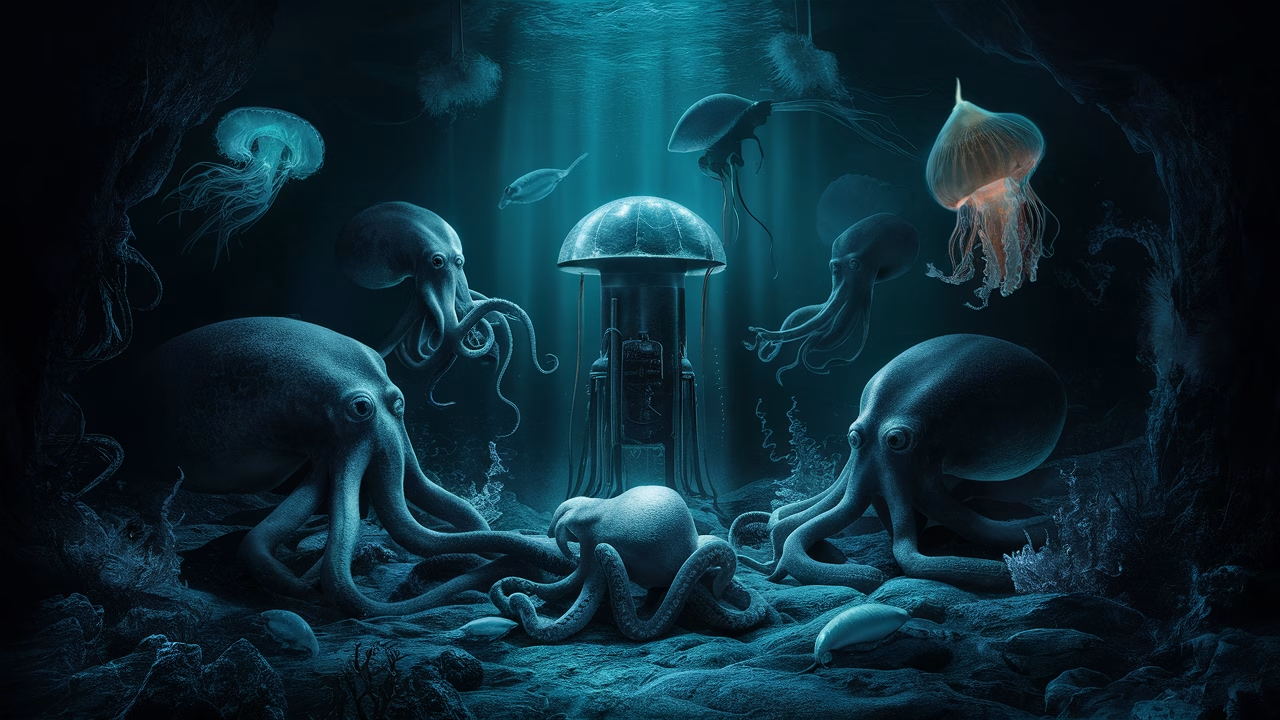
The Dumbo Octopus isn’t alone in its alien-like existence in ocean depths. It has neighbors that look just as surreal: the anglerfish with its glowing lure, the vampire squid pulsing in stillness, and the gulper eel with a mouth stretching like elastic. These deep-sea creatures aren’t products of science fiction — they’re living proof of nature’s imagination thriving in the deepest trenches.
For us surface-dwellers, these deep-sea creatures offer more than curiosity. Each new life form helps fill in gaps about Earth’s evolution, resistance to pressure, and adaptation to climate extremes. For marine biology scientists, observing their biomechanics might inspire innovations in robotics or biotechnology, while for the rest of us, they serve as a reminder: the world is wilder and more wondrous than we think.
Final Thoughts
The enigmatic Dumbo Octopus, with its fragile shape and out-of-this-world propulsion style using flap ear-like fins, is a symbol of both nature’s creativity and resilience in ocean depths. It does not roar, hunt aggressively, or dazzle with color — yet floats through darkness with a rhythm that is both tranquil and awe-inspiring in the deep sea.
In a world chasing flashy survival tactics, this deep-sea cephalopod reminds us there’s strength in subtlety and poetry in marine biology. Whether you’re a marine biologist combing through footage or a curious mind at your desk, the lesson is the same: the ocean still holds secrets worth discovering in its deepest depths.
Frequently Asked Questions
- What are the unique features of a Dumbo Octopus?
Its flap ear-like fins, soft body, ability to hover using fin propulsion, and lack of ink sac set it apart from other octopuses. - Where does the Dumbo Octopus live?
Mainly in the abyssal plains of the ocean, typically between 3,000 to 7,000 meters deep. - How does the Dumbo Octopus move?
It uses rhythmic fin flapping for cruising, jet propulsion for bursts, and arm strokes near the sea floor — a threefold movement strategy. - Is the Dumbo Octopus endangered?
Its conservation status is unclear due to scarcity of observation, but deep-sea activities pose increasing threats. - What does the Dumbo Octopus eat?
Crustaceans, bivalves, and marine worms picked off the ocean floor during subtle ambush predation. - Does the Dumbo Octopus squirt ink?
No, it doesn’t; ink dispersal is unnecessary in pitch-black deep waters. - How large can Dumbo Octopuses grow?
Most are around 20-30 cm, but giant variants have been observed at lengths up to 1.8 meters.