How do tardigrades survive in space, boiling water, and freezing cold?
Tardigrades survive by entering a cryptobiotic state, shutting down nearly all metabolic functions and enclosing themselves in a protective casing. This allows them to endure the vacuum of space, temperatures beyond boiling and below freezing, and radiation levels that would destroy most life forms.
TL;DR: Why Tardigrades Are Nature’s Ultimate Survivors
- Extreme survival: Tardigrades can live through conditions like space vacuum, boiling water, freezing cold, high radiation, and intense pressure.
- Cryptobiosis: By suspending their metabolism, tardigrades effectively “pause” life to protect themselves from fatal environments.
- Space resilience: Tardigrades were the first animals to survive direct exposure to outer space, including dangerous UV radiation.
- Boilerproof and freezerproof: They can endure temperatures from near absolute zero up to 150°C.
- Scientific goldmine: Their genes and survival tricks are influential in astrobiology, biotech, and planetary habitability studies.
Understanding Tardigrades: Water Bears Built for Extreme Survival
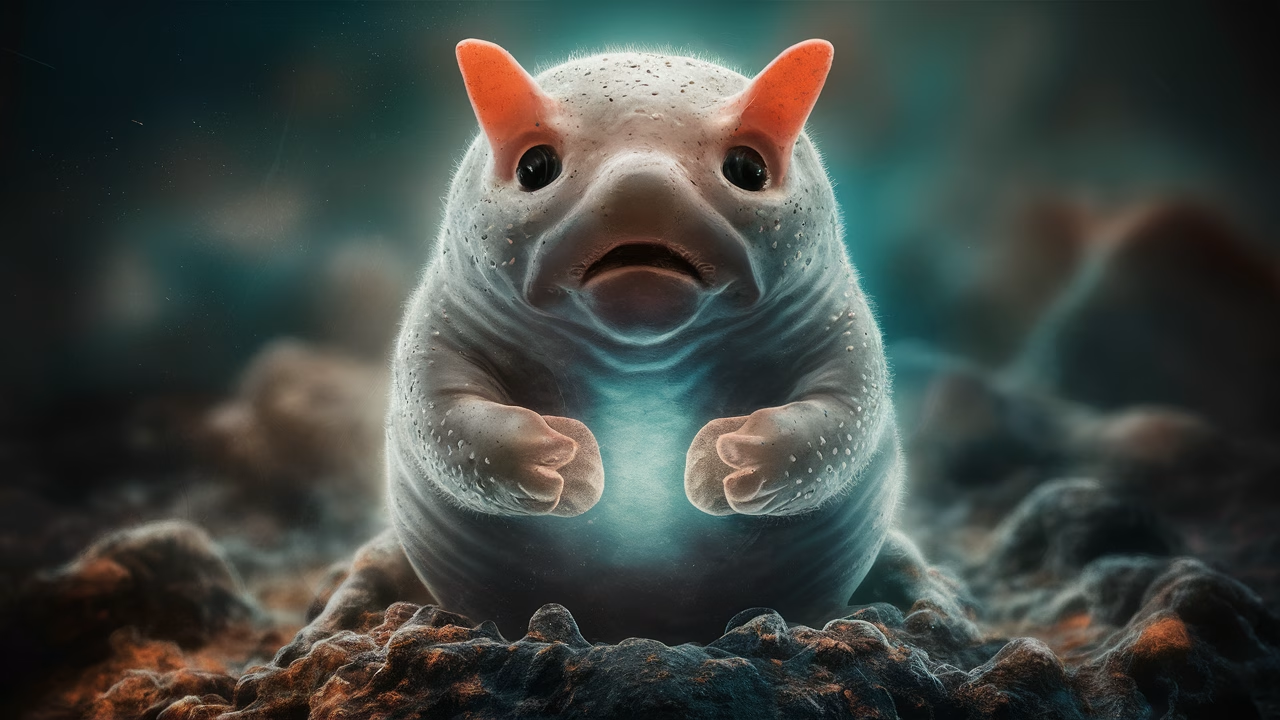
Tardigrades—often affectionately called “water bears”—are among the most fascinating and resilient life forms on Earth. Measuring typically 0.3 to 0.5 millimeters long, these eight-legged micro-animals can be found just about everywhere—soil, moss, rainforest canopies, and deep-sea trenches. But what makes tardigrades stand out isn’t just their widespread presence—it’s how they’ve adapted to survive the unthinkable.
Ever wondered how a creature with no bones, no lungs, and no circulatory system can be tougher than a cockroach? It’s because tardigrades have evolved miraculous survival strategies that shield them from complete annihilation. When faced with dry environments, intense heat, freezing cold, or radiation that would kill most organisms, tardigrades demonstrate extreme adaptation that scientists are only beginning to understand.
When these resilient creatures face life-threatening conditions, they enter cryptobiosis—a hibernation-like state where they shrivel into a dehydrated tun and shut down nearly all bodily functions. In this cryptobiotic state, tardigrades can remain dormant for decades, waiting for favorable conditions to return to active life.
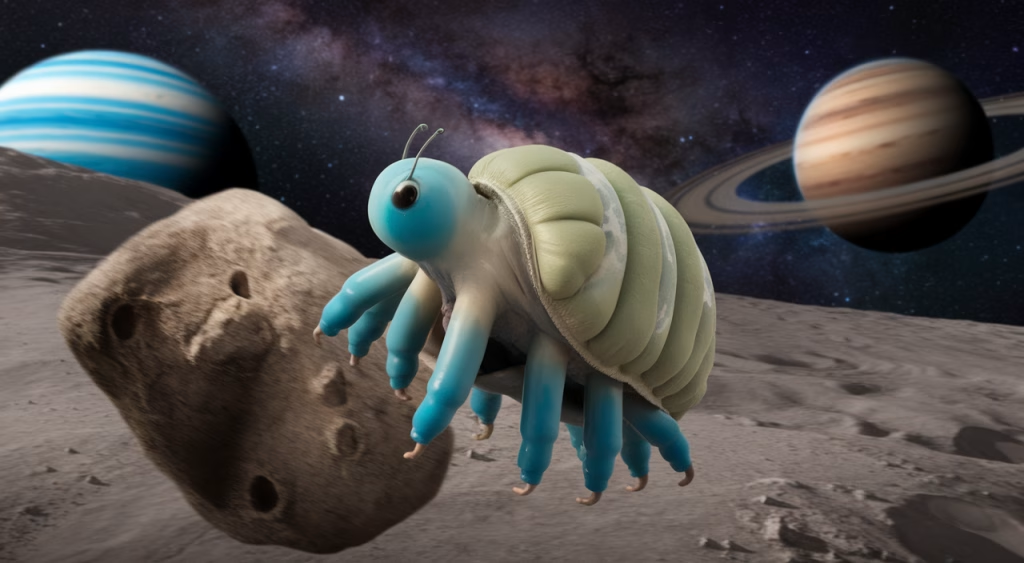
How Tardigrades Survive Space: The Ultimate Test of Resilience
Space represents the ultimate extreme environment—vacuum, deadly radiation, and temperature swings that would instantly kill most life forms. So what happens when tardigrades face the harsh reality of outer space?
In 2007, European Space Agency scientists conducted a groundbreaking experiment, exposing tardigrades to the vacuum of space aboard the FOTON-M3 mission. These remarkable organisms faced space’s harshest elements—total vacuum and extreme ultraviolet radiation—without any protection. The results stunned researchers: over 60% of tardigrades survived both the vacuum and radiation exposure, with many successfully reproducing after rehydration.
This space survival experiment didn’t just prove tardigrades could endure space—it revolutionized our understanding of life’s limits. For astrobiologists studying potential life on Mars or icy moons like Europa, tardigrades became living proof that life might exist in seemingly impossible conditions.
Scientists have discovered that tardigrades possess a unique protein called Dsup (“damage suppressor”) that shields their DNA from radiation damage. This remarkable adaptation allows tardigrades to survive radiation levels that would be lethal to humans, making them invaluable for space biology research and potential applications in human space travel.
Freezing Cold Survival: How Tardigrades Beat the Deep Freeze
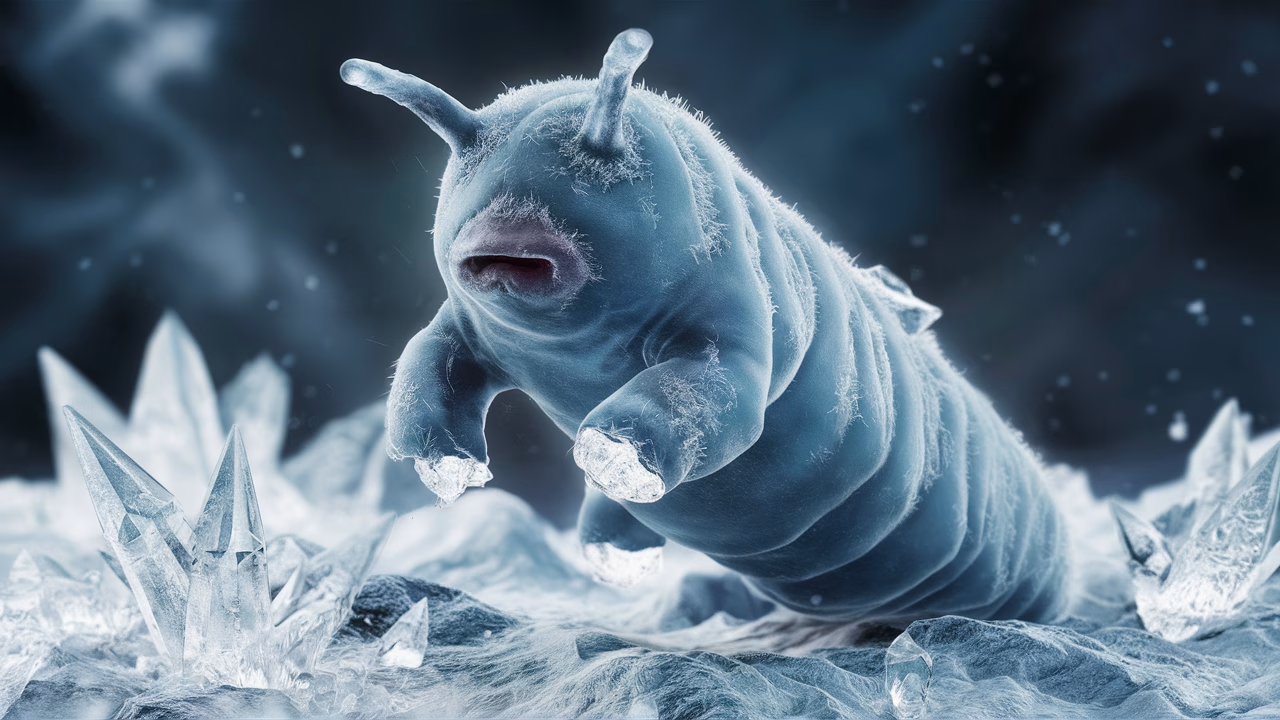
From polar regions reaching -50°C to the near absolute zero of space, tardigrades demonstrate incredible freezing resistance. But how do these tiny organisms survive temperatures that would instantly kill most life?
Through cryobiosis—a specialized form of cryptobiosis—tardigrades prevent ice crystal formation from destroying their cells. They replace cellular water with trehalose, a protective sugar that acts like biological antifreeze. This molecular substitution stabilizes cell membranes and proteins, essentially vacuum-packing their biology to survive nature’s deep freezers.
| Temperature Condition | Tardigrade Survival Response |
|---|---|
| -200°C (Space-like conditions) | Survives in cryptobiotic tun state |
| -80°C (Laboratory freezing) | Survives extended periods |
| -20°C (Antarctic temperatures) | Remains fully active |
Laboratory studies have documented tardigrades successfully reviving after being frozen for over 30 years, then reproducing normally. This extraordinary freezing resistance makes tardigrades valuable for studying cryopreservation techniques and understanding life’s limits in cold environments.
Surviving Boiling Water: Heat Resistance Beyond Belief
Boiling water typically means instant death for living cells—proteins denature, membranes collapse, and life ceases. Yet tardigrades can endure temperatures up to 150°C under specific conditions, demonstrating remarkable boiling water survival capabilities.
While active tardigrades cannot generally survive direct boiling water exposure, their cryptobiotic state changes everything. When dehydrated into their protective tun form, tardigrades deploy molecular heat shields—specialized proteins and sugars that prevent cellular breakdown even at extreme temperatures.
This exceptional heat resistance occurs because cryptobiotic tardigrades have essentially paused all biological processes, with protective molecules stabilizing their cellular structures against thermal damage. This remarkable adaptation has implications for studying sterilization processes, food safety, and developing heat-resistant biological materials.
The Science Behind Tardigrades’ Extreme Survival Mechanisms
Understanding how tardigrades achieve such incredible resilience requires examining their unique biological toolkit:
- Cryptobiosis: A reversible state where tardigrades lose 99% of their water content and reduce metabolism to virtually zero, enabling survival in impossible conditions.
- Dsup Protein: This damage suppressor protein protects genetic material from radiation and oxidative stress that would destroy other organisms.
- Trehalose and LEA Proteins: These molecules replace cellular water and stabilize biological structures during extreme dehydration or freezing.
- Protective Tun Formation: The shrunken tun state physically shields tardigrades from radiation, pressure, and environmental extremes.
The extreme adaptation abilities of tardigrades extend far beyond biological curiosity. Their survival mechanisms inspire advances in medicine, cryopreservation, space exploration, and our understanding of life’s potential throughout the universe. If tardigrades can survive space, boiling conditions, and freezing environments, what possibilities exist for life in the cosmos?
Final Thoughts: Lessons from Nature’s Most Resilient Survivors
Tardigrades prove that extreme survival isn’t science fiction—it’s remarkable biological reality. Their ability to survive space, endure boiling temperatures, and resist freezing cold challenges our assumptions about life’s limits. Whether drifting through the vacuum of space or tucked into Antarctic moss, these microscopic marvels demonstrate life’s incredible adaptability.
For anyone fascinated by biology, space exploration, or the mysteries of life itself, tardigrades offer profound insights. They remind us that in nature’s endless creativity, life finds ways to persist in the most extreme conditions imaginable—and perhaps in places we haven’t yet dared to look.
Frequently Asked Questions
Can a tardigrade survive boiling water?
Tardigrades can survive boiling temperatures while in their cryptobiotic ‘tun’ state. Active tardigrades may not survive prolonged boiling, but in the tun state, they’ve endured up to 150°C in short durations.
How long can a tardigrade live?
In active states, tardigrades live a few months to 2.5 years. But in cryptobiosis, they can survive for decades and still be revived.
Do tardigrades live in space naturally?
No. Tardigrades do not naturally occur in space. They were sent by scientists and survived due to cryptobiosis.
Can tardigrades survive nuclear radiation?
Yes. They tolerate doses over 1000x lethal levels for humans, thanks to DNA-protective proteins like Dsup.
Are tardigrades dangerous?
No. Tardigrades are not harmful to humans and don’t pose any threat as parasites or pathogens.
Where can I find tardigrades?
Look in moss or lichen and scrape off samples. Add water and observe under a microscope—you just might find some wiggling water bears!
Could tardigrades help us live in space?
Potentially. By studying their resilience, scientists aim to harness their DNA protection mechanisms for space travel and human genome shielding.