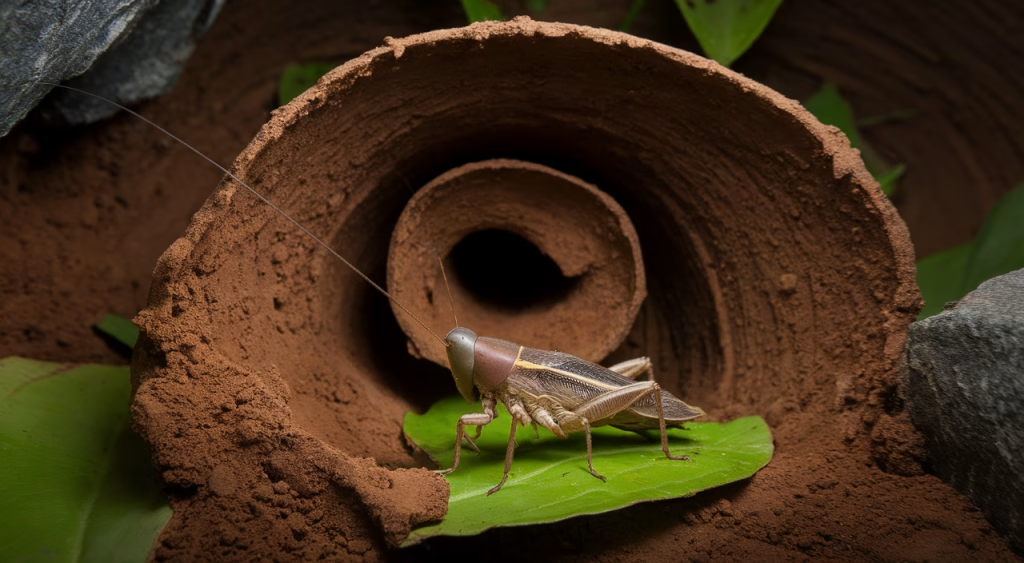
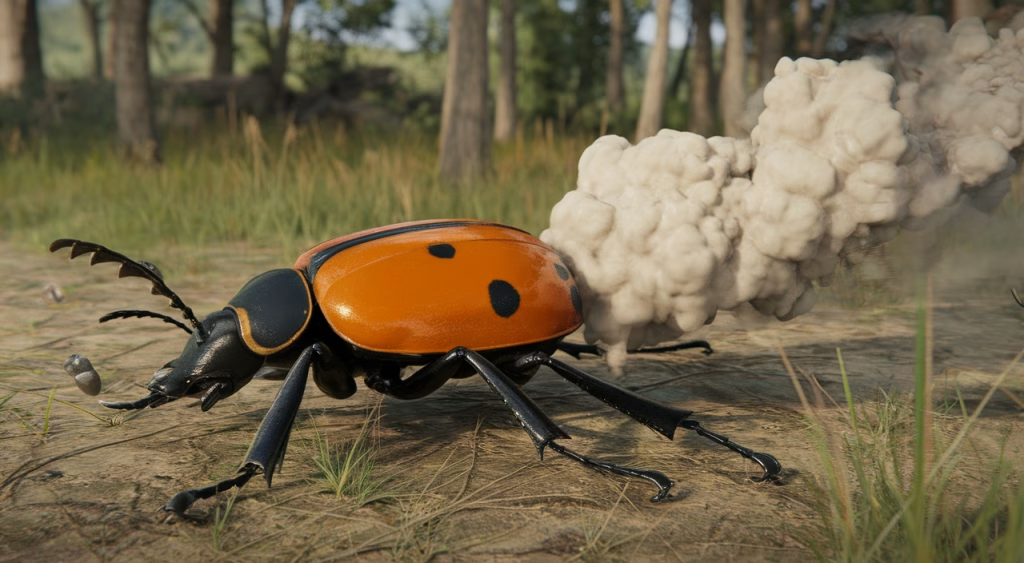
How does the bombardier beetle eject boiling chemicals from its abdomen?
The bombardier beetle ejects a boiling acid spray from its abdomen using an explosive chemical reaction inside its body. This bombardier beetle defense mechanism rapidly superheats a cocktail of hydrogen peroxide and hydroquinone into a vaporized, sizzling acid blast powerful enough to scald and ward off predators.
TL;DR: Bombardier Beetle’s Boiling Acid Spray
- Unique Defense Mechanism: Uses chemistry to create a boiling spray of acid to deter threats.
- How It Works: Mixes hydrogen peroxide and hydroquinone in a specialized abdomen chamber, ignited by catalytic enzymes.
- Evolution Significance: A textbook example of how insect chemical defenses evolve with precision.
- Inspiration for Science: We’re studying this for use in non-lethal defense sprays and microfluidics.
- Conservation Matters: Habitat destruction threatens this unique insect. Understanding it may save it.
Understanding the Bombardier Beetle
Anatomy and Behavior
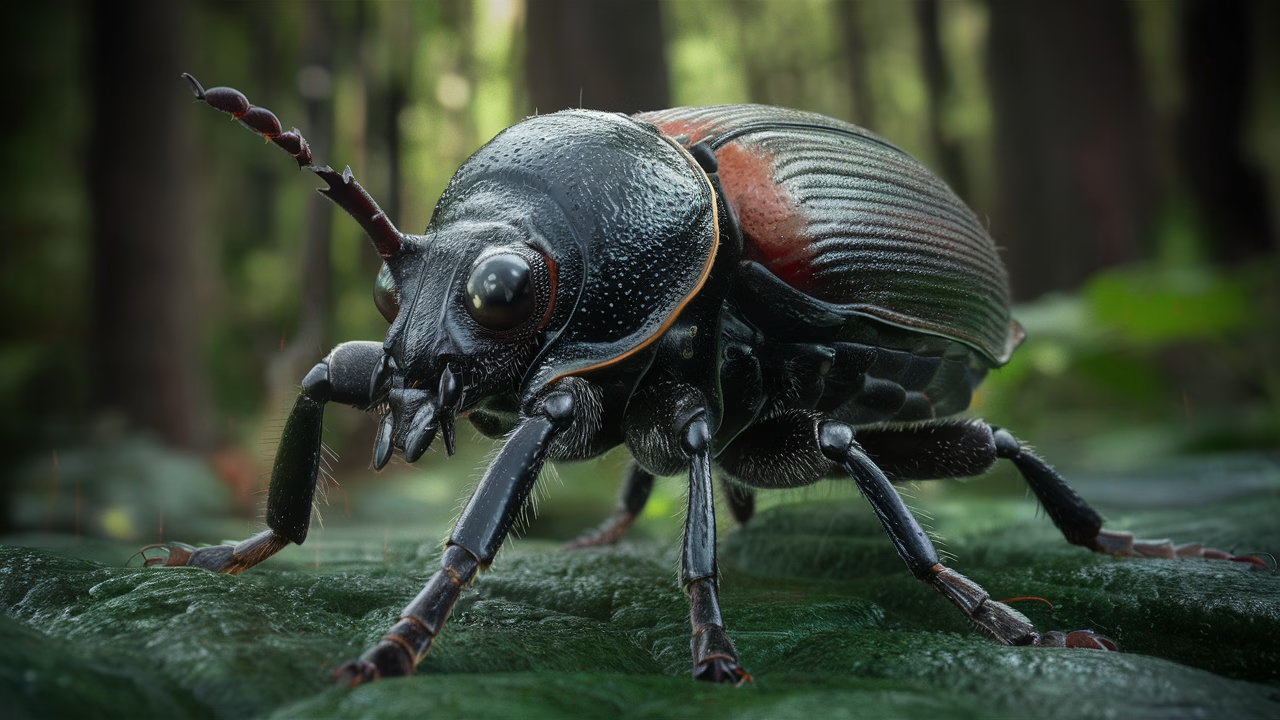
The bombardier beetle, belonging to the Carabidae family, may look like your typical ground beetle, yet it’s a tiny walking chemical factory. Measuring between 1–2 cm in length, this beetle is a master of survival. Ever wonder how such a small creature can defend itself so outrageously?
Its abdomen houses specialized glands uniquely evolved for chemical warfare. These beetles are typically nocturnal and prefer wooded or damp environments where they feed on other invertebrates. But it’s their startling chemical prowess that makes them unforgettable. When threatened, they can aim and blast a hot, noxious boiling acid spray upwards of 100°C — that’s boiling point. The spray is so precise that they can target specific body parts of their attackers — say, a frog’s face or an ant’s legs.
The Science Behind Boiling Acid Spray
Chemical Composition and Effects
So what’s cooking inside the beetle’s rear engine room? It’s chemistry at its best — and bravest.
The boiling acid spray is a reactive mix of hydroquinone and hydrogen peroxide. But in isolation, these compounds are stable. Here’s where it gets wild: inside a reaction chamber within the beetle’s abdomen, those compounds meet catalytic enzymes like catalase and peroxidase. It’s like mixing vinegar and baking soda, but with much higher stakes. The bombardier beetle defense mechanism releases heat rapidly, causing the liquid to flash-boil almost instantly.
The result? An audible pop (yes, you can hear it!), and a sizzling cloud of noxious benzoquinones expelled with force and accuracy.
| Component | Function |
|---|---|
| Hydrogen Peroxide | Oxidizer that fuels the reaction |
| Hydroquinone | Combustible fuel |
| Catalase + Peroxidase | Enzymes that trigger explosive reaction |
At speeds of up to 6 meters per second and temperatures around 100°C, it’s no wonder predators rapidly retreat. The beetle’s internal design lets them fire multiple bursts — nearly 500 shots in one minute — all while controlling direction via abdominal swiveling.
Evolution of Defense Mechanisms in Insects
Comparisons with Other Insects
In the wild, staying alive is all about strategy. The bombardier beetle sets the gold standard for insect chemical defenses — but it’s not alone in this evolutionary arms race.
Ever heard of stick insects releasing repellent scents, or ants defending colonies using formic acid? These are all variations on a theme: chemical defense. What makes the bombardier beetle extraordinary is how rapidly it can deploy this mechanism, and how hot and damaging its chemicals become on contact.
Over evolutionary timeframes, natural selection refined their dual-chamber chemical system from passive deterrents to thermochemical projectiles. Unlike other beetles that rely on tough exoskeletons or camouflage, this beetle confidently declares: come too close, and you’ll regret it.
It’s a clear display of how the evolution of defense mechanisms leads to innovation tailored to predator pressure. And while the beetle’s boiling acid spray might seem like a superpower, it’s precisely tuned to function without harming the beetle itself — a beautiful instance of evolutionary equilibrium.
Human Applications and Research
Potential Uses in Technology
Let’s zoom out. What does this mean for us humans?
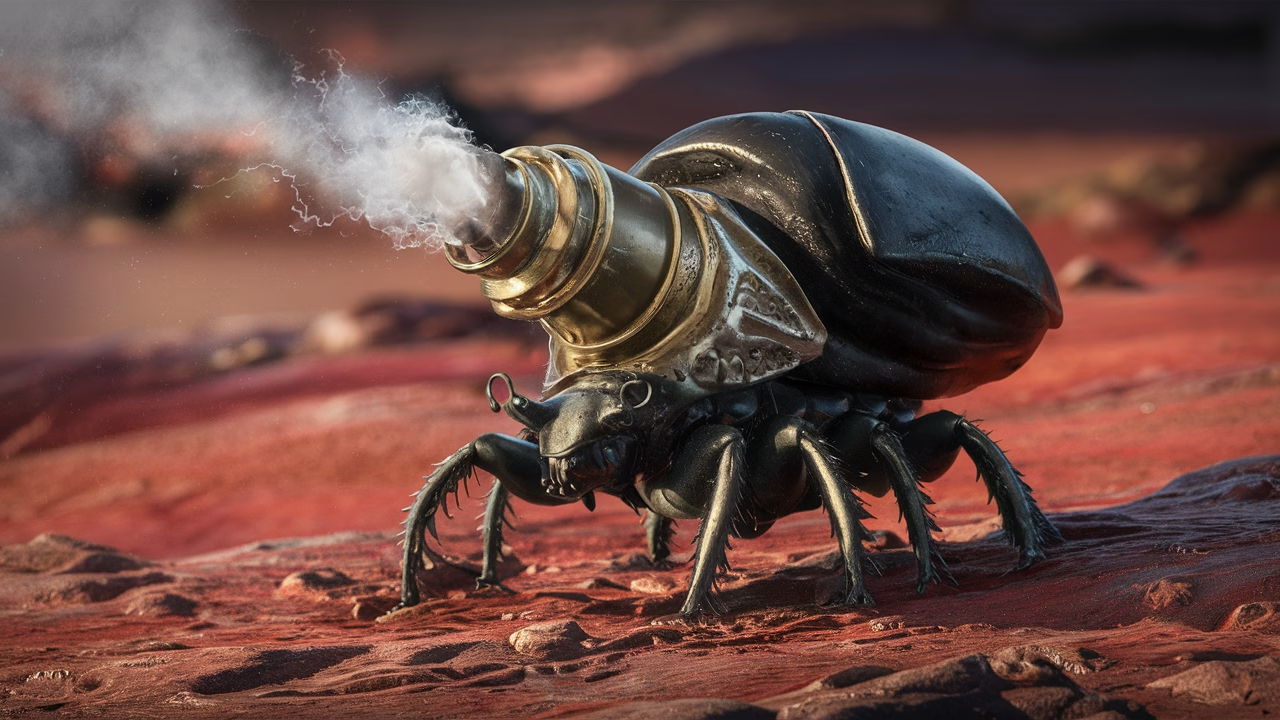
The bombardier beetle defense mechanism has intrigued scientists, chemists, and engineers. Its internal pressure regulation, rapid mixing system, and precision aim have direct correlations with modern engineering challenges in controlled explosions, micro-valve mechanics, and propulsion systems.
Picture this — non-lethal crowd-control mechanisms modeled after this beetle’s boiling acid spray to deliver controlled chemical deterrents. Or micro-injectors in medical devices using the beetle’s rapid-pulse valve technique to administer drugs precisely where needed.
Researchers in biomimetics study this natural phenomenon to design next-level microfluidic technologies, self-reacting propulsion systems, and eco-friendly pest repellents. Nature has already done the prototyping — we just need to decode and replicate it responsibly.
Protecting the Bombardier Beetle Population
Conservation Efforts and Future Prospects
Nature thrives on balance, but the survival of this fascinating beetle is under threat. Like many small insects, it faces habitat loss, pesticide exposure, and climate change.
Conservation efforts for bombardier beetles aren’t yet widespread but need to be. Preserving damp habitats, reducing chemical pesticide use, and documenting beetle populations can go a long way in ensuring their survival. Public education, especially about their ecological role in predator control and decomposition, can boost conservation interest.
So what’s the takeaway? The bombardier beetle reminds us that even the smallest creatures harbor marvels still beyond full human comprehension. If we protect them, we safeguard evolutionary brilliance — and future innovation potential.
Final Thoughts
Next time you walk through the woods and notice a scuttling beetle, consider this: it might just be nature’s own flamethrower, perfected through millennia. The boiling acid spray of the bombardier beetle is not just a survival tool — it’s an inspiration to science, a celebration of evolutionary elegance, and a call to conservation.
Frequently Asked Questions
- Why do bombardier beetles spray boiling hot acid?
To defend themselves against predators using a chemical reaction that generates heat and repels threats. - What chemicals are in the bombardier beetle’s spray?
A mix of hydrogen peroxide and hydroquinone triggered by enzymes in a reaction chamber. - Can the spray harm humans?
It can cause irritation or temporary pain on contact with human skin but is not lethal. - How accurate is the bombardier beetle’s aim?
Extremely accurate — the beetle can rotate its abdomen to direct the spray toward specific threats. - Are humans using this mechanism for new technology?
Yes, especially in biomimicry applications such as defense sprays and micro-injection valves. - Is the bombardier beetle endangered?
Not officially endangered, but populations are affected by habitat destruction and pollutants. - How hot is the acid they spray?
Approximately 100 degrees Celsius — the boiling point of water.