
Why Do Pandas Fake Pregnancy for Extra Food?
Giant pandas in captivity have learned to associate pregnancy with premium treatment—extra bamboo, high-quality snacks, and reduced stress. When pandas fake pregnancy, they cleverly mimic pregnancy symptoms to receive these rewards without actually expecting cubs.
TL;DR — Pandas May Fake Pregnancy to Get Extra Bamboo Snacks
- Pandas fake pregnancy by showing behavioral or hormonal signs similar to a real pregnancy.
- Why do they do it? It results in extra food, like higher-grade bamboo, and a more comfortable, private living space.
- How can experts tell? Ultrasounds and hormonal tests often distinguish real pregnancies from fake ones.
- Does it cause harm? Not directly, but it complicates breeding programs and requires close monitoring by conservation teams.
- This behavior reflects how intelligent and observant pandas are of their environment—particularly in captivity.
The Phenomenon of Pandas Faking Pregnancy
You might be surprised to learn that some giant pandas pretend to be pregnant—and they’re remarkably strategic about it. This fascinating behavior, known in scientific circles as a “pseudopregnancy,” means female pandas mimic many signs of actual pregnancy, including changes in hormone levels and nesting behaviors. But underneath all the theatrics, there’s no cub on the way.
When pandas fake pregnancy, they’re responding to learned patterns. Zookeepers provide extra food—a literal smorgasbord of fresh bamboo, fruit, and premium snacks—to ensure the health of both mother and cub. Add to that a more private enclosure with less stress and fewer visitors, and you can see why a savvy giant panda might think: “Sign me up again!”

Signs of a Panda Fake Pregnancy
Although giant pandas are notoriously difficult to breed, pseudopregnancy complicates their care even further. Keepers and experts usually rely on subtle clues to tell the difference:
- Reduced activity
- Changes in appetite
- Nesting behavior
- Thickening of the uterus
You can see how easy it would be to mistake these behaviors for the real deal when pandas fake pregnancy so convincingly.
Motives Behind the Behavior
“Why would a giant panda deceive caregivers about something as serious as having a baby?” you might wonder. The answer lies in conditioning and learned behavior. Over time, pandas in breeding centers—particularly in Chinese state-run facilities—begin associating pregnancy signals with receiving extra food and pampered treatment.
Here’s what typically happens: A giant panda learns that when she displays signs of pregnancy, her caregivers spoil her with premium bamboo, sweetened steamed buns, and additional snacks. She may even be moved to a quieter area, kept away from the hustle of daily zoo life. It’s like receiving VIP spa service—all based on a clever behavioral strategy.
This isn’t exactly conscious manipulation, but over time, patterns emerge. Much like other intelligent animals who learn cause and effect, pandas realize their environment responds positively to pregnancy-related behaviors. When pandas fake pregnancy, they’re demonstrating remarkable adaptability.
This behavior reflects a broader theme in wildlife biology: Animals in captivity are incredibly tuned into environmental responses. From a conservationist’s perspective, this highlights exactly how intelligent—and observant—these giant pandas truly are.
Impact on Conservation Efforts
Every time a giant panda exhibits signs of pregnancy, it triggers extensive protocols: increased veterinary checks, dietary adjustments, and resource-intensive preparations. When pandas fake pregnancy, it can lead to misallocated resources, disrupted schedules, and public disappointment.
Chinese state broadcasting facilities monitoring pandas have previously gone on high alert following supposed pregnancies, even scheduling live broadcasts of anticipated births. When no birth occurs because pandas fake pregnancy, public trust can be undermined—all because the panda preferred a quieter environment and richer bamboo meals.
Here’s the challenging part: some experts believe all giant panda pregnancies initially resemble pseudopregnancies—making it extremely difficult to distinguish real ones without advanced hormone testing and ultrasounds.
Despite these hurdles, awareness of when pandas fake pregnancy has inspired researchers to refine medical and behavioral testing techniques. It’s helped develop more accurate pregnancy monitoring systems and better welfare tracking, particularly in facilities managing large-scale bamboo-intensive diets.
How Technology Helps Spot the Real Deal
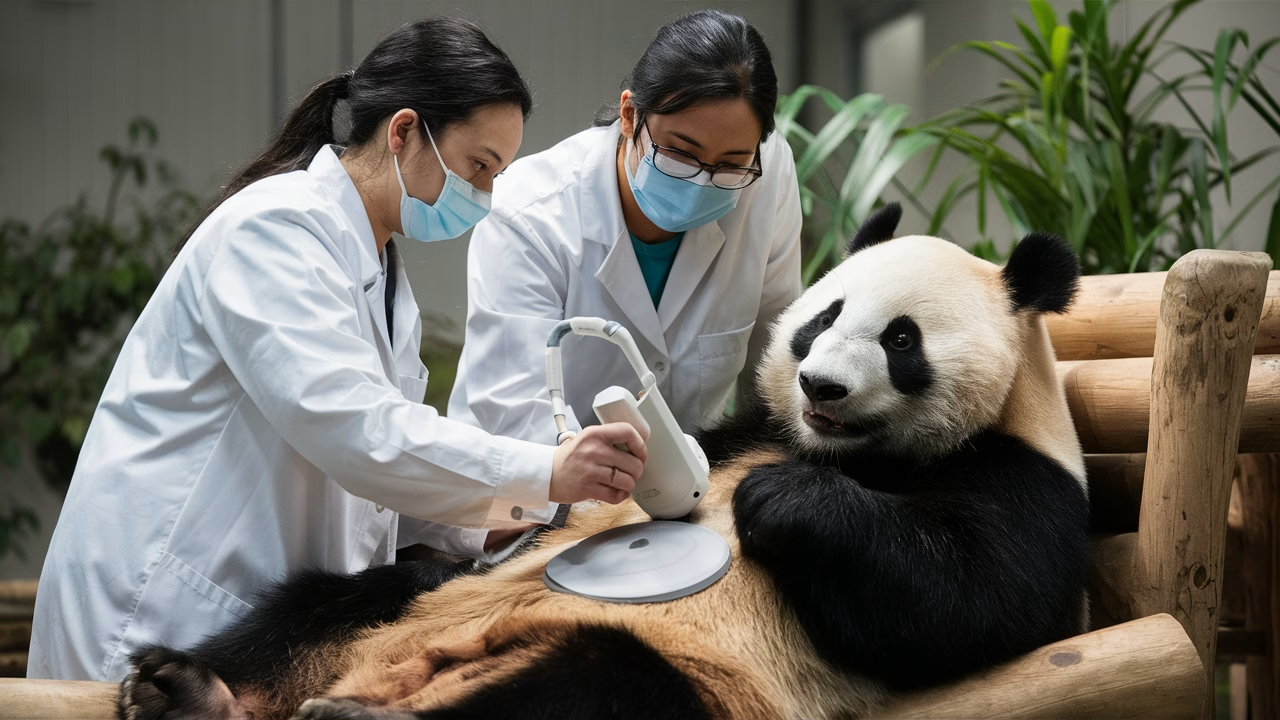
In modern panda facilities, technology plays a crucial role in determining when pandas fake pregnancy versus carrying actual cubs. Hormonal tracking, thermal imaging, and high-resolution ultrasounds are used to monitor changes. Even then, late-term pseudopregnancies can be challenging to detect.
| Real Pregnancy | Fake Pregnancy |
|---|---|
| Consistent hormonal surge (progesterone) | Fluctuating hormones |
| Confirmable with ultrasound | No clear embryo spotted |
| Appetite stabilizes | Erratic appetite |
| Gradual behavioral change | Quick switch in habits |
Final Thoughts on Pandas and Their Clever Acts
So, the next time you see a giant panda lounging with a belly full of bamboo and nesting in her cozy den, you might wonder—”Is she truly about to give birth, or is she working the system?”
When pandas fake pregnancy, it reveals fascinating insights into how animals adapt—not just to wild environments but also to the artificial ones we create in captivity. It challenges caregivers, scientists, and us observers to constantly refine our understanding and empathy toward these remarkable creatures.
Ultimately, this behavior reminds us that protecting a species requires looking beyond biology. We must embrace behavioral understanding as a guiding light in giant panda conservation efforts.
Frequently Asked Questions
- Do pandas really fake pregnancy?
Yes. Female pandas sometimes display behaviors and hormonal changes typical of pregnancy—even when they’re not actually pregnant. - Why do pandas pretend to be pregnant?
To gain better living conditions, more bamboo, and special care they receive when thought to be pregnant. - How can scientists tell if a panda is faking?
They use hormone testing and ultrasounds to verify the presence of an embryo or changes within the uterus. - Does this behavior happen in the wild?
No, it is primarily observed in captivity where pandas learn that pregnancy-related cues bring rewards. - Is faking pregnancy harmful to pandas?
Not directly, but it can complicate breeding and waste care resources when conservation teams prepare for a non-existent cub. - Do other animals fake pregnancy?
Yes, pseudopregnancy is seen in species such as dogs, cats, and other mammals, though pandas’ motives may be more strategic. - How has this behavior changed panda breeding programs?
Panda centers now rely more on scientific tools and behavioral data than solely outward signs when predicting births.