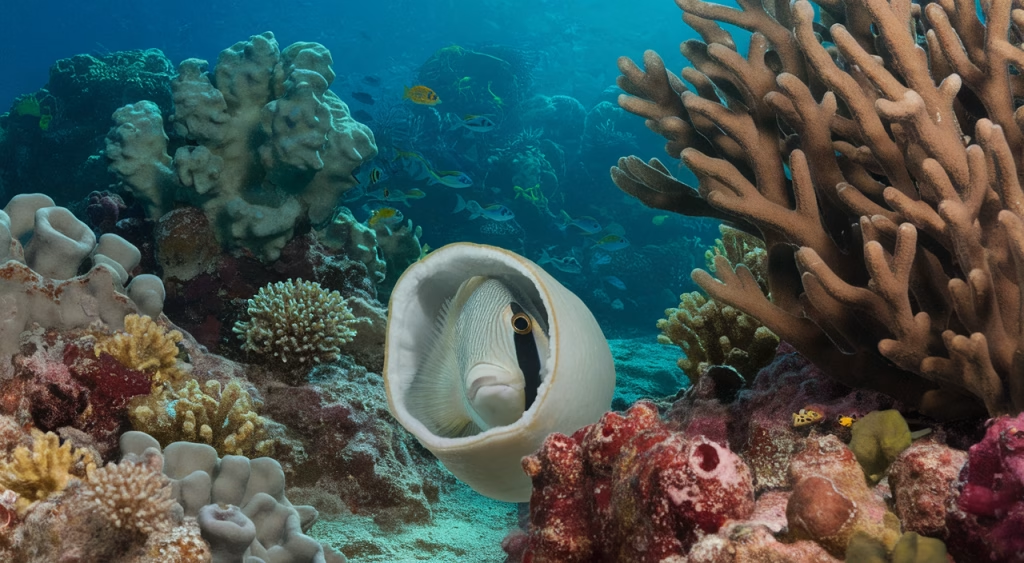
Why does the pearlfish live inside sea cucumbers’ anuses?
Because it’s one of the safest, warmest, and most resource-rich hideouts on the ocean floor — and it’s a surprisingly strategic life choice rooted in symbiosis and survival.
- The pearlfish lives inside sea cucumbers’ anuses primarily for shelter and protection from predators.
- This behavior is a unique case of marine symbiosis — not parasitism in all cases.
- It’s essential to marine ecosystem balance — especially in biodiversity hotspots like coral reefs and seagrass beds.
The Symbiotic Relationship: Pearlfish and Sea Cucumbers
Let’s address the big question — is the pearlfish gross, or is it brilliant? In fact, it’s a bit of both. The relationship between pearlfish (family Carapidae) and sea cucumbers (Holothuroidea) is one of the most fascinating examples of marine symbiosis you’ll find in our oceans. While it raises eyebrows, it’s also an excellent case of ecological efficiency that showcases the remarkable adaptability of marine life.
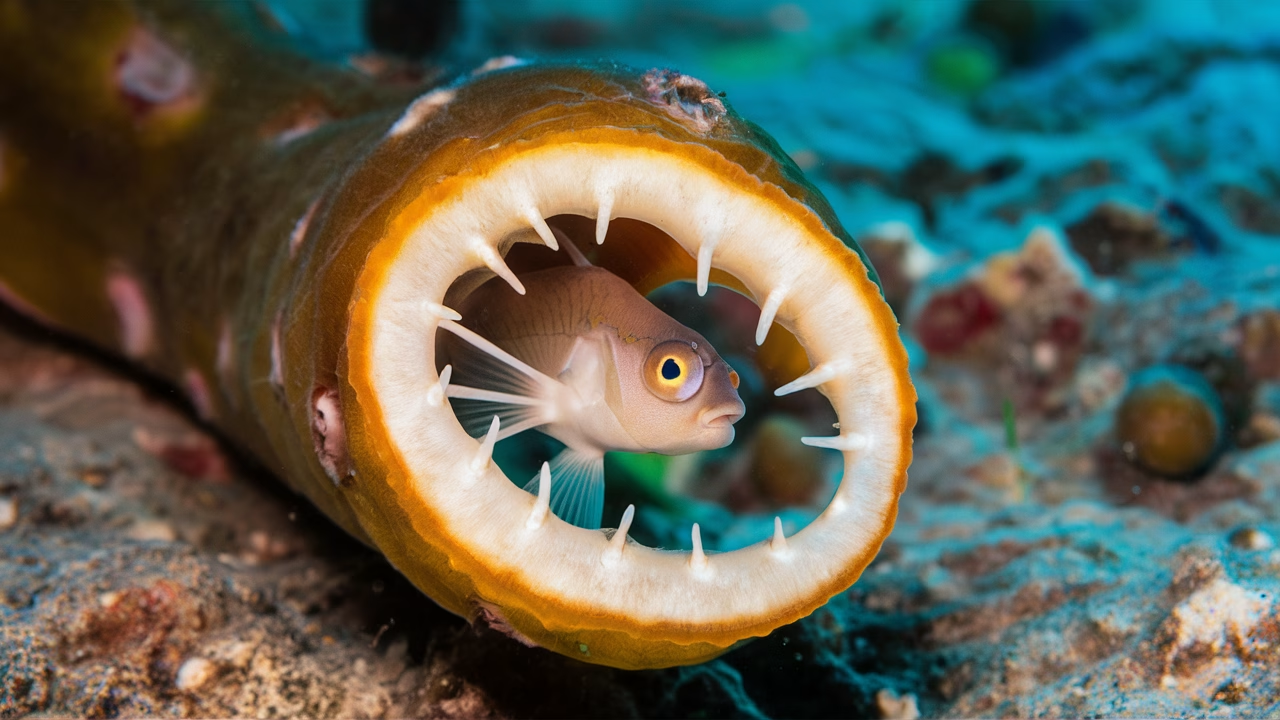
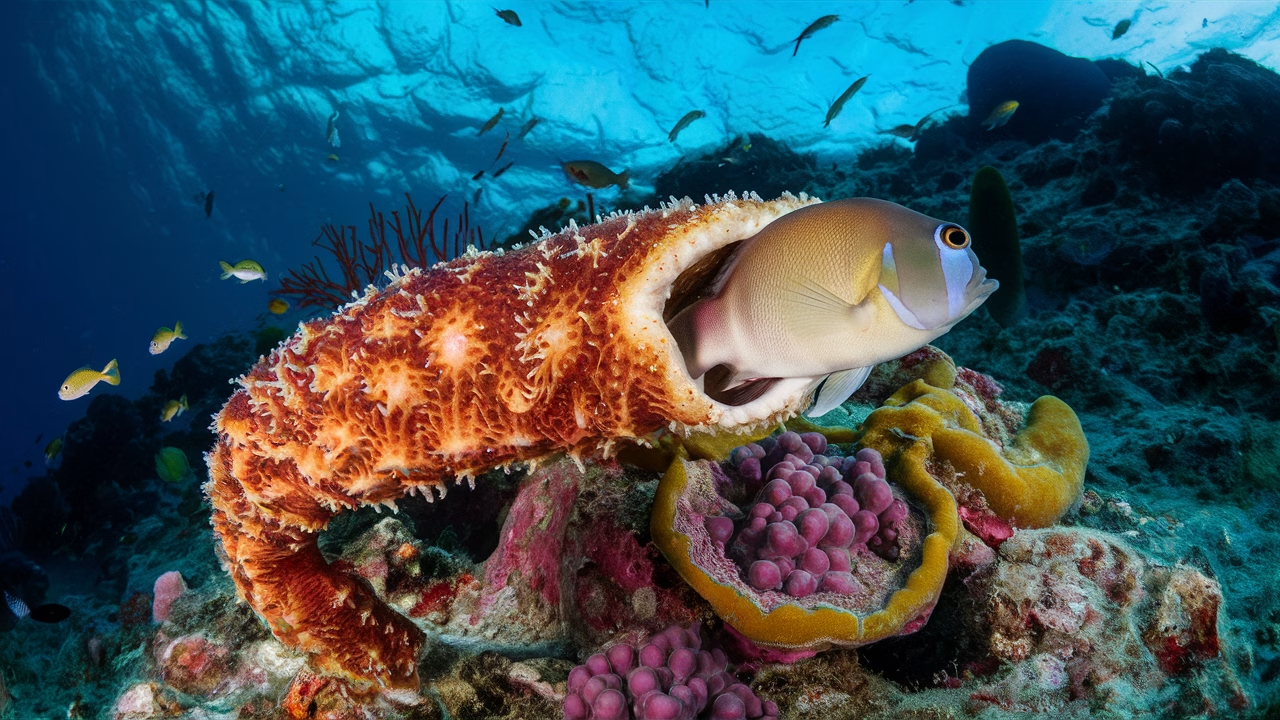
At the heart of this relationship is the protection and access to resources that sea cucumbers provide pearlfish. These eel-shaped fish are nocturnal and hide during daylight hours. Their refuge? The respiratory tree — accessed through the sea cucumber’s anal cavity. For the sea cucumber, this is typically a passive arrangement when no harm is done, and for the pearlfish, it’s not just home — it’s also a potential hunting ground, depending on the species.
When we study pearlfish and sea cucumbers, we discover three distinct types of symbiosis:
- Commensalism: The pearlfish benefits without harming the sea cucumber. Most species fall into this category of marine symbiosis.
- Parasitism: Some pearlfish (Encheliophis spp.) may nibble on gonads or internal tissues, causing damage to their host.
- Mutualism: While rare in this relationship, some researchers speculate that pearlfish may aid in cleaning internal tissues, though this aspect of their symbiotic relationship is not widely documented.
Much of the confusion around this interaction stems from the fact that different pearlfish species exhibit different behaviors. Ongoing research into individual species continues to refine our understanding of this evolutionary partnership between pearlfish and sea cucumbers.
Pearlfish and Sea Cucumbers: The Ultimate Guide to Their Fascinating Symbiotic Relationship
Ecological Significance in the Marine Ecosystem
Now that we’ve explored how pearlfish and sea cucumbers interact, let’s examine why this bizarre partnership matters to ocean health and marine ecosystem balance.
The presence of pearlfish in sea cucumbers contributes to a surprisingly delicate balance in ocean ecology. Because pearlfish are predators of small invertebrates, they influence prey populations on reefs, seagrass beds, and benthic ecosystems. Their populations, in turn, are regulated by their unique dependency on host sea creatures — mostly sea cucumbers, but sometimes clams and starfish too.
Meanwhile, sea cucumbers play a critical role as the ocean’s cleanup crew in marine ecosystems. They consume organic matter in the sediment and excrete cleaner substrate. They’re often essential to coral reef and sandy bottom health — positions that now may benefit (or suffer) from their unusual roommates in this symbiotic relationship.
| Species | Relationship Type | Host Impact |
|---|---|---|
| Carapus boraborensis | Commensal | Minimal/no harm |
| Encheliophis homei | Parasitic | Can damage reproductive organs |
| Carapus mourlani | Commensal | Non-invasive behavior |
Understanding the dynamic between pearlfish and sea cucumbers helps marine researchers track biodiversity shifts, adaptation patterns, and the subtle gears that keep seafloor ecosystems thriving. When sea cucumbers are overfished — often to sell in international markets — entire micro-ecosystems can lose their balance. If that happens, pearlfish populations may drop rapidly, causing unpredictable ripples throughout the marine ecosystem.
Behavioral Insights of Pearlfish Inside Sea Cucumbers
So what does life look like for pearlfish living in this unique symbiotic relationship? Interestingly enough, pearlfish exhibit very scheduled behavior patterns. By day, most species stay nestled inside the sea cucumber’s cloaca. At night, they slither out to hunt, socialize, and roam the reef floor. It’s like renting a cozy studio apartment with pro-level home security — and only paying in fish etiquette.
Studies published in journals like Marine Biology and Environmental Biology of Fishes reveal that pearlfish can detect chemical and motion cues to locate their way back to their host sea cucumbers. Some appear to return to the same host repeatedly, demonstrating site fidelity in their symbiotic relationship. Others are more nomadic, switching sea cucumbers based on availability and predation pressures.
In rare cases, more than one pearlfish will co-inhabit a single sea cucumber host. This arrangement can lead to competition, sometimes recorded in the form of tail-nipping or exit blocking behaviors within their marine symbiosis. It’s not as harmonious as it sounds, but it’s functional for survival.
Adaptations for Survival: Pearlfish and Sea Cucumbers
Now let’s dive into the evolutionary magic behind this symbiotic relationship. How do these two wildly different marine species make this oddball arrangement work in their ecosystem?
- Pearlfish Adaptations: Streamlined, slender bodies that flex easily to pass through tight cavities in sea cucumbers. Reduced or absent swim bladders keep them silent and stealthy. Their gill structures also allow them to tolerate low-oxygen environments — perfect for life inside another animal in this marine symbiosis.
- Sea Cucumber Adaptations: Surprisingly accommodating hosts in this symbiotic relationship. Their respiratory tree (used for gas exchange) opens directly into their cloaca, the very cavity exploited by the pearlfish. It’s not a defensive organ — and as such, has no evolved resistance to pearlfish invaders.
It’s a match made not in heaven, but in millions of years of marine evolution. And it underscores one vital point: nature often favors the weird if it means survival in complex marine ecosystems.
Conservation Efforts and Future Research
Much still remains unknown about the relationship between pearlfish and sea cucumbers. For starters, it’s unclear how abundant these symbiotic relationships truly are in marine ecosystems, since they’re difficult to observe without disturbing the host animals. Deep-sea submersibles and robotic tools may help illuminate more examples of marine symbiosis across other regions of the ocean.
But here’s what we do know: sea cucumbers are being overharvested at alarming rates for culinary and medicinal markets. Without adequate regulation and monitoring, populations are decreasing in places like Southeast Asia, threatening not only their ecological roles but the pearlfish that depend on them in this delicate marine ecosystem balance.
Researchers are calling for more marine protected areas (MPAs), stricter export controls, and public education campaigns to reduce demand for sea cucumber products. With every new dive, scientists hope to document more about the full impact of pearlfish and sea cucumbers on the underwater community and their role in marine symbiosis.
Frequently Asked Questions
- Do all pearlfish live in sea cucumbers?
No. Some pearlfish inhabit clams, starfishes, or hide in rock crevices, depending on species and habitat. - Is the sea cucumber harmed by pearlfish?
Often no — but in parasitic species, the pearlfish may consume internal organs like gonads or respiratory tissues. - Can sea cucumbers eject pearlfish?
Not actively. Sea cucumbers have limited defenses once the pearlfish is inside. Some can expel their internal organs as a last-ditch defense — but this is a costly move. - How do pearlfish find sea cucumbers?
Likely through chemical signaling and environmental cues — though exact mechanisms remain under study. - Are pearlfish endangered?
Not currently classified as endangered, but their well-being is closely tied to the health of host populations. - Can sea cucumbers survive without their internal organs?
Some can regenerate organs like the respiratory tree — a rare resilience in the animal kingdom. - Why is this symbiosis important to understand?
Because it reveals strategies of survival, ecological balance, and biodiversity that are critical to sustaining ocean life.