Can sailfin lizards really run on water?
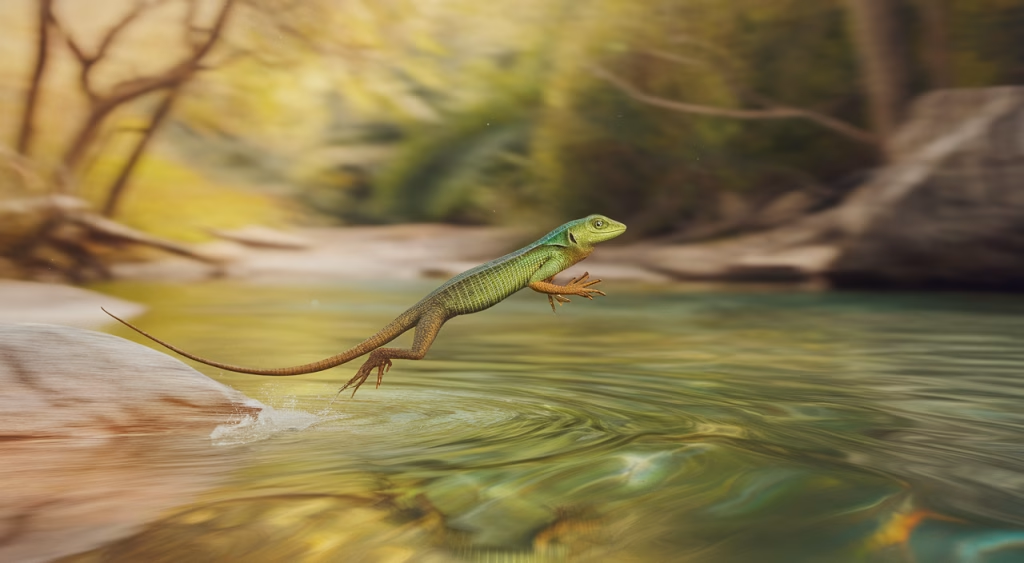
Yes, the Philippine sailfin lizard runs on water with remarkable grace and speed! Unlike most lizards, this fascinating species uses its uniquely adapted body and powerful hind limbs to skim across the water’s surface for short distances. This rare feat of animal locomotion is not magic—it’s biomechanics at its finest, showcasing the sailfin lizard’s incredible ability to defy gravity.
TL;DR: How the Sailfin Lizard Pulls Off Its Water-Running Stunt
- Species Spotlight: The Philippine sailfin lizard (Hydrosaurus pustulatus) is native to the rivers, lakes, and mangroves of the Philippines.
- Unique Mobility: These lizards can sprint over water using a bipedal gait, relying on strong hind legs and fringed toes.
- Science Behind It: Their ability mimics the mechanics of the basilisk lizard but with subtle differences in body structure and stride.
- Conservation Needed: Habitat loss and illegal pet trade threaten these aquatic influencers. Local programs aim to reverse the trend.
The Marvel of Philippine Sailfin Lizards
1.1 Sailfin Lizard Species Overview
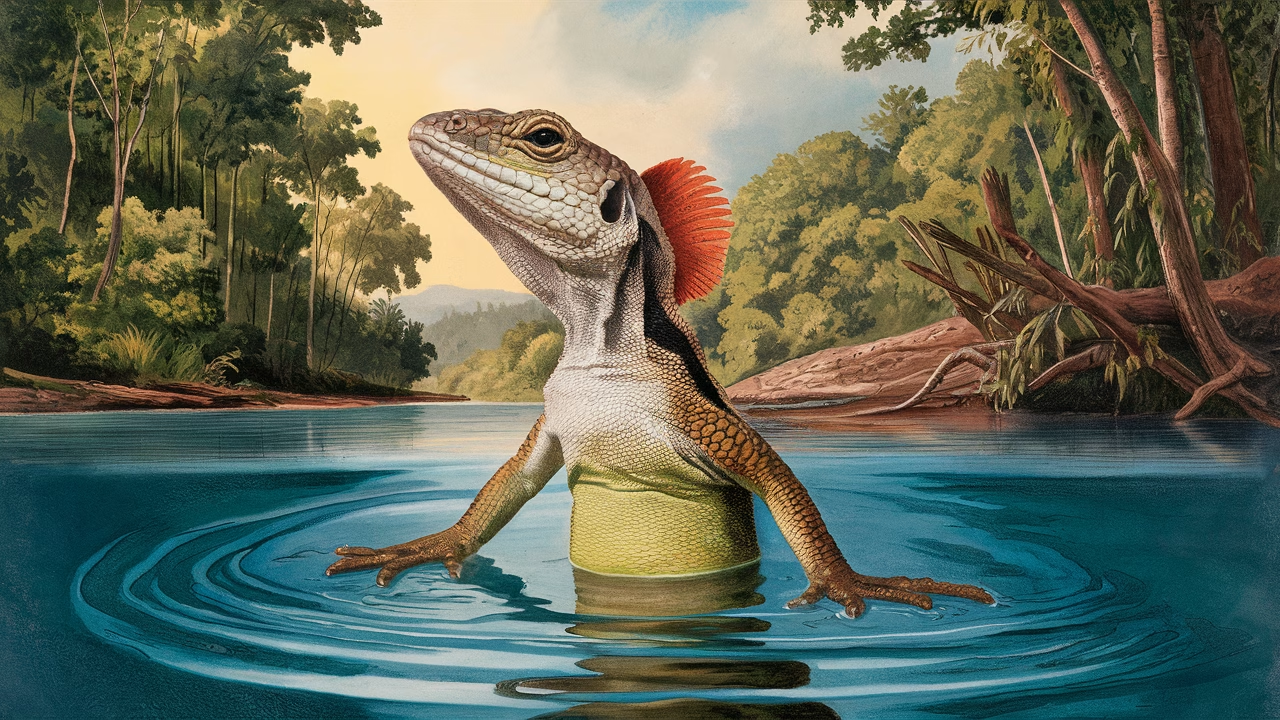
If there’s one reptile that seems part dragon, part acrobat, it’s the Philippine sailfin lizard. Characterized by its ornate dorsal crest, muscular tail, and striking facial features, this semi-aquatic reptile has long fascinated scientists and wildlife enthusiasts alike. Hydrosaurus pustulatus, a species endemic to the Philippines, averages about 1 meter in length and lives along the densely vegetated riverbanks of Luzon, Mindanao, and neighboring islands. Understanding lizard adaptability to water running becomes clear when you observe these magnificent creatures in their natural habitat.
1.2 Unique Locomotion Behavior
What sets this reptile apart isn’t just its flamboyant sail or vibrant coloration—it’s the sailfin lizard’s ability to run on water using extraordinary bipedal locomotion. While other lizards rely heavily on quadrupedal movement, the sailfin uses a bipedal gait when fleeing predators. What’s truly astonishing is its ability to extend that bipedal run across the water’s surface, a behavior once believed to be exclusive to the more-famous basilisk lizard. This Philippine sailfin lizard unique locomotion behavior makes it one of nature’s most remarkable aquatic influencers.
1.3 Scientific Studies and Observations
While formal studies on Hydrosaurus are limited compared to Central American basilisks, recent fieldwork and biomechanical analysis reveal fascinating insights into how sailfin lizards run on water. The sailfin’s tail and fin-like crests act as stabilizers, while the hind limbs, designed for burst locomotion, slap the water with just enough force and frequency to temporarily lift the animal across the surface tension. One fascinating study from a Philippine university even used high-speed videography to capture and quantify the splash mechanics during surface running—a crucial step in understanding this remarkable animal locomotion.
The Art of Running on Water
2.1 How Sailfin Lizards Run on Water
The term “water running lizard” might sound mythical, but the fascinating running ability of sailfin lizards is pure science. When startled or threatened, the Philippine sailfin lizard rears up on its hind legs and launches into a sprint. If it encounters a body of water during its escape, it doesn’t stop—instead, it keeps running on the surface. As each hind foot slaps the water, it creates a small pocket of air beneath, adding temporary lift. Its long toes, fringed for added surface area, help in pushing against the water’s resistance with remarkable efficiency.
This movement—a rhythmic, piston-like cycle of foot slap, drag, and lift—exemplifies advanced animal locomotion. It’s a feat that can only be performed by species with very specific morphological traits and quick reflexes, making the sailfin lizard a true aquatic influencer in the reptile world.
2.2 Locomotion Mechanisms Explained
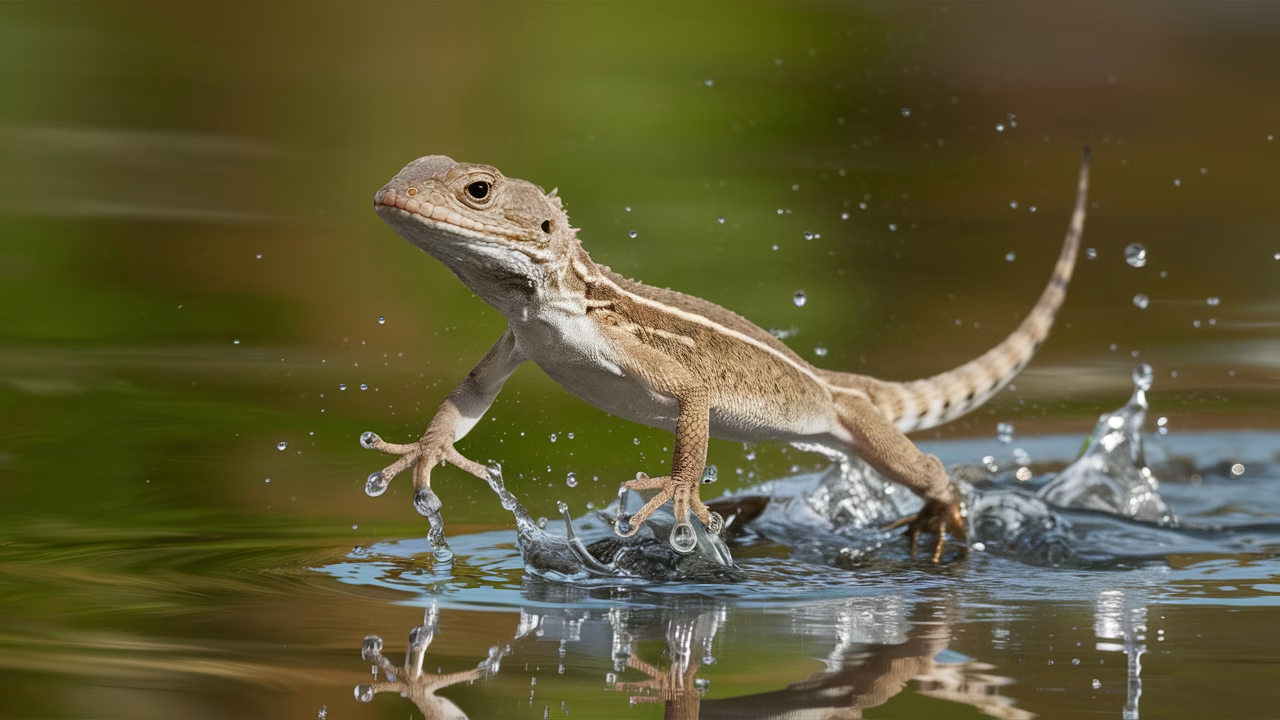
Let’s break down the mechanics behind how the sailfin lizard runs on water. Water-running lizards like the sailfin inhabit a unique niche in animal locomotion. Here are the key anatomical and mechanical components that enable this extraordinary behavior:
| Feature | Function |
|---|---|
| Powerful hind limbs | Generates sufficient vertical impulse to stay semi-suspended |
| Fringed toes | Increases surface area and distributes force |
| Tail as counterbalance | Helps maintain upright posture during bipedal run |
| Steamline body | Minimizes drag and maximizes forward propulsion |
In essence, sailfin lizards are biological marvels—evolution’s answer to nature’s call for quick aquatic escape. While they can only sustain this run for a few strides—typically 1 to 1.5 meters across shallow water—it’s often enough to escape predators or reach refuge. This remarkable adaptation showcases understanding lizard adaptability to water running at its finest.
Conservation Efforts and Future Prospects
3.1 Challenges Faced by Sailfin Lizards
While these reptiles bask in the evolutionary spotlight, they are far from secure in the wild. Rapid deforestation, mining operations, and river pollution have radically altered their native habitat. Worse still, the Philippine sailfin lizard has gained popularity in the exotic pet trade—despite legislation aimed at protecting native wildlife. The result? Declining wild populations and increased fragmentation of their forested habitats. These threats underscore why conservation efforts for aquatic influencers like the sailfin lizard are more critical than ever.
3.2 Conservation Programs and Initiatives
Fortunately, national parks and local conservation partnerships are taking charge to protect these remarkable creatures. Some Philippine institutions have initiated breeding programs, educated indigenous communities, and implemented eco-tourism alternatives that allow locals to benefit from protecting rather than exploiting wildlife. Citizen science programs—where schoolchildren help report sightings—are also growing in popularity, fostering early interest in wildlife biology and the fascinating running ability of sailfin lizards.
Here’s what often happens with lesser-known species: they’re ignored until they’re gone. But with increased awareness and community involvement, the amazing ability of sailfin lizards to run on water just might be their sanctuary, not their swan song. Conservation efforts for aquatic influencers like these require our immediate attention and action.
Final Thoughts
Ever find yourself hypnotized by a nature documentary, jaw agape as some critter performs the impossible? That’s the sailfin lizard moment. But this isn’t just good television—it’s a wake-up call for conservation. By understanding the biology, appreciating the wonder, and recognizing the threats, we become better stewards for the planet’s most eccentric beings. The next time you witness how a sailfin lizard runs on water, remember you’re seeing millions of years of evolution perfected in a single, breathtaking stride.
Frequently Asked Questions
Can sailfin lizards run on water?
Yes, the Philippine sailfin lizard can run short distances across water using a unique bipedal gait and specially adapted limbs.
Where are Philippine sailfin lizards found?
They are endemic to the Philippines, typically inhabiting forested riversides, mangroves, and freshwater wetlands across several islands.
How does their body help them run on water?
Their strong hind legs, long toes with fringed edges, and balancing tail all aid in creating lift and reducing drag during water runs.
They’re distantly related and share surface-running behavior, but sailfins are in a different genus (Hydrosaurus) and have their own unique adaptations.
Are they endangered?
Not officially classified as endangered yet, but the species is under increasing threat due to habitat loss and illegal pet trade.
Can they swim as well as run on water?
Absolutely. Sailfin lizards are excellent swimmers, often diving into water to escape danger, and using powerful tail strokes to navigate currents.
How can I help protect sailfin lizards?
Support conservation groups, educate others, and avoid purchasing exotic pets derived from vulnerable wildlife populations.