What Do Cat Sleeping Positions Reveal About Their Personality?
If you’ve ever found your cat curled into a ball one moment and stretched like a starfish the next, you’ve probably wondered: What do these cat sleeping positions really mean? These seemingly random postures are actually rich with meaning—not just in terms of comfort, but also in mood, trust, and your feline friend’s unique personality.
TL;DR:
- Loaf Position: Indicates alertness and partial trust.
- Side Sleeper: Suggests relaxed trust and emotional bonding.
- Belly Up: Reflects total trust and temperature regulation.
- Curled Up Ball: Shows self-protection and warmth conservation.
- Starfish: Symbolizes peak confidence and thermoregulation.
- High Perch: Taps into your cat’s ancient instincts for safety and perspective.
- Sleep Near You: Indicates ‘social thermostat’ behavior—wants company without contact.
- Full Contact Sleeping: Suggests strong emotional bond and familial trust.
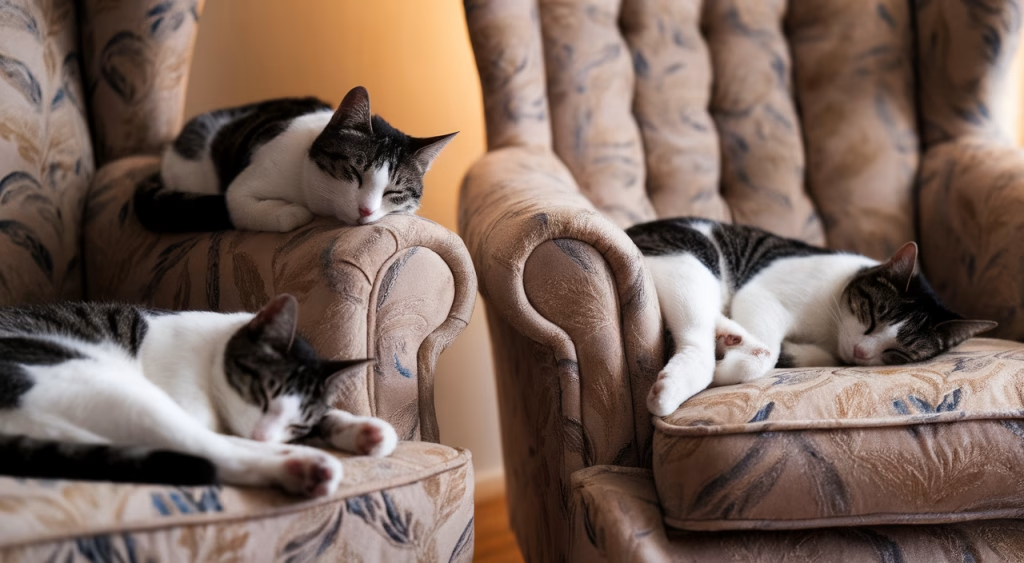
- Group Sleeping: Illustrates social hierarchy and feline relationships.
- Hidden Sleepers: Sign of stress, denning instinct, or need for solitude.
The Classic Loaf Position: Decode Your Cat’s Light Sleep Surveillance
What Is the Cat Loaf Position?
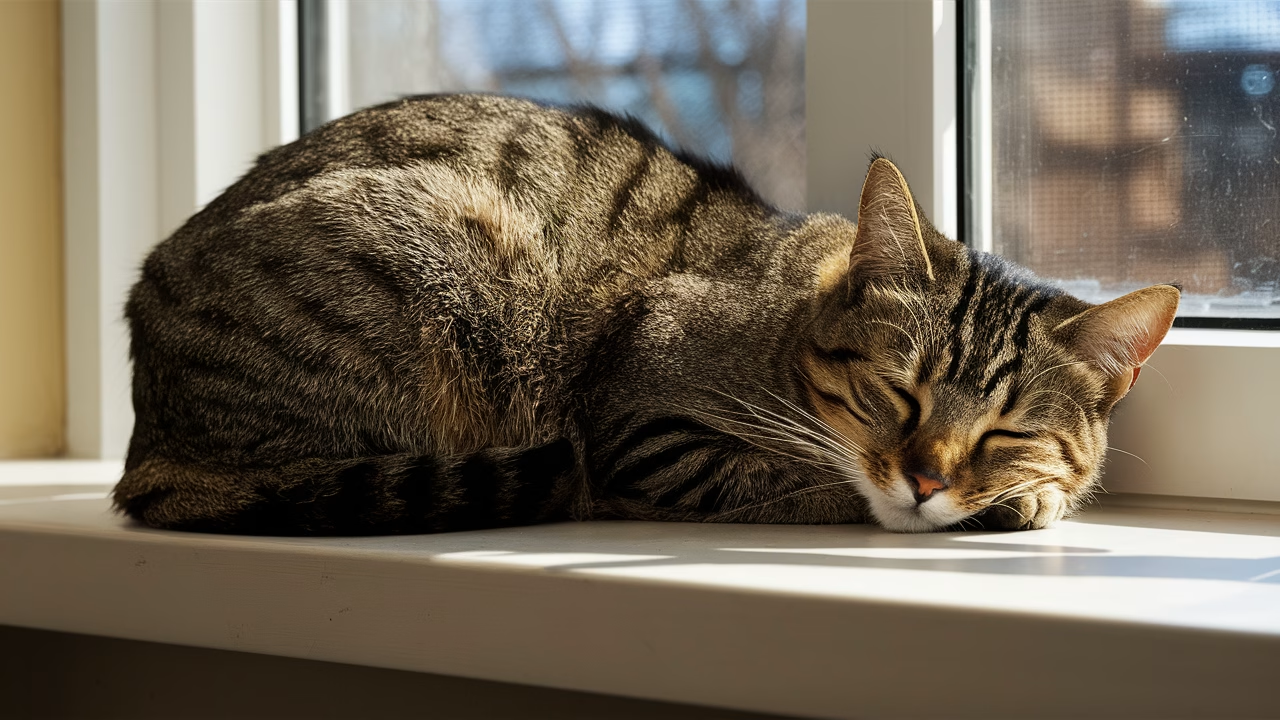
Imagine a furry dinner roll with ears. In the cat loaf position, your feline friend tucks all four paws neatly under their body and often hunches into a slightly domed shape. They usually keep their eyes partly open, ready to spring into action if needed.
Why Cats Choose This Pose
This isn’t just about comfort—this cat sleeping position is a built-in early warning alert system. Known as “light sleep surveillance,” cats in loaf mode are napping, not sleeping deeply. They’re conserving energy while staying alert to environmental stimuli, making this one of the most common feline behaviors you’ll observe.
What It Says About Personality and Mood
Seeing your cat in this position means they feel relatively safe but not completely secure. If your cat often loafs near you, they trust you—but with conditions. Think of this as their equivalent of keeping one eye open during sleepovers at a new friend’s house.
The Side Sleeper Position: Understanding Your Cat’s Vulnerability
Side Sleeping Explained
When your cat flops dramatically onto their side with legs outstretched like a centerfold, they’re revealing more than just good vibes. This open posture is rare in wild cats because it puts vital organs on display—making it one of the most meaningful cat sleeping positions.
Trust, Safety, and Emotional Comfort
This is where cat sleep psychology intersects with social bonding. A feline friend who sleeps on their side near you is broadcasting, “I trust you not to eat me in my sleep.” It’s one of the ultimate compliments a cat can give and represents deep emotional connection.
Bonus Insight
Cats mimicking human-style postures demonstrate a high level of social attunement—something we see often in well-bonded pet-human pairs.
The Belly Up Sleeping Position: Unveiling Your Cat’s Ultimate Trust Exercise
Exposed Belly = Peak Trust
Few things scream “I love you” louder than a cat flopping on its back, belly exposed, paws in various hilarious directions. Beneath the cuteness lies an evolutionary contradiction: the belly is the most vulnerable spot on a cat’s body, making this one of the most significant cat sleeping positions you can witness.
Why This Position Is So Rare (and Valuable)
Your feline friend only sleeps like this when they feel deeply secure. It also helps regulate body temperature during hot weather, as the less-furred belly dissipates heat more easily—showing how cat sleep psychology balances comfort with survival instincts.
The Curled Up Ball Position: Discovering Your Cat’s Natural Heating System
Old Survival Habits Die Hard
Often called the “donut,” this position—where your feline friend’s nose tucks under its tail, creating a nearly perfect circle—maximizes warmth and minimizes vulnerability. This classic among cat sleeping positions dates back thousands of years.
Protective and Self-Soothing
This is a protective mode that dates back to wild cats sleeping through cold nights while preserving body heat and hiding vital body parts. Understanding this aspect of cat sleep psychology helps you recognize when your cat needs extra comfort.
What It Says
Your cat may feel safe but is also engaging survival mechanisms—perhaps due to cold drafts, mild stress, or simply following their instincts.
The Starfish Position: Decoding Your Cat’s Temperature Regulation Strategy
Total Relinquishing of Control
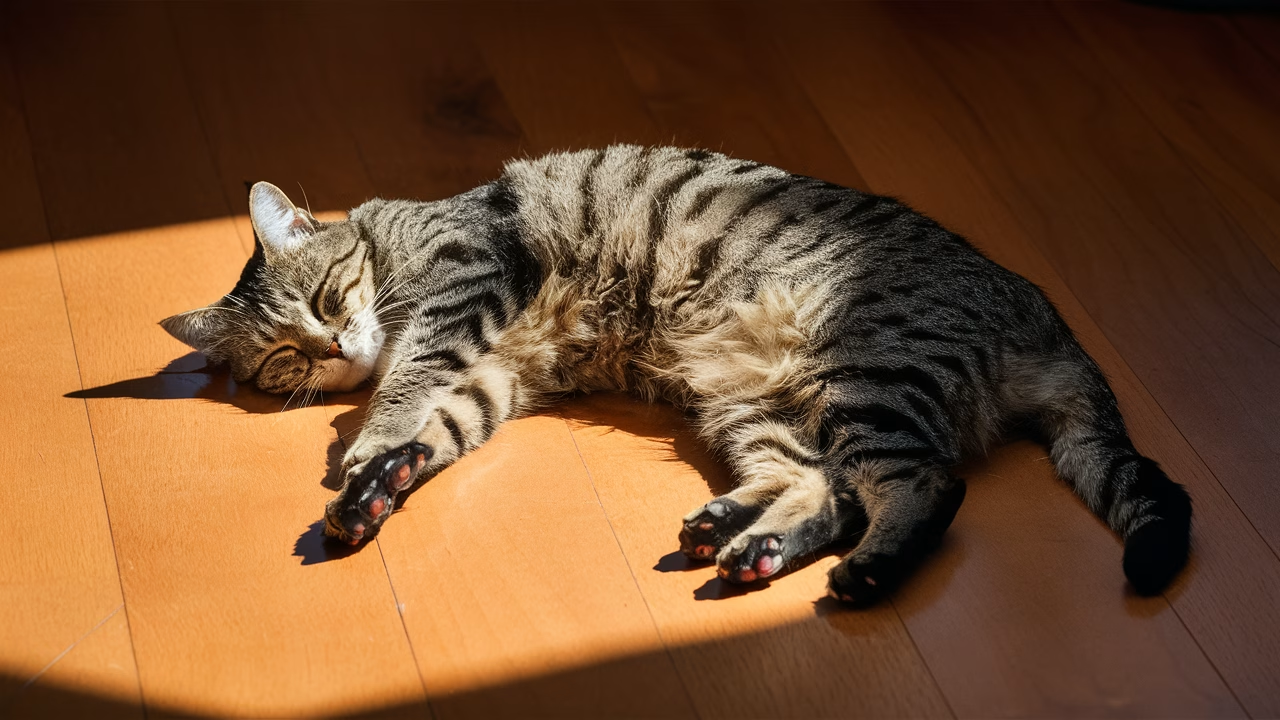
When your feline friend lies with limbs stretched in every direction, resembling a plush starfish, they’re experiencing peak comfort—likely during warmer months. This pose allows maximum exposure for heat dissipation and represents one of the most relaxed cat sleeping positions.
Confident, Relaxed, and Comfortable
This position tells a story of a trusting, confident cat that feels perfectly balanced—physically and emotionally—in your home. Cat sleep psychology reveals this as a sign of complete environmental satisfaction.
Comparison Chart: Cat Sleeping Positions and Their Meanings
| Sleeping Position | Meaning | Trust Level |
|---|---|---|
| Loaf Position | Alert, semi-relaxed | Moderate |
| Side Sleeper | Comfort, safety | High |
| Belly Up | Total trust, temperature regulation | Very High |
| Ball Shape | Warmth, protection | Moderate |
| Starfish | Confidence, cooling | Very High |
| High Perch | Territory monitoring | Situational |
High Perch Sleeping: Exploring Your Cat’s Ancestral Survival Instincts
Why It’s Not Just About “Being Weird”
If your feline friend insists on napping on top of bookshelves, fridges, or curtain rods, you’re seeing ancient biology in action. From trees in the jungle to mountain cliffs, feline ancestors used height for safety and observation—making elevated cat sleeping positions completely natural.
Still Wired for Survival
Even indoors, cats instinctively seek vantage points. It’s not aloofness—it’s their way of surveying their territory and feeling in control. Understanding this aspect of cat sleep psychology helps you appreciate their need for vertical space.
Owner Adjacent Sleeping: Unveiling Your Cat’s Social Thermostat Behavior
Close, But Not Too Close
Your feline friend chooses to sleep near you—maybe within arm’s reach—but avoids direct contact? That’s “social thermostat” behavior in action. It’s their version of saying, “I like you. Let’s not cuddle,” and represents sophisticated cat sleep psychology.
Smart Boundary Setting
This reflects a remarkable level of intelligence. Cats evaluate your sleep movement patterns and pick a strategic spot that balances warmth, safety, and personal space—showing how cat sleeping positions involve complex decision-making.
Full Contact Sleeper Position: Understanding Your Cat’s Trust and Affection
Closeness = Bond Strength
If your feline friend chooses to sleep on top of you or pressed firmly against your side, they’re saying “You’re family.” They trust you enough to know you won’t mind if they drool a little on your laptop bag—making this one of the most endearing cat sleeping positions.
Emotional Attachment in Action
This behavior is linked to social grooming and scent marking rituals—your cat is mingling their scent with yours, solidifying your mutual bond. Cat sleep psychology shows this as the highest form of feline affection.
Group Sleeping Behaviors: Insights into Cat Social Dynamics
Feline Group Politics
Multi-cat households often form social structures visible in their cat sleeping positions. Alphas often get the “best” or highest spots, while subordinates keep respectful distances, revealing fascinating insights into feline social hierarchies.
Mutual Groomers → Mutual Sleepers
Cats who sleep touching are showing mutual trust. Cats nearby with a tail’s width between them? That’s courteous friendship in feline terms, demonstrating how cat sleep psychology extends to social relationships.
The Hide-and-Seek Sleeper: Exploring Your Cat’s Denning Behavior
Boxes, Closets, and Under Beds
This sleeping style taps into denning instincts. Your feline friend chooses hidden spaces to decompress, regulate temperature, and avoid perceived stressors—making concealed locations among the most important cat sleeping positions for stressed cats.
Stress Clues
An increase in this behavior could signal environmental stress—new guests, loud noises—or simply the need for downtime in a safe ‘cave.’ Understanding this aspect of cat sleep psychology helps you identify when your cat needs extra support.
Frequently Asked Questions
- Q: Why does my cat move between sleeping positions frequently?
A: Cats adjust positions to manage temperature, comfort, and changes in mood or noise levels. - Q: Is belly-up sleeping always a sign of trust?
A: Usually yes, but context matters. Sudden changes could warrant observation for stress or illness. - Q: Should I be concerned if my cat hides to sleep often?
A: Not necessarily. It often reflects denning instinct. However, an increase may signal stress or change in environment. - Q: What does it mean when my two cats sleep back-to-back?
A: Back-to-back sleeping signals trust and social closeness without full-on cuddling. - Q: Why does my cat sleep mostly in high places?
A: It provides safety, control, and thermoregulation—especially appealing to naturally dominant or shy cats. - Q: Can I train my cat to sleep with me?
A: Not exactly, but you can encourage proximity with consistent routines, soft beds, and positive associations. - Q: Do kittens have different sleep positions than adult cats?
A: Kittens often sleep in clusters or in warmer, more sensitive positions as they are still developing trust and social cues.