Why Can’t My Dog Recognize Itself in the Mirror?
Most pets like dogs and cats fail the mirror test—not because they’re not smart, but because they experience the world in a radically different way than we do. Only a handful of animal species demonstrate true self-recognition using mirrors, and those that do give us an incredible glimpse into animal cognitive abilities and consciousness.
- TL;DR Summary:
- Most animals don’t recognize themselves in mirrors due to different sensory priorities—like scent over sight in dogs.
- The mirror test reveals cognitive abilities and possible self-awareness in some species like dolphins, elephants, and great apes.
- Surprisingly, birds like magpies and mammals like pigs show unique mirror-use behaviors—even if they fail formal recognition tests.
- Self-recognition in animals shows there is no one-size-fits-all model for consciousness.
- Future research into animal behavior is shifting to include non-visual sensory experiences, marking a major evolution in cognitive studies.
The Mirror Test and What It Reveals About Animal Minds
Imagine walking past a mirror and not recognizing your own face. For most animals, this is simply reality. The mirror self-recognition test—developed in the 1970s—is a method scientists use to determine if animals possess a sense of self.
Here’s how it works: scientists place a visible mark on an animal’s face or body in a spot they can only see via a mirror. If the animal uses the mirror to investigate or touch the mark, it demonstrates self-recognition—that “that’s me” moment of awareness.
But the implications go far deeper than a fun science trick. Passing the mirror test hints at underlying cognitive traits: introspection, awareness of one’s own body, and even a sense of identity. In essence, it’s a gateway into understanding which creatures may possess what we consider conscious thought.
Cracking the Case: Which Animals Pass the Mirror Test?
Out of the thousands of species on Earth, just a few have truly passed the mirror test—each with its own unique flair. Let’s dive into the most fascinating animals that demonstrate self-recognition and explore how their behaviors reveal untapped pools of intelligence.
Dolphins: Underwater Geniuses with Mirror Recognition
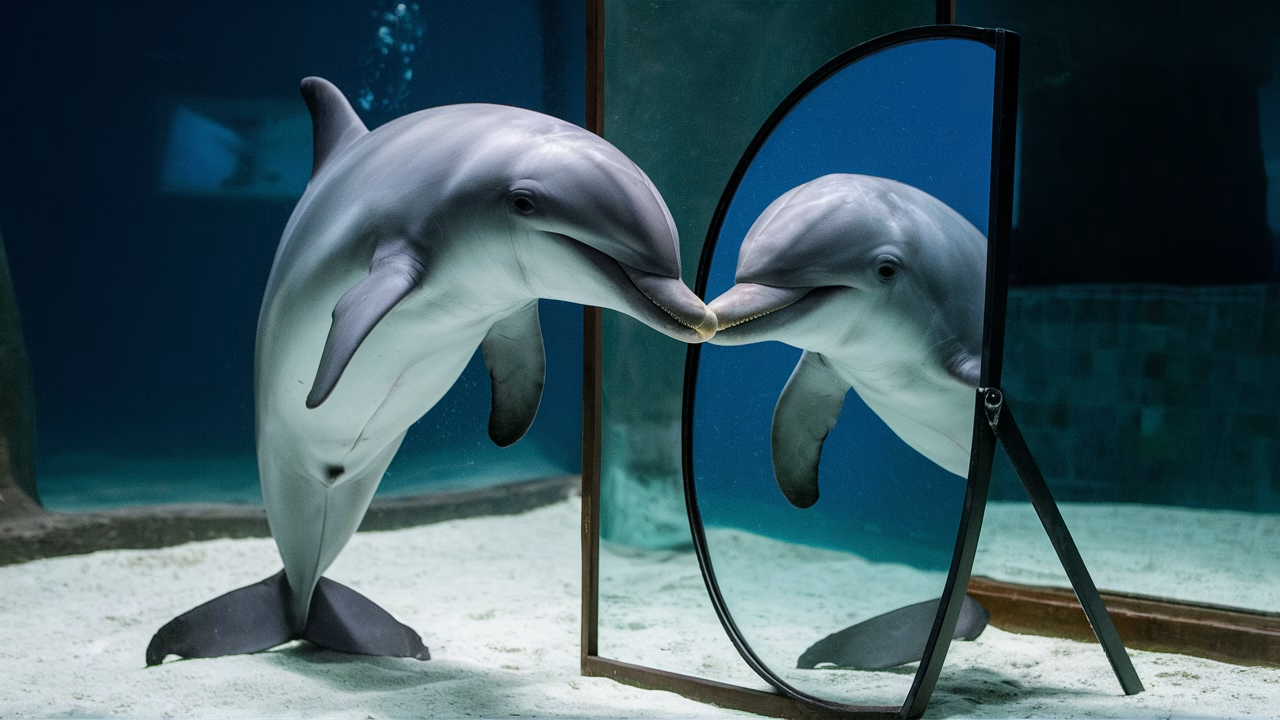
You might know dolphins are smart, but did you know they’re underwater mirror pros? Researchers have documented dolphins approaching mirrors, twisting their bodies, inspecting hard-to-see places like their bellies and backs, and even opening their jaws to examine their teeth.
It’s not just random play—these actions are goal-directed and show they understand the reflection is themselves. Some scholars even suggest dolphins’ mirror behaviors rival that of young children. They engage in self-exploration like, “Oh hey, is that a spot on my fin?” It’s advanced, intentional, and showcases remarkable animal cognitive abilities.
Elephants: Gentle Giants with Self-Awareness
When a five-ton giant stops to check itself out in a mirror, you pay attention. Elephants are among the rare animals to pass the mirror test—and in memorable fashion. One famous case featured an elephant named Happy, who repeatedly touched a white X painted on her forehead while standing before a mirror.
Other elephants have been observed making trunk gestures, examining their tusks, or even using the mirror to remove food from their teeth. Considering their complex social emotions—grief, empathy, and cooperation—elephants’ self-recognition makes evolutionary sense. Their brains are wired for social bonding, and self-awareness may play a crucial part in maintaining those bonds.
Great Apes: Masters of Mirror Behavior
Chimpanzees, bonobos, orangutans, and even gorillas have consistently passed the mirror test. But what’s fascinating is how each species interacts with the mirror.
Chimpanzees groom themselves. Orangutans pull faces. Bonobos gaze, seemingly pondering their reflection much like humans. Gorillas, however, initially respond with aggression—suggesting they first perceive the reflection as a rival. Once that tension fades, they too begin to explore themselves with curiosity.
These animal behavior patterns aren’t just cute—they’re cognitive goldmines. They showcase memory, introspection, and body-awareness, suggesting high-level executive functioning in these remarkable creatures.
Magpies: Surprising Feathered Philosophers
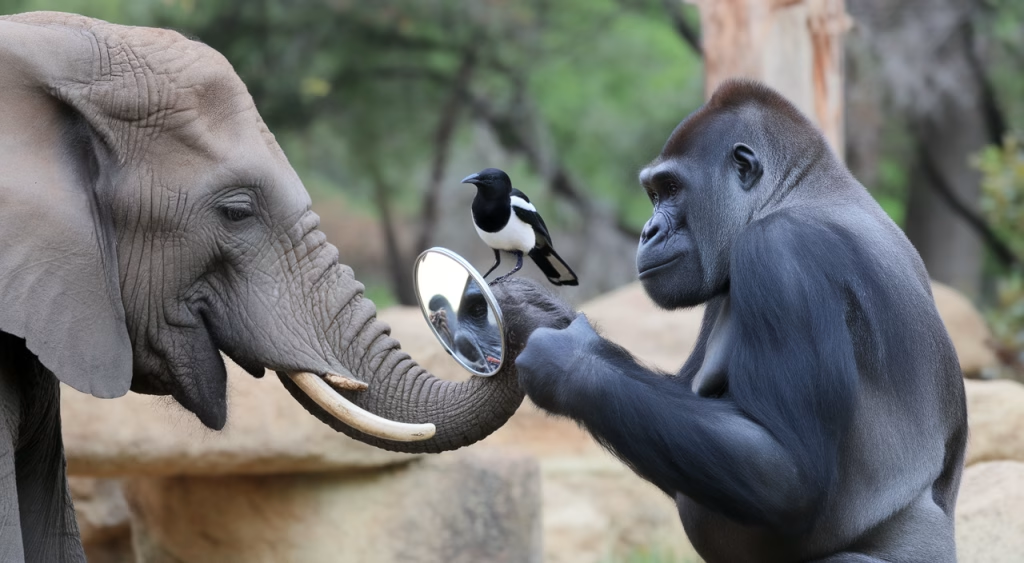
Here’s a twist—among the most intelligent animals to pass the mirror test is the magpie, a bird sometimes dismissed as a noisy nuisance. It turns out, magpies are feathered Einsteins. In one experiment, researchers placed a colored dot on the featherless part of a magpie’s neck. When presented with a mirror, the bird scratched at the spot—clearly recognizing the reflection as itself.
It marks the first time a non-mammal passed the test, and it forces us to rethink what brain structures are necessary for self-awareness. Magpies may lack a neocortex, but they still exhibit high-level cognition, suggesting that animal cognitive abilities have evolved in multiple forms across species.
Pigs, Dogs, and Cats: Unique Views on Reflection
Why Your Pet Might Be Smarter Than You Think
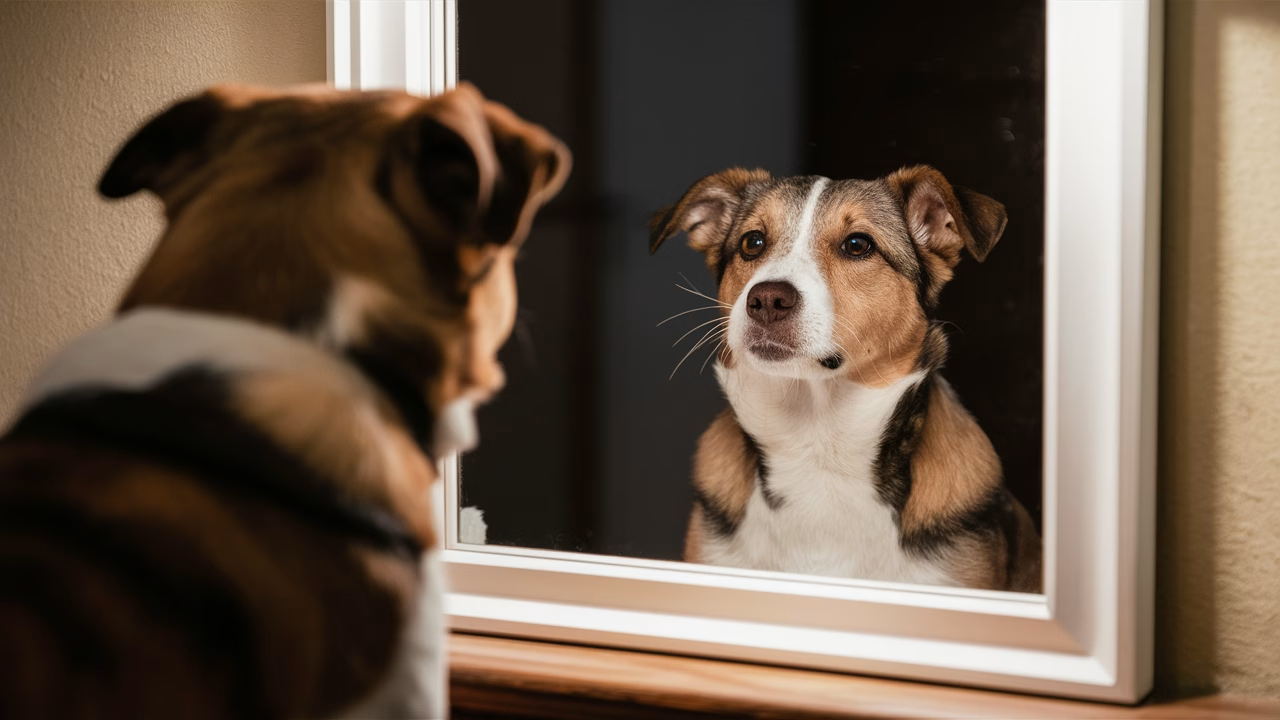
So, where does this leave your furry companions? As delightful as they are, most evidence shows dogs and cats do not pass the classic mirror test. But that doesn’t mean they lack intelligence or even self-awareness. In fact, new research into animal behavior paints a much more nuanced picture.
Dogs explore the world mainly through smell, not sight. So using a visual test to examine their sense of identity is like using a silent movie to test someone’s musical ability. Some researchers developed “olfactory mirrors”—using chemical cues like dog urine and scent markers—to study if dogs recognize their own scent. Results? Many dogs sniff their own scent longer than a stranger’s—suggesting they recognize themselves, just through their nose.
Pigs may not recognize their reflection, but they learn to use mirrors as tools. In some studies, pigs have found hidden food after watching its location in a mirror. That kind of deductive reasoning indicates a solid understanding that mirrors represent reality—even if the pig doesn’t see “himself” in the glass.
Cats, those aloof rulers of our homes, generally ignore mirrors. Occasionally, they’ll try to sneak behind it, puzzled at the ghost-cat that disappears. So while cats don’t pass the mirror test, they may still engage with the concept of reflection in their own mysterious way. As always, they make sure to keep us guessing about their true animal cognitive abilities.
Why Human Babies Struggle With Mirrors—At First
We humans pride ourselves on self-awareness. But here’s a humbling fact: babies don’t typically pass the mirror test until they’re 18 to 24 months old. During this window, toddlers go from playfully poking the “baby in the mirror” to using it to examine themselves. This mirrors the steps animals take during testing—curiosity, confusion, and ultimately, self-recognition.
This important milestone tells us that self-awareness isn’t just a switch that flips on—it develops alongside brain growth and sensory integration. It’s a process, not a moment. The same could be true for animals as well.
What Self-Recognition Tells Us About Animal Intelligence
The bigger picture? Passing or failing the mirror test isn’t the only way to measure cognitive complexity. Many animals may experience forms of self-awareness that don’t involve visual reflection at all. Their intelligence just expresses itself in completely different ways.
From tool use and empathetic behavior to memory retention and communication, animals show their smarts on their own terms. And that’s exactly what researchers are beginning to explore. New studies in animal behavior are evolving the field beyond classic visual tests and into multisensory investigations—including sound-based, scent-based, or social-based methods of measuring awareness.
| Species | Mirror Test Result | Notable Behavior |
|---|---|---|
| Dolphins | Passed | Observe body parts, open mouths to inspect teeth |
| Elephants | Passed | Touch marks on head, comedic trunk interactions |
| Chimpanzees | Passed | Groom hard-to-see areas using mirrors |
| Magpies | Passed | Peck marks on their own bodies after viewing mirror |
| Pigs | Failed* | Use mirrors to find hidden food |
| Dogs | Failed* | Recognize their own scent in “scent mirrors” |
| Cats | Failed | Rarely interact; occasionally investigate behind mirror |
Frequently Asked Questions About Self-Recognition in Animals
- Q1: Can all intelligent animals pass the mirror test?
A: Not necessarily. Some intelligent species like elephants and dolphins pass it, but others like dogs and pigs display animal cognitive abilities in ways the test wasn’t designed to measure. - Q2: Why does my dog bark at the mirror?
A: Dogs are reacting to what they perceive as another animal. Since they rely more on smell than sight, mirrors can be confusing or meaningless to them. - Q3: What age do human babies pass the mirror test?
A: Most babies pass between 18 and 24 months, developing recognition gradually through exploration and body awareness. - Q4: Can animals have self-awareness without recognizing themselves in a mirror?
A: Absolutely. Animals may experience other forms of self-awareness tied to scent, sound, or social context rather than visual cues. - Q5: Could mirror tests be unfair or misleading?
A: Yes. The test is heavily centered on vision. Animals like dogs, that rely on scent, may not react meaningfully to mirrors despite having self-awareness. - Q6: How is animal self-awareness researched today?
A: Modern research is expanding beyond mirrors—now involving scent-based recognition tests, problem-solving scenarios, and even social experiments to map awareness.