Is the olm really blind and able to live for over a century?
Yes, the olm (Proteus anguinus) is completely blind and has one of the longest lifespans of any amphibian, often exceeding 100 years in natural conditions.
TL;DR: The Blind Olm—Europe’s Long-Lived Cave Mystery
- Blind by Evolution: The olm has no functional eyes due to its cave-dwelling lifestyle.
- 100+ Year Lifespan: These amphibians can live more than a century, with some individuals exceeding 120 years.
- Unique Habitat: Restricted to underground rivers and lakes in the Dinaric Alps, especially Herzegovina.
- Low Metabolism: They survive years without food, thanks to an ultra-slow metabolism.
- Conservation Challenges: Pollution, habitat tourism, and water extraction threaten their species.
Understanding the Olm’s Unique Traits
The Blind Olm: Evolution’s Puzzle
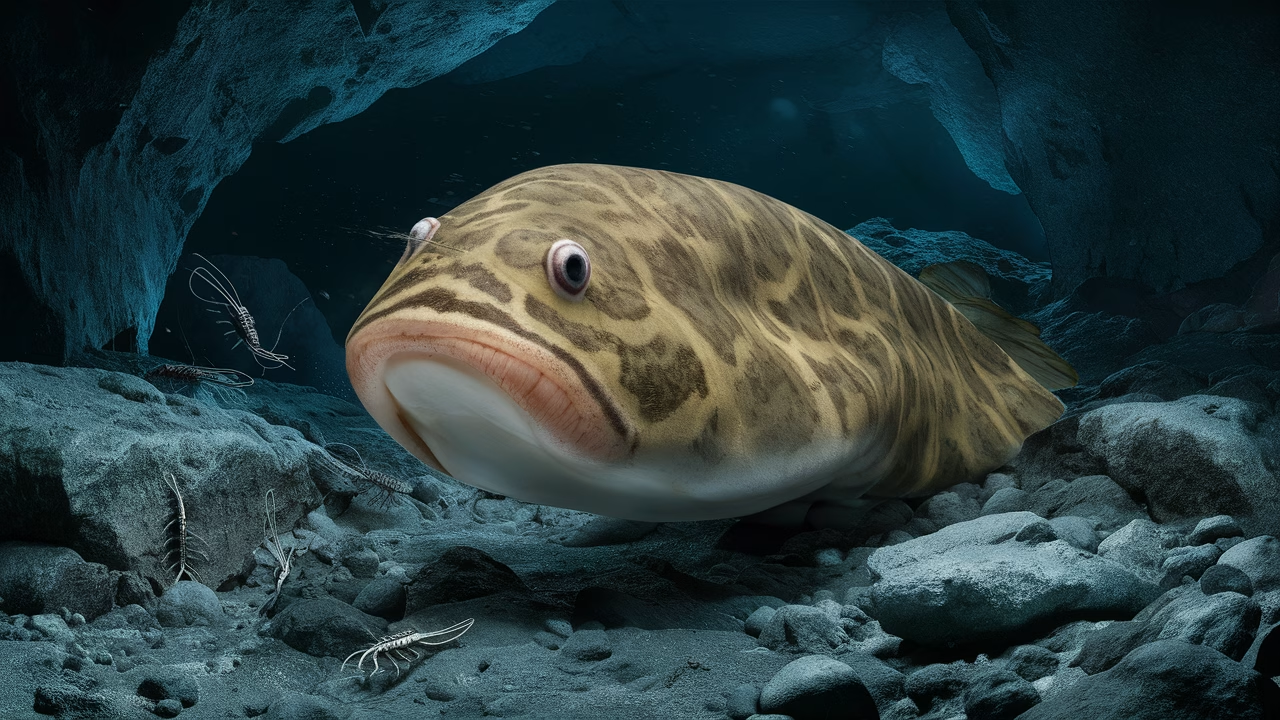
Imagine being born into a world of complete darkness—and never seeing light for your entire life. That’s the reality for the blind olm, a cave-dwelling salamander so perfectly adapted to cave life that its eyes have completely regressed. Encased in skin, their rudimentary eyes serve only to detect light intensity. Instead, the blind olm developed other superpowers: heightened smell, hearing, and even the ability to sense electricity in water.
Referred to by its genus name Proteus, the olm is often affectionately called the “baby dragon” because of its pale, elongated body and external gills that resemble feathered ornaments. This cave-dwelling salamander is the only exclusively aquatic cave vertebrate in Europe and the only member of the Proteidae family found outside North America.
The Enigmatic Lifespan of the Olm
How Can the Olm Live So Long?
You might be wondering—what allows a cave-dwelling salamander the size of a hotdog to outlive most humans? The blind olm’s extraordinary lifespan comes down to three key biological strategies:
- Low metabolic rate: The olm’s metabolism is so slow it may go up to 10 years without food.
- Minimal cellular damage: Having a stable environment (no UV exposure, temperature fluctuation, or predators) means less stress on tissues.
- Delayed reproduction: Some olms don’t breed until their late 20s or even 30s, which may contribute to their energy conservation and longevity.
Research published in Biology Letters even reported that one individual didn’t move from the same spot for seven years. That’s how little energy they require, and how patient they can be.
Exploring the Olm’s Natural Habitat
Blind Olm Habitat in Herzegovina’s Underworld
Ever picture an upside-down world—an endless labyrinth of flooded tunnels, limestone passageways, and black silence? That’s the blind olm habitat in Herzegovina and throughout the Dinaric karst caves. This unique environment stretches across parts of Slovenia, Croatia, Bosnia and Herzegovina, and Montenegro. Within Herzegovina, ecologists and researchers have documented several vital populations of blind olms in protected subterranean systems.
They live in underground lakes, streams, and water-saturated rock formations. These underwater caves are nutrient-scarce, so the blind olm’s ability to survive long fasting periods is essential. Their diet? Small insects, snails, amphipods (tiny shrimp-like crustaceans), and other cave invertebrates found in these underwater caves.
| Habitat Feature | Contribution to Survival |
|---|---|
| Dark, isolated caves | Protects against predators & stabilizes environment |
| Cold, oxygen-rich water | Supports slow metabolism & long life |
| Underground rivers | Facilitates balanced hydration & feeding strategies |
Conservation Efforts for the Olm
Olm Conservation: A Delicate Balancing Act
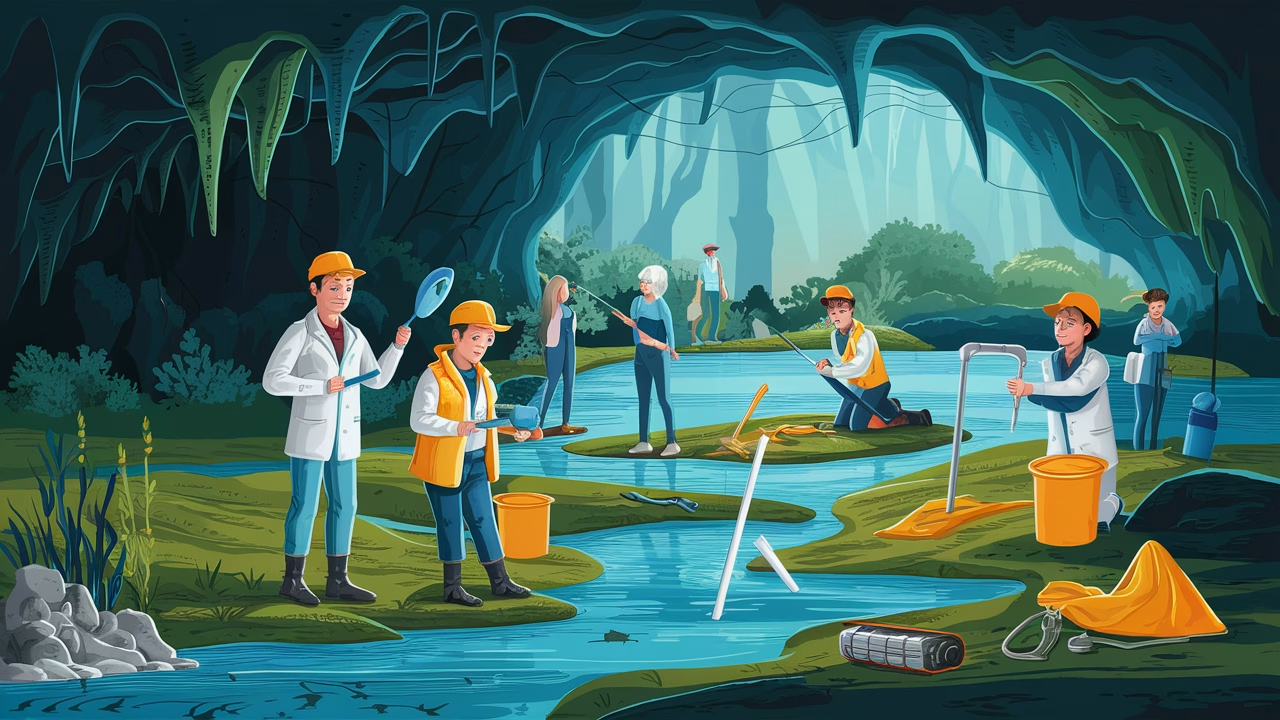
If you’re fascinated by the blind olm, know this: they’re in trouble. Today, the headwaters and spring caves where these cave-dwelling salamanders live are increasingly threatened by human activity. Agricultural runoff, pesticide use, illegal waste dumping, and careless tourism all introduce pollutants into delicate subterranean ecosystems. Since the blind olm’s skin is semi-permeable and sensitive to toxins, even small amounts can be harmful.
So how can conservationists—and concerned nature lovers like you—implement effective olm conservation tips?
- Support clean water laws: Protecting spring-fed systems supports the olm’s entire ecosystem.
- Limit tourism access: Some caves should remain undisturbed. Awareness campaigns help reduce unwanted human traffic.
- Aid citizen science: Report changes in cave water clarity, strange algae, or die-offs to local environmental groups.
- Avoid chemical runoff: Whether gardening, washing cars, or using fertilizers, minimize substances entering groundwater.
Organizations in Herzegovina and Slovenia have prioritized olm conservation through education and monitoring programs. By keeping these blind olm habitat areas pristine, we safeguard an ancient lineage that’s survived for millions of years.
Fascinating Facts About the Proteus Salamander
Weird Yet Wonderful: Facts About Proteus Salamander
Let’s dig into what makes the blind olm not only rare but really cool for biology nerds, cave researchers, and environmentalists alike. These facts about Proteus salamander will amaze you:
- They don’t age like we do: Blind olms show negligible senescence, meaning they don’t physically age in the same way other animals do.
- They breathe through gills and skin: Like an axolotl, olms retain their juvenile features—including external gills—for life.
- They reproduce rarely and slowly: Females may lay eggs once every 6 to 12 years, and they can even give birth to larvae in rare cases.
- True cave-dwellers: The blind olm is among the top-tier examples of a troglobite—a species permanently restricted to the cave environment.
- Unknown population count: Because they live so deep and in remote settings, we’re still unsure how many olms survive in the wild.
Final Thoughts: Why We Should Care
The blind olm is a marvel of evolution—a living artifact from a time before humans ever walked the Earth. Its resilience and mystery challenge us to look deeper, quite literally, into the world beneath our feet. Protecting the cave-dwelling salamander isn’t just about saving a species. It’s about honoring the complex ecosystems hidden from everyday sight.
If we care about biodiversity, water purity, and natural history, then the blind olm—mysterious and unseen—is our shared responsibility.
Frequently Asked Questions
- What is the lifespan of an olm?
Olms regularly exceed lifespans of 100 years, with some reaching up to 120 in stable cave environments. - Are olms completely blind?
Yes, olms are blind. Their eyes are underdeveloped and covered by skin, sensing only light changes. - Where do olms live?
They inhabit underground aquatic systems in the Dinaric Alps—especially caves in Herzegovina, Slovenia, and Croatia. - What do olms eat in underwater caves?
Their diet consists of insect larvae, amphipods, snails, and other tiny invertebrates. - How do olms survive without food for years?
Their metabolism slows drastically, allowing them to conserve energy and live off stored body fat for long periods. - Can olms be kept as pets?
No, olms are not suitable as pets due to their specialized habitat and long life cycle. - Why are olms important for science?
They provide insights into regenerative biology, evolution in isolated ecosystems, and longevity in vertebrates.