What makes chiton eyes unique among marine invertebrates?
Chiton eyes are exceptional because they’re made of aragonite — a mineral form of calcium carbonate — giving these marine invertebrates rock-based vision unlike any other known in the animal kingdom. These unique vision capabilities allow chitons to detect predators and navigate their underwater environment using hundreds of tiny mineral lenses embedded in their shells.
TL;DR: Chiton Eyes — A Vision Made of Stone
- Built From Rock: Chiton eyes incorporate aragonite, a mineral typically found in seashells, into their lenses, setting them apart from any other animal visual system.
- Dual-Environment Vision: These eyes can detect changes in light and dark both underwater and in air — a rare and complex visual feat among marine invertebrates.
- Evolutionary Goldmine: The use of aragonite suggests a unique path in mollusk evolution, blending protection with sensory perception.
- Research-Backed: Studies have confirmed that chitons use hundreds of tiny eyes across their shell’s surface to detect threats and navigate.
Evolution of Chiton Eyes with Aragonite
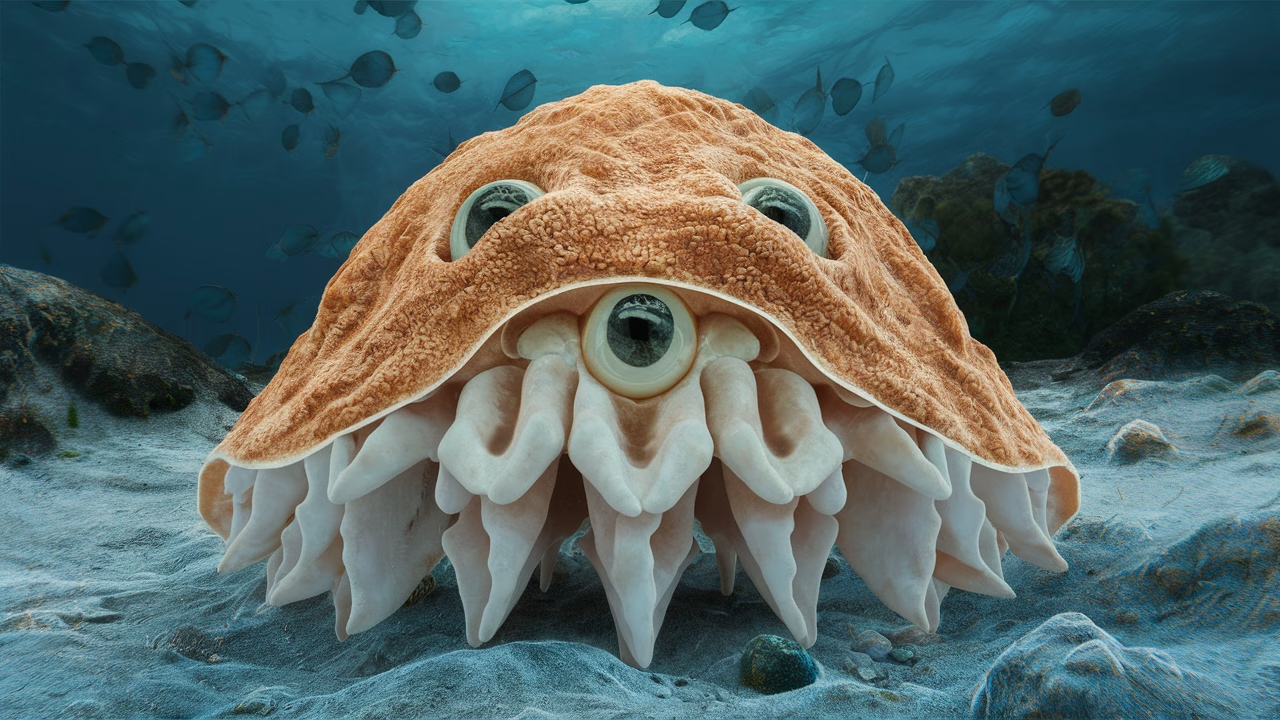
If evolution were an artist, the chiton shell would be one of its boldest works. These mollusks — cousins to snails, clams, and cephalopods — carry armored plates across their backs. Embedded within these plates are hundreds of minuscule chiton eyes, each a polished dome of aragonite.
What began purely as protection evolved into a sensory tool. Aragonite, usually a defense material, was recruited for vision — a natural innovation that allowed protection and perception to co-exist in marine invertebrates.
Early chitons likely lacked visual systems. Over time, tiny photoreceptive pits evolved under protective shells. Then came the hybrid miracle — aragonite crystals structured into lenses — offering rudimentary vision without sacrificing defense.
Ever wondered how something as seemingly inert as a rock could be reshaped into a sensory organ? Chiton eyes are the definitive answer to this evolutionary puzzle.
Understanding the Significance of Aragonite in Chiton Vision
Aragonite is a crystalline form of calcium carbonate that plays a crucial role in chiton eyes. In most mollusks, it forms their hard external shell. In chitons, not only does it form the outer armor, but it also shapes the lenses of their eyes. This mineral refracts light similarly to glass, enabling focused images to be formed — right on the chiton’s back.
| Material | Used In Animal Vision? | Transparency & Refraction |
|---|---|---|
| Aragonite | Only in chiton eyes | Moderately transparent; refractive |
| Protein-based lenses | Common (humans, squid, fish) | Highly transparent and tunable |
| Calcite | Trilobites (extinct) | Transparent, but double refracting |
The significance of aragonite in chiton eyes lies in its dual role — structural and optical. It’s like building a stained glass window that serves both as armor and surveillance camera. This evolutionary adaptation allows marine invertebrates to maintain visual capabilities without compromising their protective shell structure.
Unique Vision Capabilities of Chitons
To the casual observer, chiton eyes look like tiny black dots sprinkled across a rough shell. In reality, they form a repeating mosaic of optical windows. Each aragonite dome links to photoreceptor cells underneath that detect light and form basic images — a remarkable feat for marine invertebrates.
So, what vision capabilities do chitons actually possess?
- Light vs. Dark: Chitons can distinguish changes in brightness — a critical feature to detect looming predators in their marine environment.
- Silhouettes: Behavioral experiments suggest they can identify overhead shapes — possibly casting shadows on the ocean floor.
- Movement Sensitivity: Their reaction to moving shadows indicates danger detection, helping them clamp down tightly to rocks.
While their vision isn’t comparable to ours in sharpness, these unique vision capabilities are perfectly evolved for their environment and survival needs. Nature, after all, doesn’t always aim for complexity — just enough functionality to survive and thrive.
Aragonite’s Role in Underwater Vision
Understanding how aragonite functions underwater reveals why chiton eyes are so remarkable among marine invertebrates.
Seawater bends light differently than air, creating challenges for most visual systems. Chiton eyes, built from aragonite, handle refraction organically. This mineral is naturally optimized for underwater clarity, giving these marine invertebrates a significant advantage.
Moreover, unlike soft lenses that distort under pressure or heat, aragonite lenses maintain shape and function regardless of underwater pressures or changing currents. It’s the perfect material for static stability — and stability means consistency in visual input for these mollusks.
Why does this matter? Vision clarity isn’t just about seeing — it’s about timing response in a three-dimensional fluid world where escape seconds matter for marine invertebrates like chitons.
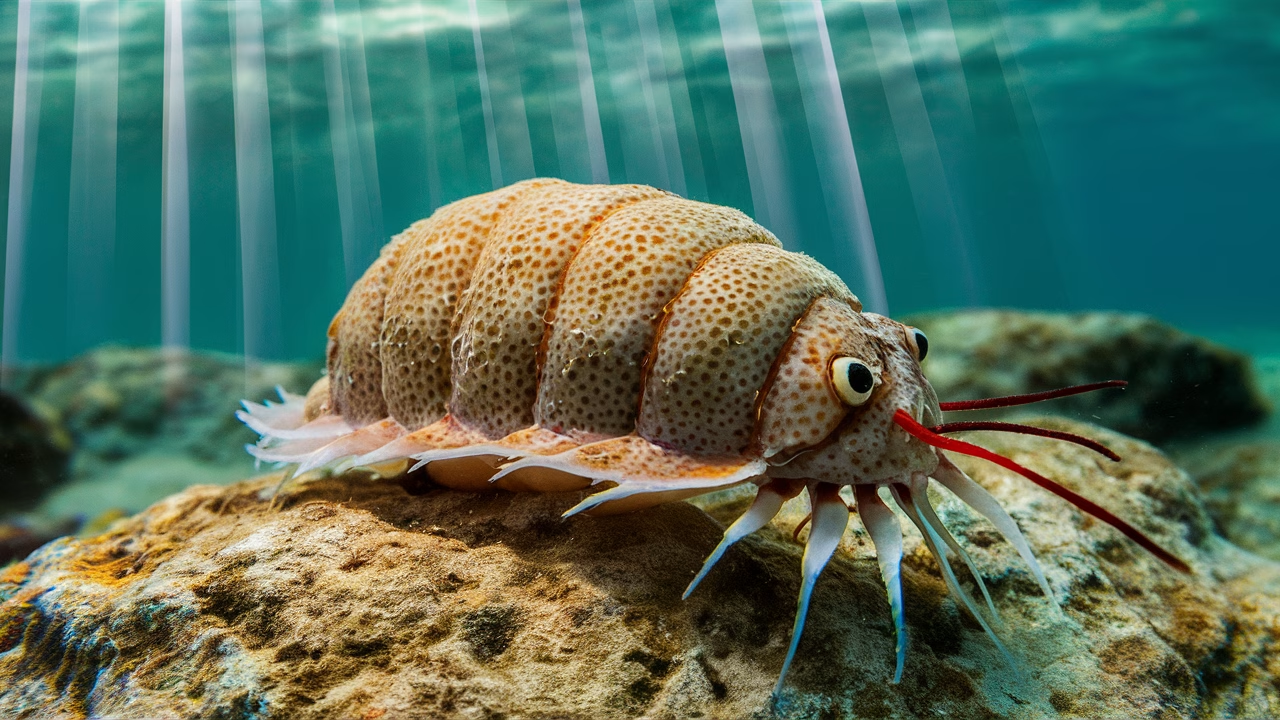
Research Findings on Chiton Eyes
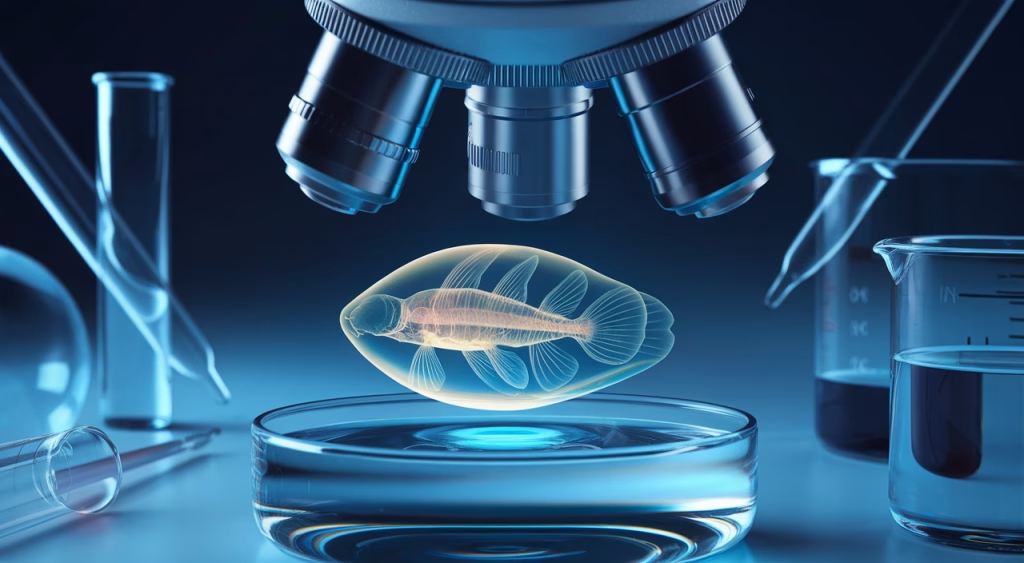
Years of marine biology research have revealed the fascinating details of chiton eyes and their aragonite-based vision system. Images from scanning electron microscopes reveal exquisitely shaped aragonite lenses dotting the shell. Behavioral studies confirm chiton reactivity to shadows and motion.
Here’s a glance at compelling chiton eyes research findings:
- Each chiton may contain 500 to 1000 eyes per individual, uniquely distributed across the shell plates — more than any other marine invertebrate.
- Eye lenses made of aragonite were found to preserve image resolution while underwater and in air, demonstrating remarkable vision capabilities.
- Blocking or disrupting the aragonite lenses significantly reduces shadow response, proving a visual function beyond basic light sensitivity.
These studies help bridge evolutionary biology and materials engineering. Synthetic replication of aragonite-based optics could one day influence resilient underwater camera design or mineral-based sensors inspired by these remarkable marine invertebrates.
Final Thoughts: A Stellar Example of Evolutionary Ingenuity
Chiton eyes remind us that evolution rarely walks a straight, predictable path. Sometimes, it uses stone instead of flesh, armor instead of jelly, and turns instinctual defense into panoramic visual awareness. These marine invertebrates have cracked one of evolution’s stranger codes — seeing through stone with aragonite lenses.
The unique vision capabilities of chitons demonstrate how nature finds innovative solutions to survival challenges. Their rock-based eyes represent millions of years of evolutionary refinement, creating a visual system perfectly adapted to marine life.
So next time you think of eyes as the soft, wet organs we’re familiar with, imagine the chiton. Its rocky body, armed with aragonite vision, watching the currents and shadows — perceiving the world not with softness, but with stone.
Frequently Asked Questions
- What are chiton eyes made of?
Chiton eyes are made of aragonite, a mineral form of calcium carbonate usually found in seashells and mollusk shells. - Can chitons see clearly with their aragonite eyes?
Chitons likely see in low resolution, enough to detect shadows and distinguish light from dark — not detailed shapes but movement and basic forms. - Are chiton eyes visible to the naked eye?
Yes, chiton eyes appear as tiny black dots scattered across a chiton’s armored plates, numbering in the hundreds per individual. - Why is aragonite unusual for animal vision?
Eyes are normally made from soft, flexible materials; aragonite is a rock-like mineral, making it extremely rare in biological optical systems. - Do any other animals have rock-based eyes like chitons?
Trilobites (now extinct) used calcite in their lenses, but chitons are the only known living animals using aragonite for vision. - How do aragonite lenses help with underwater vision?
Aragonite lenses maintain their shape under pressure and optimize light refraction underwater, enabling stable vision in varying marine environments.