How do Antarctic fish survive in freezing waters?
What keeps blood from freezing in a fish swimming through waters colder than ice? The answer lies in a fascinating biological adaptation: antifreeze proteins in Antarctic icefish blood that have evolved over millions of years to prevent deadly ice crystal formation.
TL;DR: Unlocking Antarctic Fish Survival in Subzero Oceans
- Key Adaptation: Antarctic icefish survive freezing temperatures thanks to antifreeze glycoproteins (AFGPs) that prevent their blood from crystallizing.
- Unique Family: These antifreeze proteins are found in notothenioids, a group of fish endemic to the Southern Ocean.
- How It Works: These proteins bind to microscopic ice crystals, halting their growth and keeping tissues ice-free.
- Evolutionary Story: Over millions of years, notothenioids evolved these proteins in response to Earth’s changing climate.
- Wider Importance: Studying these proteins provides insight into cryopreservation, climate adaptation, and biotechnology.
The Science Behind Antarctic Icefish Survival
Understanding Antarctic Icefish and Their Adaptations

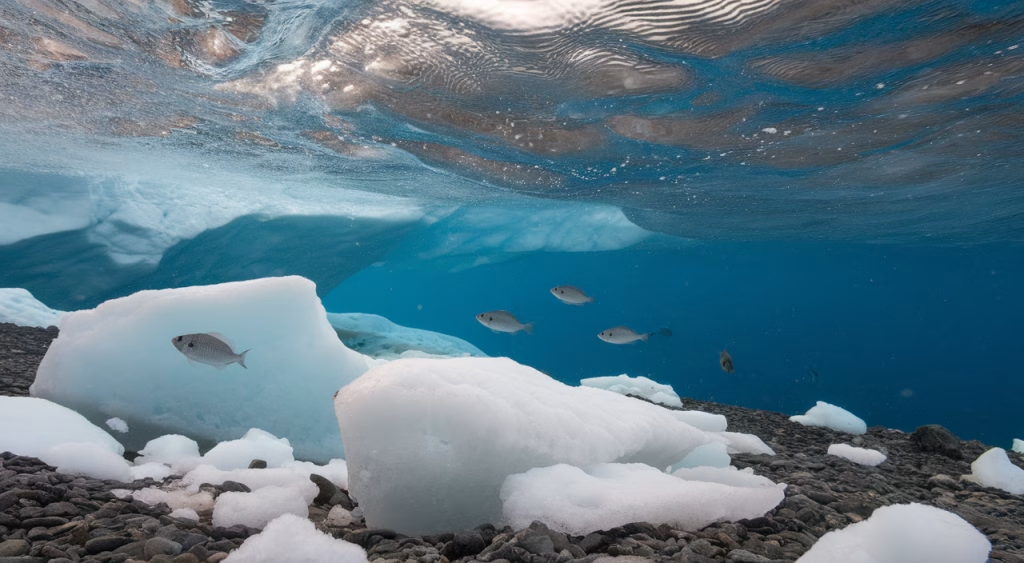
Imagine being dunked into a tub of salty water sitting just below the freezing point — about -1.9°C (28.6°F). That’s everyday life for Antarctic icefish. Among the most extreme marine environments on Earth, the Southern Ocean remains bitterly cold year-round, yet these remarkable fish thrive in these frigid waters without turning into an icicle. But how?
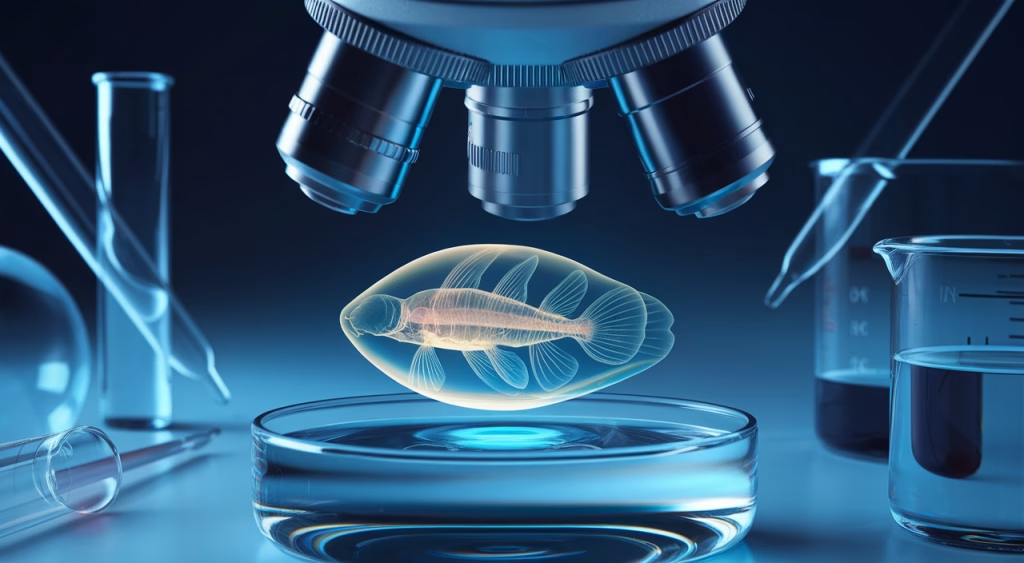
The key to their survival lies in antifreeze proteins (AFPs) — specialized molecules found circulating in their blood and other body fluids. In particular, Antarctic notothenioids, which include over 120 species of icefish, have evolved to produce specialized glycoproteins known as AFGPs (antifreeze glycoproteins). These molecules are structured like sugar-protein hybrids and perform a life-saving task: they stop the tiny ice crystals that form in the fish’s tissues from growing big enough to cause cellular damage.
Every living creature has a freezing point — a threshold beyond which the fluids in its body start to crystallize. For most fish, that point is around -0.7°C. But for Antarctic icefish species like the Channichthyidae, or ‘crocodile icefish,’ water temperatures often fall well below that. That’s where their antifreeze proteins become essential for survival.
The Role of Antifreeze Proteins in Maintaining Icefish Blood
So, how do these antifreeze proteins actually work on a molecular level to keep Antarctic icefish alive?
To understand this, imagine water molecules locking together to form an ice crystal like dancers linking arms to create a circle. Antifreeze proteins disrupt this choreography. They attach themselves to the surface of incipient ice crystals and block further binding of water molecules. In scientific terms, they create a ‘thermal hysteresis’ gap — lowering the freezing point of bodily fluids without affecting the melting point.
This mechanism prevents supercooled water inside the Antarctic icefish from turning solid. Interestingly, AFGPs attach most efficiently to specific planes on the growing ice crystal surface, halting growth in a targeted fashion. It’s not unlike placing barricades on a road, forcing traffic (ice growth) to a halt.
Even though their blood can contain tiny ice crystals, these never reach dangerous sizes. That delicate balance allows Antarctic icefish to keep their tissues safe and functional even in perpetually frozen seawater.
Unique Features of Notothenioids
Exploring the Cold-Adapted Traits of Notothenioid Fish
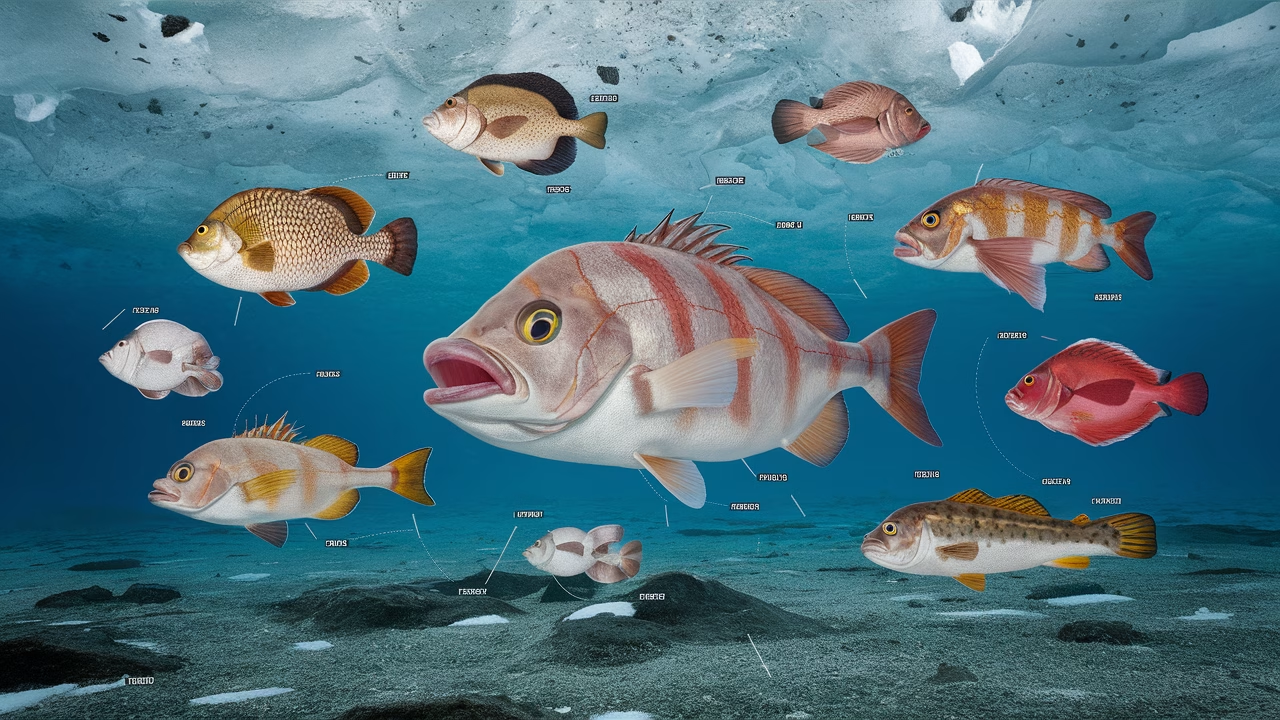
The Antarctic notothenioids have become a textbook example of evolutionary ingenuity. These remarkable fish occupy an ecological niche with little competition, largely because most other creatures can’t tolerate such harsh conditions. Over time, notothenioids have developed other peculiar adaptations besides antifreeze proteins.
- Colorless Blood: Some species like the crocodile icefish have completely lost hemoglobin, relying on dissolved oxygen directly through their plasma — a trait almost unheard of among vertebrates.
- Reduced Red Blood Cells: Many notothenioids have fewer or no red blood cells, reducing blood viscosity in cold temperatures.
- Large Cardiovascular Systems: Bigger hearts and blood vessels help circulate oxygen efficiently despite cold, viscous conditions.
These unique adaptations have diversified into over 100 species occupying levels of the Antarctic ecosystem from benthic (sea floor) to pelagic (open water) zones, making notothenioids one of the most successful Antarctic marine life groups.
Implications for Marine Life
Importance of Antifreeze Proteins in the Survival of Antarctic Marine Animals
It’s tempting to marvel at Antarctic icefish in isolation, but their survival tells a broader story about life in extreme environments. The antifreeze protein mechanism is a vital evolutionary tool not only for notothenioids but potentially for other marine life as well.
Studies have indicated that species like the sea raven (Hemitripterus americanus) and winter flounder (Pseudopleuronectes americanus) also possess types of antifreeze proteins. These are different in structure and evolutionary origin, showcasing convergent evolution — when completely different organisms develop similar traits to adapt to comparable challenges.
Understanding these systems also has significant biotechnology potential. Cryopreservation of human cells and organs, cold storage of food, and even ice-resistant coatings might benefit from replicating how these antifreeze proteins work at the molecular level.
But there’s also a cautionary tale: as climate change warms Antarctic waters, scientists worry that the delicate balance these antifreeze proteins help maintain may be disrupted. Warmer temperatures could introduce invasive species to the Southern Ocean or change food web dynamics entirely, threatening these unique adaptations.
Final Thoughts: A Frozen Frontier of Discovery
Antarctic icefish and their remarkable antifreeze proteins represent the cutting edge of adaptive biological science. From the seemingly simple trait of circulating sugar-based proteins to the loss of oxygen-transporting hemoglobin, this group of fish demonstrates just how creative life can be in facing environmental extremes.
For marine biologists, cryobiologists, and curious minds alike, these unique adaptations crack open new doors — from better understanding the natural resilience of Antarctic marine life to developing innovations that mimic nature’s own cold-tech toolkit.
So next time you see a snowfall or feel the winter chill, remember: somewhere in the Southern Ocean, an Antarctic icefish is swimming freely through icy voids, its blood pulsing safely with the help of molecular marvels older than humanity itself.
Frequently Asked Questions
- Do Antarctic fish have antifreeze proteins in their blood?
Yes, Antarctic icefish and other notothenioids have antifreeze glycoproteins that prevent their blood and tissues from freezing in subzero waters. - What are antifreeze proteins used for in marine animals?
They bind to small ice crystals inside the body, stopping them from growing and damaging cells – a crucial adaptation for survival in freezing environments. - What kind of fish have antifreeze proteins?
Primarily notothenioids in Antarctica, but also some northern species like winter flounders have evolved similar proteins. - How do antifreeze proteins work?
They attach to ice crystals in bodily fluids and prevent further growth by creating a freezing hysteresis — lowering actual ice formation temperature. - Can antifreeze proteins be used in cryogenics?
Yes, they’re being studied for applications like cryopreservation of cells, organs, and food products. - Is climate change affecting icefish survival?
Potentially. Warming oceans may disrupt their cold-specialized ecosystem and allow competitors to move southward. - Are antifreeze proteins unique to icefish?
While not unique, the version found in Antarctic icefish is structurally and functionally specialized for extreme polar conditions.