Can the Giant Coconut Crab Really Crack Open a Coconut?
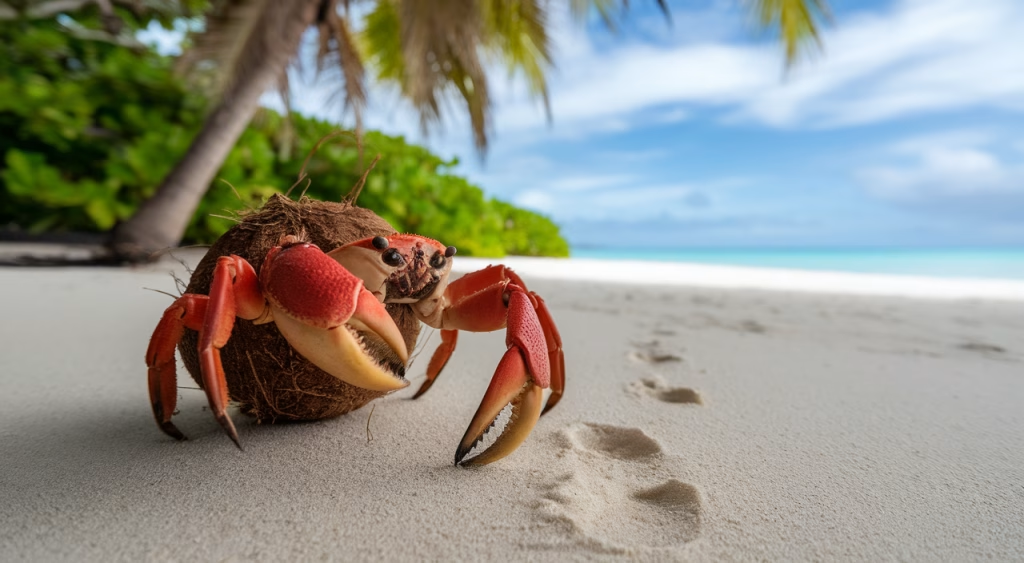
Yes, the giant coconut crab can crack open coconuts—right down the middle—using just its claws. These terrestrial titans possess the strongest claw force among land arthropods, generating a grip force of up to 3,300 newtons. That’s stronger than the bite of many mammal predators, allowing them to break into one of nature’s hardest shells with ease.
TL;DR Summary — The Strength and Secrets of the Coconut Crab
- The coconut crab is the world’s largest land crab and can grow over 3 feet across from leg to leg.
- Its claws generate forces strong enough to crack open coconuts—earning its name.
- They climb trees to harvest coconuts, drop them, or peel their fibrous husks before cracking them open.
- They’re solitary, nocturnal, with keen survival instincts and unique behaviors rarely seen in crustaceans.
- Coconut crabs play a critical role in cleaning up ecosystems by scavenging organic material.
- They face threats from habitat loss and human harvesting, sparking conservation concerns in recent years.
Meet the World’s Largest Land Crab: The Coconut Crab
If you’ve ever encountered the image of a clawed giant perched on the trunk of a palm tree, you’ve likely met the coconut crab in visual form. Scientifically known as Birgus latro, this species is a kind of terrestrial hermit crab that has evolved into the undisputed heavyweight among land-dwelling arthropods. Far from your average beachside crab, the giant coconut crab can reach a leg span of over 3 feet and weigh up to 9 pounds.
What’s more astonishing is its grip. Coconut crabs use their oversized pincers to lift nearly 60 pounds and exert crushing forces that outperform many carnivorous animals. That strength is not just for show—it’s essential to their survival and feeding habits in their tropical coconut crab habitat.
How Do Coconut Crabs Climb Trees and Crack Coconuts?
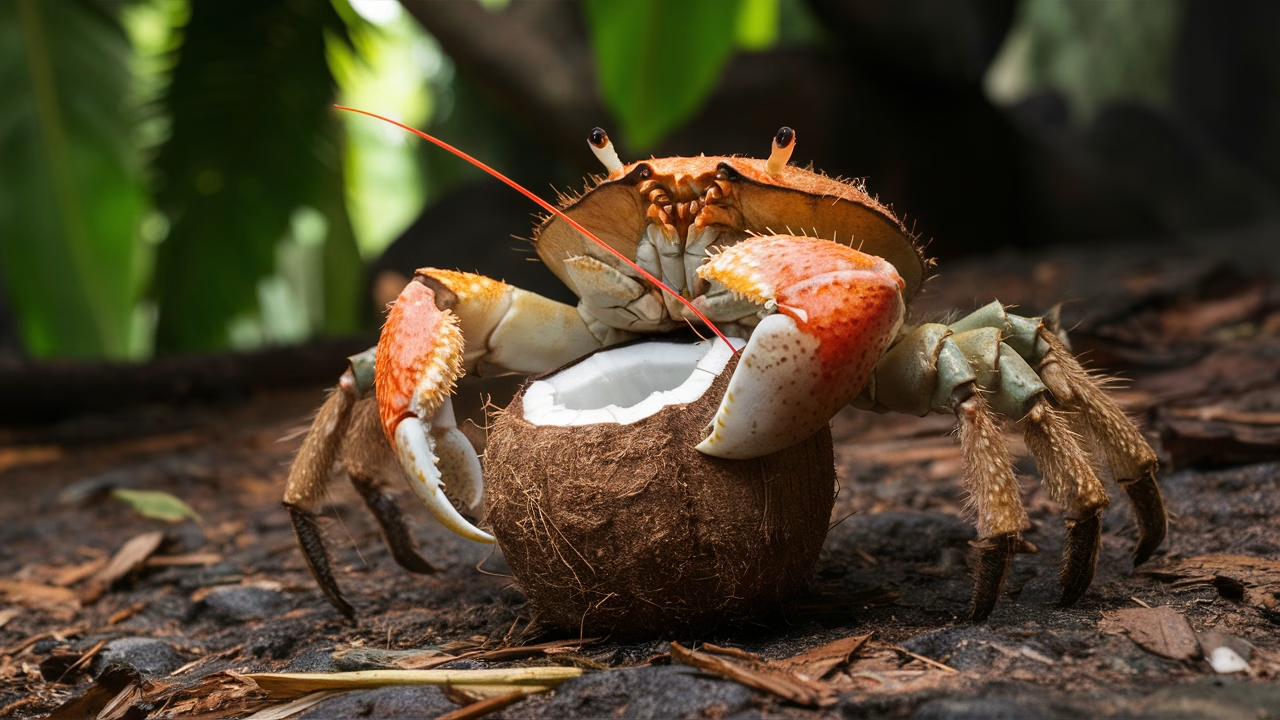
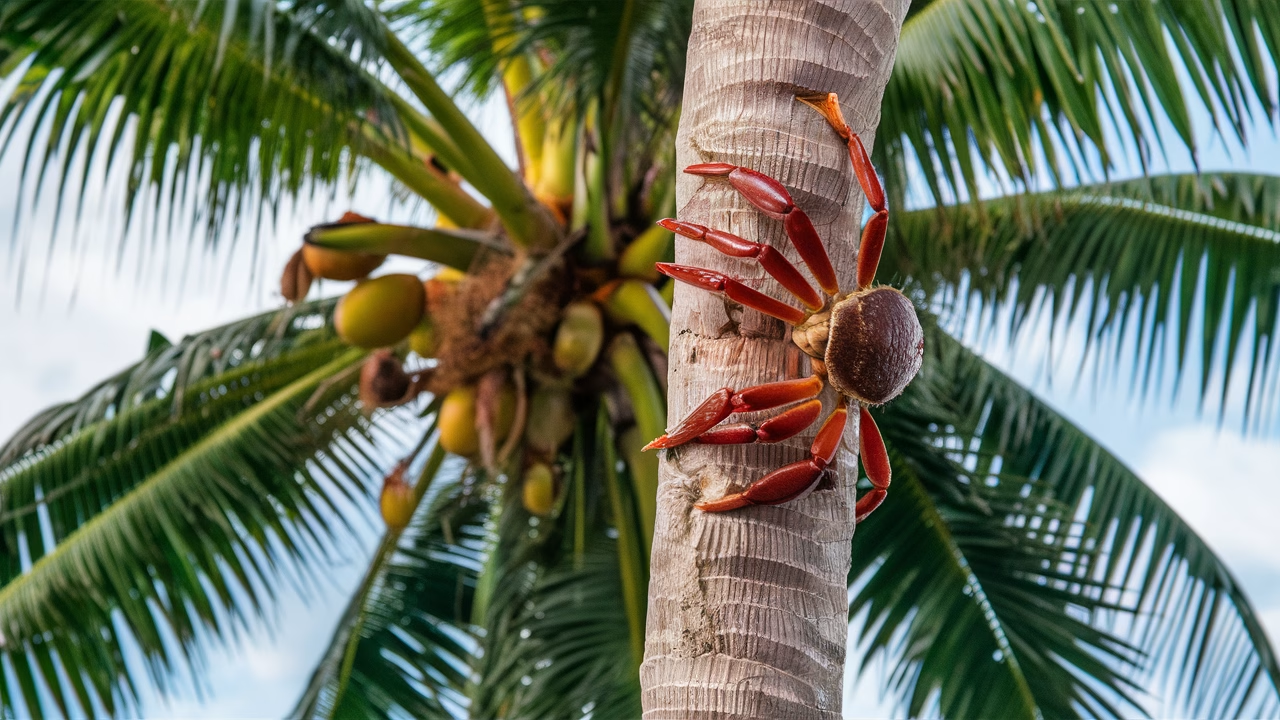
One of the most commonly asked questions is: How do coconut crabs climb trees and crack something as tough as a mature coconut? First, they climb trees using their specialized claws and leg pads to access the coconuts or collect fallen ones. Their claws are shaped to create a pinching wedge—imagine pliers with serrated edges—which they use to strip away the outer husks. This alone can take hours.
Once the husk is removed, they use their strongest claw (usually one is much larger) to pound, grip, and eventually pierce the shell. This coconut crab behavior involves calculated cracking at fault lines in the shell rather than brute force. It’s not uncommon to see them testing the nut at different angles—an insight into their problem-solving prowess.
When successful, they split the hard coconut open and feast on the rich, white flesh inside. It might sound simple, but it’s the result of thousands of years of adaptation that makes the coconut crab the world’s largest land crab with such remarkable abilities.
The Adaptive Anatomy Behind the Power
Let’s break down the unique behaviors of giant coconut crabs and their incredible anatomy. How exactly do they manage such force?
- Massive Chelipeds (Claws): These crabs possess one claw significantly larger than the other. This asymmetry gives them leverage similar to a naturally occurring nutcracker.
- Muscle-Dense Appendages: Unlike aquatic crabs, coconut crabs have evolved dense musculature tailored for terrestrial function. This generates a concentrated force over small surface areas—perfect for cracking shells.
- Sensory Lobes: They use sensitive parts of their claws to feel for weak points in the coconut shell.
Coconut Crab Habitat and Why It Matters to Behavior
You’ll often find coconut crabs in tropical islands across the Indian and South Pacific Oceans. These include places like Christmas Island, select islands of Micronesia, and parts of Polynesia. The coconut crab habitat typically consists of coastal forests and crevices, where they burrow into the ground to keep their soft underbellies protected from predators and drying out.
Because they breathe through modified gills, they require humid environments and cannot remain in water like their crustacean cousins. Nocturnal by nature, they emerge in the cooler hours to scavenge for fruit, carrion, and of course—coconuts.
Unique Behaviors of Giant Coconut Crabs
Coconut crabs have no shortage of peculiar habits that showcase their intelligence. They climb trees sometimes 20 feet high—not just for food but also, often, to escape predators or reposition territory. Have you ever heard stories of coconuts mysteriously disappearing? In many island legends, coconut crabs are the “ghost” thieves of the tropics.
They’re also fiercely solitary. Unlike other crustaceans that may congregate in tide pools or groups, coconut crabs prefer to go it alone—claiming a burrow to themselves, marking space with scent, and defending it with those fearsome claws.
How Do Coconut Crabs Climb Trees and the Myth of Falling Coconuts
Let’s answer one of the most curious coconut crab facts: How do coconut crabs climb trees? These creatures have spiny legs lined with hooked claws, sort of like the crampons climbers wear on ice. Their body weight is distributed across multiple limbs, and the pads on their walking legs help them grip bark and even vertical coconut trunks.
Sometimes, they use gravity assist—by climbing a tree, detaching a coconut, and letting nature do the hard part through a high fall. Then they descend to crack open the bruised nut more easily. It’s like they understand basic physics—truly remarkable coconut crab behavior in an animal considered primitive by most standards.
The Role of Coconut Crabs in Island Ecosystems
Coconut crabs aren’t just charismatic curiosities—they’re vital ecosystem contributors. As scavengers, they help clean up decomposing organic material, animal remains, and leftover fruits. This natural sanitation service reduces disease spread and promotes nutrient cycling back into the soil.
In some ecosystems, coconut crabs are apex invertebrate predators—consuming small vertebrates, bird eggs, and carrion. Their presence often indicates a healthy coconut crab habitat and minimal human interference.
But human interaction has not always been kind. Where populations are dense or tourism expands, coconut crabs are often harvested for food. This disrupts local populations, especially since they grow and reproduce slowly—often taking over a decade to mature sexually.
Are Coconut Crabs Endangered? Conservation and Future Outlook
So, are coconut crabs endangered? Technically, they’re not globally listed as endangered yet. But regional populations face mounting pressure. Habitat degradation, coastal development, and targeted harvesting are shrinking many established colonies, especially on smaller islands.
Conservation efforts are underway—some islands have banned or restricted coconut crab harvesting during breeding seasons. Others have initiated tagging programs to research migration and growth. Education, paired with ecotourism that respects wildlife boundaries, shows promise for protecting the world’s largest land crab.
For now, their future depends on responsible tourism, enforcement of international wildlife protection laws, and continued public fascination—which, hopefully, includes amazed readers like you.
Final Thoughts: Why the Coconut Crab Deserves Your Awe
The coconut crab is a living example of evolution engineering strength, ingenuity, and survival mastery into a single land crab. Watching one crack a coconut isn’t just surprising—it reshapes what we think crustaceans are capable of. So whether you’re hiking a tropical path or reading this in your city apartment, remember: there’s a creature out there using its bare claws to split a coconut—and that’s worth marveling at.
Frequently Asked Questions
- Can coconut crabs crack coconuts? Absolutely. Their claws can generate enough pinching force to break open coconuts after removing the fibrous husk.
- How do they climb trees? They use strong legs with claw-like pads that lock onto bark and allow them to scale even smooth tree trunks.
- What do coconut crabs eat? Aside from coconuts, they eat fruits, fallen leaves, carrion, and sometimes small animals or eggs.
- Are coconut crabs dangerous? While not typically aggressive, they can pinch hard if threatened. It’s best to observe from a safe distance.
- Where do coconut crabs live? They inhabit tropical islands in the Indian and South Pacific Oceans, usually in moist, forested areas near shorelines.
- Are coconut crabs edible? In some cultures, yes, though there are conservation efforts against overharvesting due to their slow reproduction.