
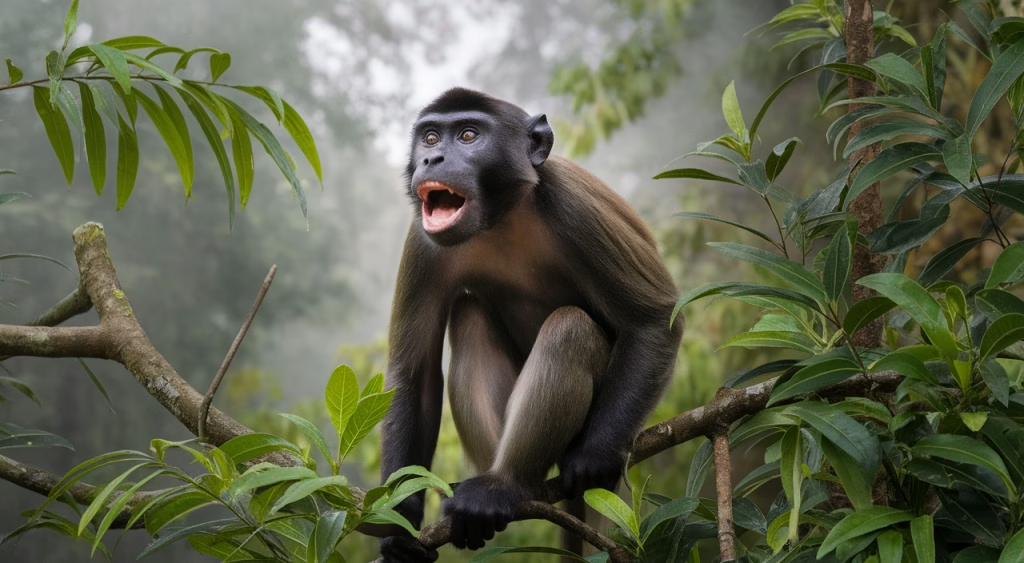
How far can you really hear a howler monkey’s roar?
Up to 3 miles (5 kilometers) away! Yes, the howler monkey roar is one of the loudest vocalizations in the animal kingdom. This powerful sound can travel across rainforest canopies, making it a key communication tool for the species. When you hear that haunting call echoing through the trees, you’re experiencing one of nature’s most impressive acoustic phenomena.
TL;DR: Why howler monkeys roar—and what it means
- The howler monkey roar can be heard up to 3 miles away due to specialized throat anatomy and social function.
- The sound helps groups mark territory, avoid conflict, and maintain family cohesion in thick forest environments.
- Howler monkeys live in Central and South American rainforests, where their habitats are increasingly threatened by deforestation.
- Field recording of their iconic calls helps researchers monitor populations and study communication patterns.
- Conservation efforts, including habitat preservation and wildlife corridors, are crucial to safeguarding their future.
The Fascinating World of Howler Monkeys
If you’ve ever stepped into a tropical forest in Central or South America just before sunrise, you may have heard a hair-raising, guttural howl echoing eerily through the trees. That’s not your imagination—it’s the powerful howler monkey roar, one of the loudest land animals on Earth.
Found in the lush canopies from southern Mexico down into the Amazon Basin, howler monkeys (genus Alouatta) are more than just noisy neighbors. They’re vital components of their ecosystems, serving as seed dispersers, indicators of rainforest health, and subjects of incredible acoustic communication research.
In this guide, we’ll examine not only why their howler monkey roar is so loud, but what it tells us about their behavior, lifestyle, and the mounting threats they face due to habitat loss and human encroachment.
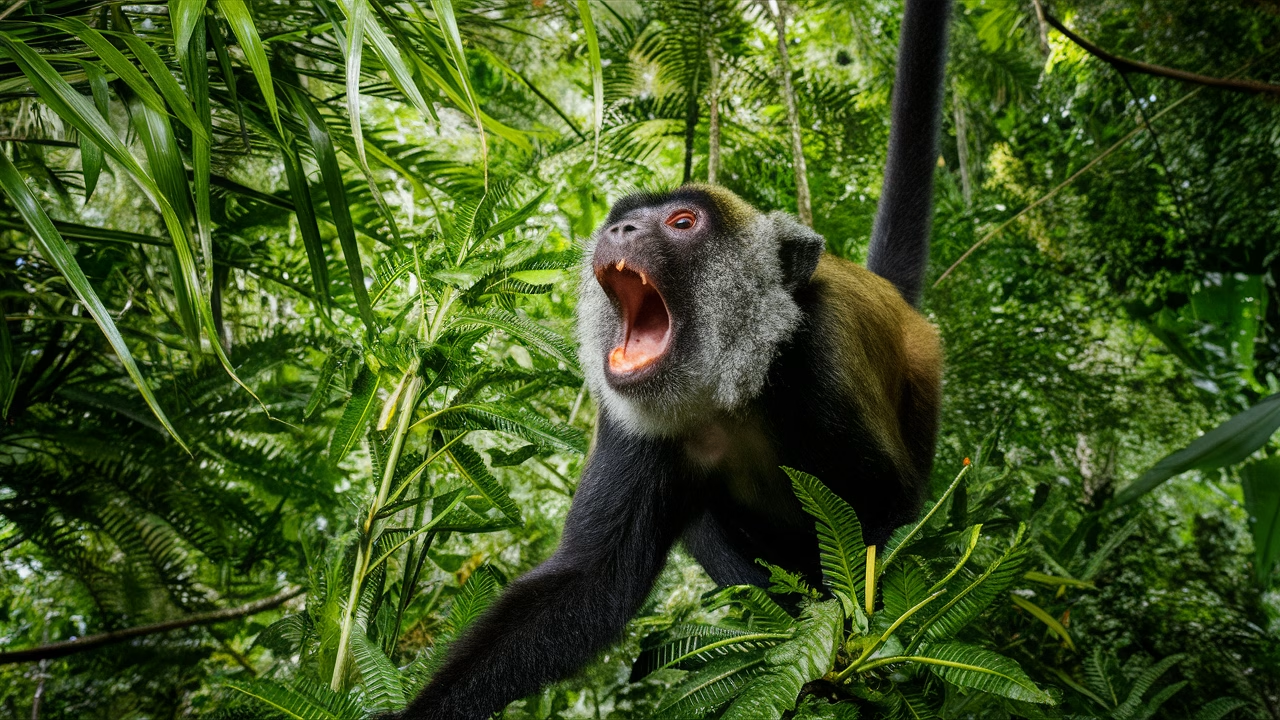
Understanding Howler Monkey Behavior
To understand why howler monkeys roar, we need to first understand their social structure and environment. These primates live in territorial groups, often ranging from 6 to 15 individuals. Maintaining boundaries without violence requires smart communication—and that’s where their booming voice comes in.
Territorial Announcements and Avoiding Conflict
Howler monkeys use their loud vocalizations to announce their presence to neighboring groups. This helps to avoid direct confrontations that could lead to injury or stress. Because rainforests are dense and visibility is limited, sound becomes the most efficient communication medium.
The howler monkey roar serves dual purposes: claiming territory and checking in with family members. Essentially, it’s the rainforest version of a megaphone handshake, saying, “We’re here. Please don’t come any closer.”
Feeding and Movement Patterns
These folivores (leaf-eaters) spend up to 80% of their day lounging and digesting. Leaves aren’t exactly high-energy food, so howler monkeys conserve their energy by being relatively sedentary. Their loud roar means they don’t have to move around as much to look for rivals or mates—they just vocalize loudly from where they are.
The Roars of Howler Monkeys
Ever wondered how a monkey weighing only 15–20 pounds produces a howler monkey roar loud enough to rival a lion’s?
The secret lies in their anatomy. Howler monkeys have an enlarged hyoid bone in their throat—a resonating chamber that amplifies their voice. Think of it as a built-in subwoofer, funneling deep howls up and out into the forest. Their modified vocal cords further deepen the sound, turning their relatively small bodies into acoustic powerhouses.
What Makes Their Roar Travel So Far?
| Anatomical Feature | Purpose |
|---|---|
| Enlarged Hyoid Bone | Amplifies and resonates sound |
| Spacious Larynx | Supports deep, guttural tones |
| Throat Sac | Acts like a megaphone |
They usually begin vocalizing at dawn and dusk. Why those hours? Acoustically, sound waves travel farther in the cooler, moist air before the sun hits full strength—extending their 3-mile broadcast range even more.
Field Recording and Acoustic Monitoring
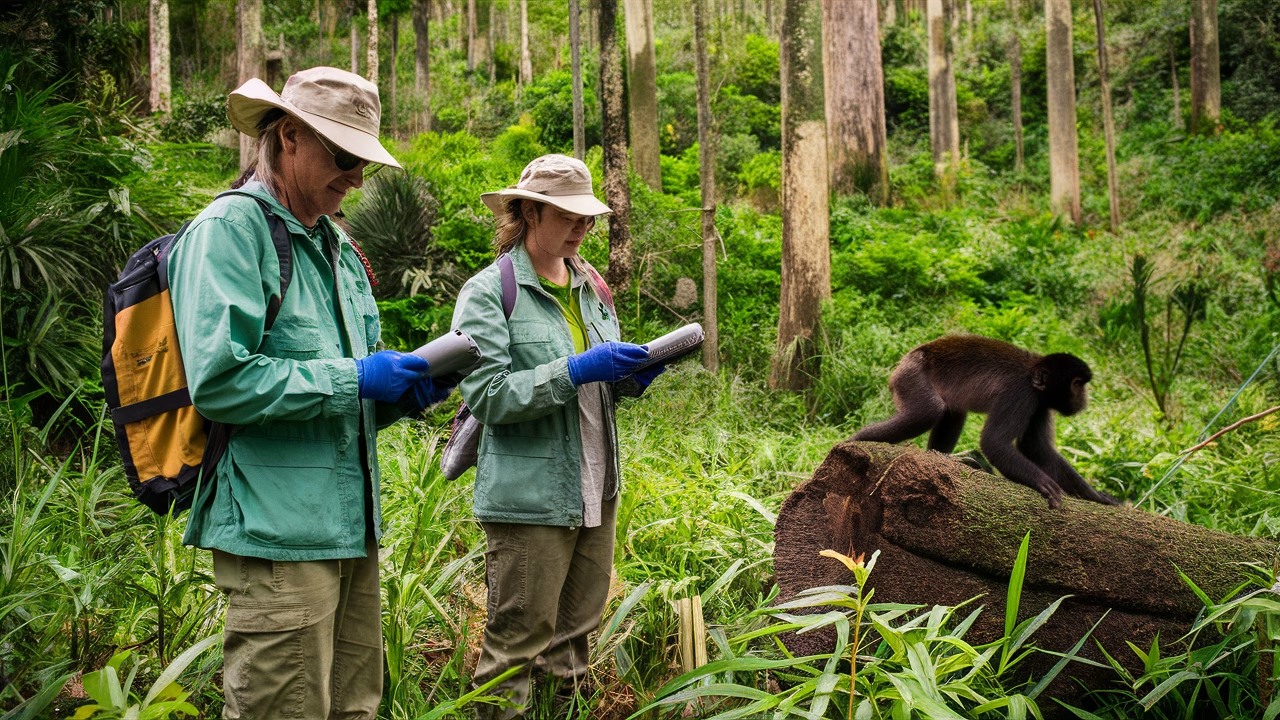
As wildlife researchers, we use field recording to study these vocalizations with precision. By tracking howler monkey calls with directional mics or acoustic sensors, we can estimate population distributions and monitor behavior over time without disturbing the animals.
Over time, phonic pattern analysis (like identifying consistent “roaring syllables”) helps us detect stress levels, identify individuals, and assess ecosystem health.
These field recording sessions capture not just scientific data—they’re the literal voice of the forest.
Threats to Howler Monkey Populations
While the howler monkey roar dominates the forest, human noise—and intrusion—is starting to take over. Understanding howler monkey habitat destruction causes is crucial for their survival.
Top Causes of Habitat Destruction
The main howler monkey habitat destruction causes include:
- Agricultural expansion: Forest is cleared to make way for crops such as soy or palm oil.
- Logging: Both legal and illegal logging operations fragment their canopy pathways.
- Urbanization: Expanding cities push into tropical forests, cutting off groups from one another.
- Road building: Infrastructure divides forests into unusable patches.
Behavioral Impacts of Habitat Loss
When howler monkeys lose their habitat, they also lose their acoustic range. Smaller or fragmented forests make their roar less effective for territory protection. This leads to:
- Increased conflict between groups
- Broken family units as connectivity fails
- Reduced mating success due to isolation
In practice, this means howler monkeys are getting quieter—not because they’ve lost their voices, but because they’ve lost the space to use them.
Conservation Efforts for Howler Monkeys
Despite the challenges, we’re not without hope. Following howler monkey conservation efforts guide, conservationists around the world are working diligently to keep the forests echoing with howler monkey roar. Here’s what it takes and how you can help.
Successful Howler Monkey Conservation Approaches
| Conservation Strategy | Impact |
|---|---|
| Wildlife Corridors | Connect fragmented habitats for safe movement |
| Reforestation Projects | Restore lost canopy and flora biodiversity |
| Eco-tourism Programs | Generate income and incentives for protection |
| Community Outreach | Educate locals about species importance |
| Field Recording Technologies | Monitor populations with minimal disturbance |
What You Can Do
- Support reforestation and wildlife charities focused on Central and South American ecosystems.
- Choose certified sustainable products that minimize habitat destruction.
- Spread awareness by sharing field recording and educational materials about howler monkey vocalizations meanings.
Final Thoughts
The howler monkey roar is more than just a curious fact—it’s a living embodiment of biodiversity, adaptation, and resilience. Every echo is a reminder of the interconnected chorus that defines healthy ecosystems. As habitats shrink and challenges mount, preserving this voice of the forest becomes not just important, but essential.
Let’s make sure the rainforest doesn’t fall silent.
Frequently Asked Questions
How far away can howler monkeys be heard?
Up to 3 miles (5 kilometers) under ideal conditions—especially during early morning when the air is moist and still, helping the deep howler monkey roar travel more efficiently through the forest.
Why do howler monkeys roar?
To mark their territory, warn other groups to stay away, and communicate with their troop. The howler monkey roar minimizes conflict and helps maintain peace across overlapping ranges.
Are howler monkeys endangered?
Some species are considered near-threatened due to habitat loss, fragmentation, and human encroachment. Understanding howler monkey habitat destruction causes and supporting conservation efforts are critical to safeguarding their future.
What do howler monkey vocalizations mean?
Different calls typically serve different functions—territorial declarations, group location check-ins, and alarm calls in response to threats like predators. Understanding howler monkey vocalizations meanings helps researchers study their behavior.
Can field recordings help howler monkey conservation?
Absolutely. Field recording allows researchers to track population density, health, and behavior without direct interference, offering a non-invasive solution to study these vocal primates.
Where do howler monkeys live?
Mainly in tropical rainforests of Central and South America. They inhabit various canopy layers and rely on thick, tall forests for vocal transmission and movement.
What are the major causes of howler monkey habitat destruction?
Agriculture, deforestation, road building, and urban development are rapidly fragmenting their natural habitats, making survival and reproduction more difficult. These howler monkey habitat destruction causes are the primary threats to their populations.