How Does the Green Heron Use Bait to Lure Fish?
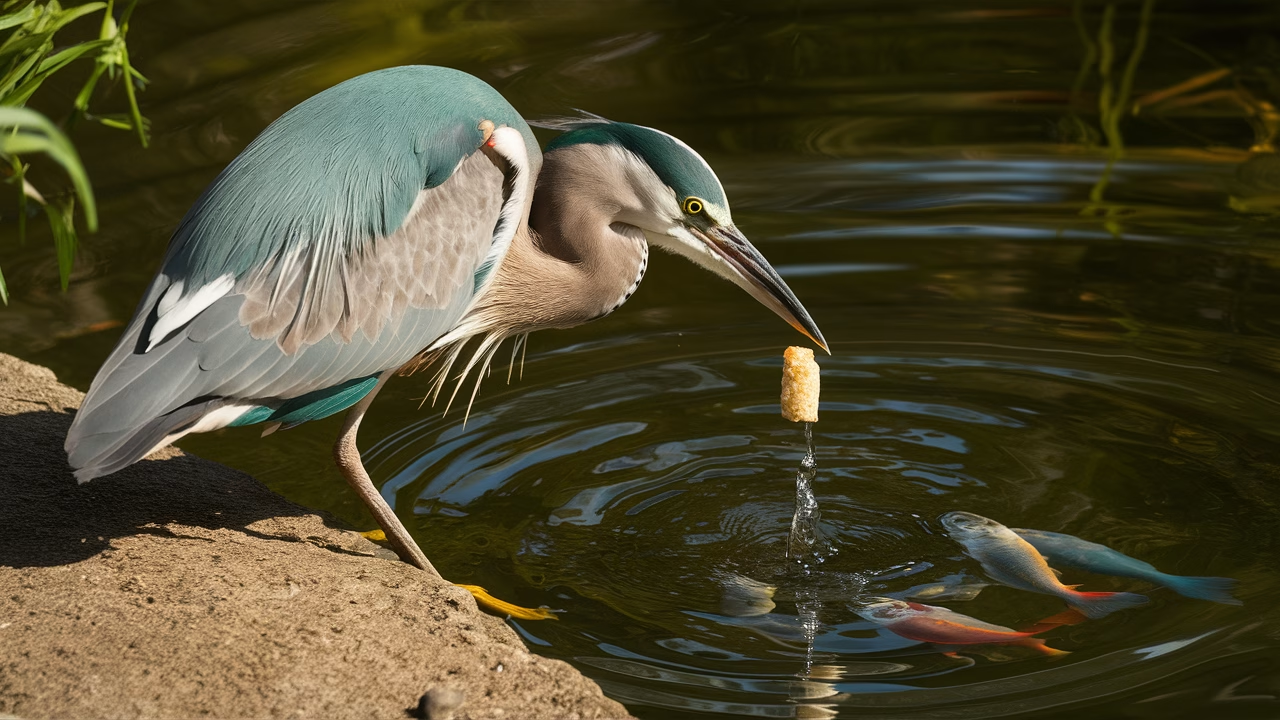
Unlike most birds that rely on stealth, speed, or sharp talons to hunt, the green heron stands apart in how it involves cognition, patience, and—believe it or not—tools. Green herons (Butorides virescens) are among the few birds observed using bait to lure fish close enough to catch. They drop small objects such as insects, bread crumbs, or twigs onto the water’s surface and wait for curious fish to investigate—only to become lunch.
TL;DR: How Green Herons Fish with Bait
- Green herons are one of the only bird species known to use bait purposefully to fish.
- They drop items like bread, insects, or feathers onto the water surface to attract fish.
- This behavior showcases cognitive adaptability—comparable to tool use in primates.
- It’s not innate but learned, adapted, and varied between individuals and environments.
- Understanding green heron baiting behaviors helps us appreciate avian intelligence and survival strategies in dynamic ecosystems.
Understanding Green Herons’ Baiting Behavior
Ever watched a bird go fishing like a practiced angler? That’s precisely what the green heron does. These small, stocky birds with elegant green-black caps and chestnut bodies set themselves apart with an almost anthropomorphic trait: fishing with bait.
The first documented observations of green herons fishing behavior date back to the early 20th century, but thanks to growing public interest and tools such as high-definition cameras and citizen science, we now know this behavior isn’t just occasional—it’s remarkably methodical. Green herons typically employ floating bait such as:
- Crusts of bread—often scavenged from nearby parks or picnic areas.
- Insects—captured and released onto the water as live bait.
- Twigs, feathers, leaves—even these are carefully adjusted until they float effectively.
This behavioral pattern isn’t anecdotal—it has been observed repeatedly in the wild and in controlled environments. What’s powerful here is intention. Unlike instinctual actions, bird baiting for fish implies foresight and adaptability, two signs of advanced cognition.
The Intriguing Ways Green Herons Lure Fish
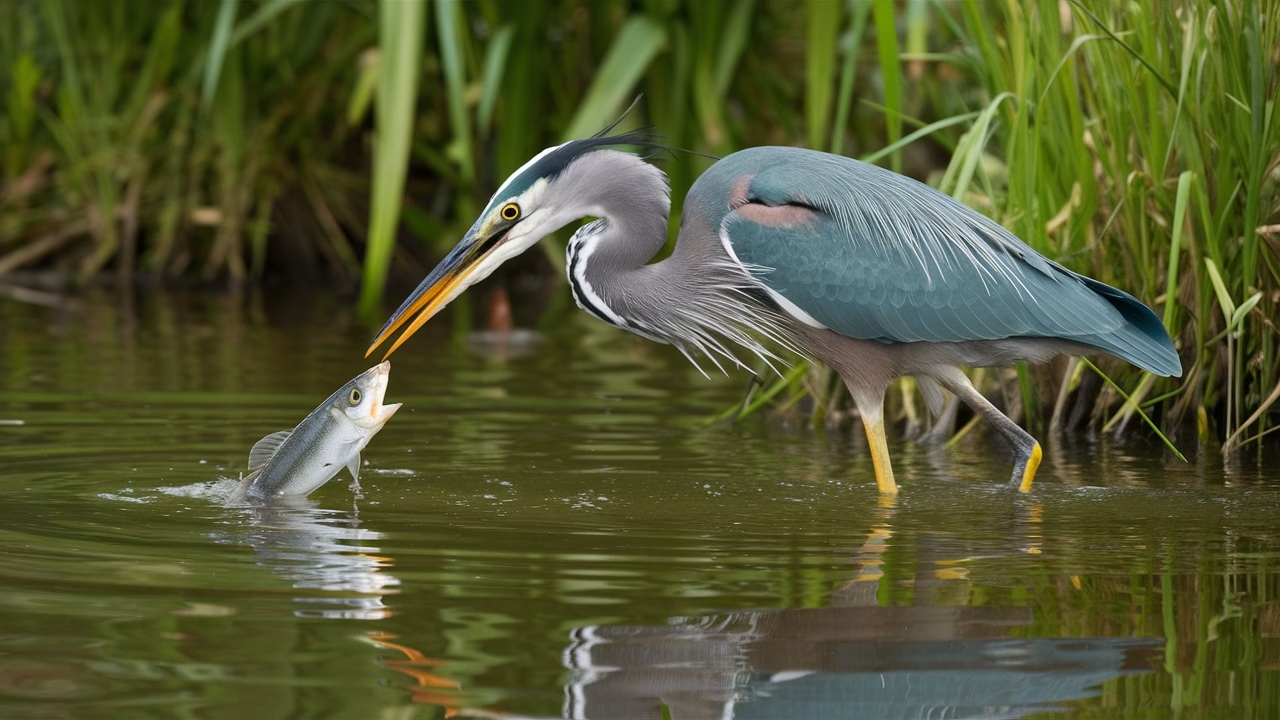
To grasp this truly remarkable behavior, let’s picture a green heron wading near a pond. Instead of striking at visible prey, it gently drops a beetle into calm waters, stepping back and freezing. Moments pass. Ripples scatter. A curious fish surfaces—and snap—the bird lashes out and seizes it with pinpoint accuracy.
What this reveals is more than ingenuity—it’s experimentation. Some herons are seen repeatedly placing bait until they find the right size, texture, or buoyancy. Here’s a closer look at some fascinating real-world observations of green heron feeding habits:
| Bait Type | Behavioral Insight | Proven Catch? |
|---|---|---|
| Live insects | High fish interest, used multiple times in one sitting | Yes |
| Bread crumbs | Common near human activity | Yes |
| Twigs/leaves | Least effective but still used persistently | Occasionally |
Some herons even drop bait near edges or under docks, showing an understanding of shaded fish hangouts. In essence, the green heron isn’t just casting and waiting—it’s problem-solving in real time using sophisticated bird fishing techniques.
Adaptations for Successful Prey Capture
What makes bait-fishing viable for green herons? Several remarkable anatomical and behavioral adaptations work together:
- Accuracy and Patience: Up-close, the bird’s neck unfolds like a coiled spring, allowing for sniper-like strikes.
- Hand-Eye Coordination: The coordination needed to drop an item and monitor water movements is no small task in the avian world.
- Reduced Fear of Disappointment: In nature, a failed strike costs energy. Green herons hedge against this by using bait to increase capture success rates.
- Learning and Sharing: While not every green heron uses bait, there’s evidence of learned behavior—juveniles that observe often adopt the practice.
The result? Greater feeding efficiency, especially in environments where fish are wary or scarce. That’s a crucial survival edge for a solitary bird needing calories to thrive alone during nesting or migration.
Implications of Baiting Behavior for Heron Survival
So, what does this mean in the bigger picture of bird evolution and survival?
Bait-fishing represents one of the rare instances of tool use in birds, joining the ranks of species like New Caledonian crows and Egyptian vultures. For green herons, this opens up new ecological niches and promotes individual adaptive advantages.
How Green Heron Cognition Affects Conservation
Green herons’ baiting methods also raise fascinating conservation points. Their ability to adapt in human-dominated landscapes (e.g., fishing with bread near city ponds) shows resilience. However, their reliance on aquatic habitats makes them vulnerable to pollution, habitat loss, and climate-induced water fluctuation.
Here’s what often happens in practice: urban green herons pick up human-generated debris as bait. While clever, these interactions also increase risks in polluted areas or introduce dietary contaminants. Habitat-aware conservation planning must consider encouraging clean, fish-rich wetlands that nurture this baiting behavior naturally.
In other words, it’s one thing to marvel at how the green heron uses bait to lure fish—it’s another to ensure they have clean, safe places to perform the trick.
Final Thought: More Than Just a Fishing Bird
When you next walk past a quiet pond or urban creek, keep your eyes open. That motionless bird on the log may not be resting—it may be about to launch a masterclass in fishing ingenuity.
The green heron using bait to lure fish is more than a cool fact—it’s a window into avian cognition and adaptability. This single behavior reveals layers of survival strategy, problem-solving, and creativity that challenge our assumptions about birds. It’s one thing to survive. It’s another to do so cleverly. And that’s what sets the green heron apart.
Frequently Asked Questions
- Do herons use bait to fish?
Yes. Green herons are one of the few bird species known for using bait to attract fish. - Is baiting behavior common among all green herons?
No, this behavior is learned and more common in individuals exposed to frequent fishing successes or observational learning. - What kind of bait do green herons use?
Anything that floats and attracts fish—bread, insects, feathers, even human-processed food items near urban areas. - Can other birds fish using similar methods?
Very few. Some crows and raptors show tool use, but the green heron is unique in aquatic baiting techniques. - Does this behavior help green herons survive better?
Yes. Baiting increases their fishing efficiency, especially in low-prey environments or unfamiliar habitats during migration. - What can birdwatchers do to observe this behavior?
Visit calm, quiet bodies of water known to host green herons, bring binoculars, and respect the bird’s space and environment to avoid disturbances. - Do juvenile green herons learn baiting from adults?
Some evidence suggests they do. Observational learning likely plays a role in spreading the behavior through generations or regions.