Why do horseshoe crabs have 10 eyes, and how do they use them?
Horseshoe crabs use their 10 eyes to survive in one of the ocean’s most competitive environments. These eyes—distributed across their shells, tails, and even under their bodies—allow them to detect movement, find mates, and navigate their muddy, murky habitats day or night. Each eye serves a specific function in their complex vision system, making horseshoe crabs one of nature’s most visually adapted creatures.
TL;DR: How Horseshoe Crabs Use Their 10 Eyes
- 10 eyes in total: Includes compound, lateral, median, endoparietal, ventral, and tail eyes.
- Compound eyes: These large lateral eyes detect movement and light intensity—essential for survival and mating behavior.
- Tail eyes: Yes, they can detect light with their tails to escape threats when flipped over!
- Specialized functions: From finding mates to syncing mating behavior with moonlight, each eye plays its role in this ancient creature’s life.
- Evolutionary success: These eyes have remained nearly unchanged for 450 million years—a testament to their design’s effectiveness.
Understanding Horseshoe Crab Anatomy
To understand why horseshoe crabs have 10 eyes, we first need to examine their unique anatomy. Horseshoe crabs aren’t actually crabs at all—they’re more closely related to spiders and scorpions. As living fossils, they’ve inhabited Earth’s shorelines for over 450 million years with remarkably little anatomical change. This evolutionary stability suggests their vision system is exceptionally well-designed.
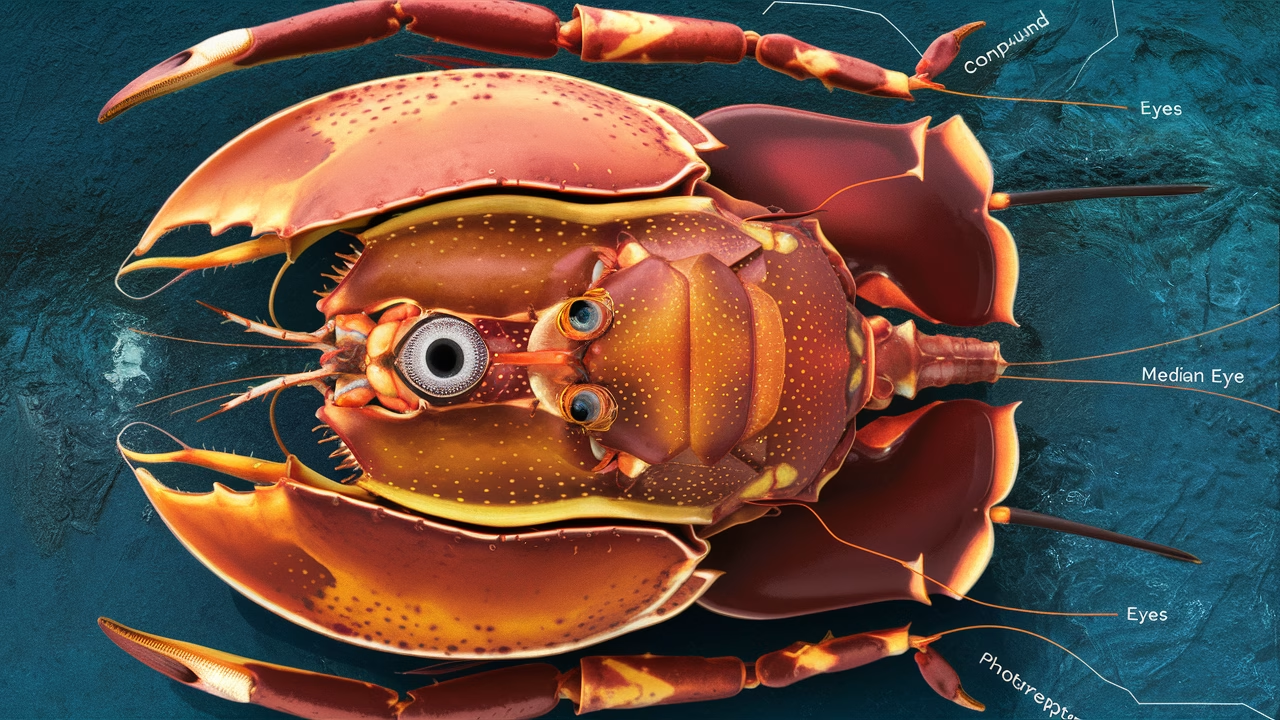
The horseshoe crab’s body consists of three segments: the prosoma (head), opisthosoma (central body), and telson (tail). Their 10 eyes are strategically positioned across these regions, each serving specific survival functions—some help them locate mates, others detect light changes as warning signals, and some even function while buried under sand.
These 10 eyes don’t work like human vision. Instead, they form a complex, distributed visual system where compound eyes work alongside lateral eyes and specialized light sensors to create a comprehensive awareness of their environment.
The Role of Compound Eyes
The most prominent features are the compound eyes—large bumps on each side of the horseshoe crab’s prosoma. These compound eyes function differently from human vision, consisting of thousands of ommatidia units that act as individual light detectors, similar to insect eyes.
Rather than forming sharp images, these compound eyes excel at detecting movement, brightness changes, and contrast. This capability proves invaluable when horseshoe crabs navigate murky estuarine waters or traverse sandy beaches during mating season. Their compound eyes can distinguish between subtle variations in their environment that would be invisible to many other marine creatures.
Most remarkably, horseshoe crab compound eyes are sensitive to UV light and can increase their sensitivity by a million times at night. This extraordinary light detection allows them to perceive even the faintest changes in lunar illumination, which is crucial for their reproduction cycles.
These compound eyes also serve as an early warning system against predators. By detecting movement and shadow patterns, horseshoe crabs can respond to threats before they become visible, giving them precious seconds to burrow into sand or seek shelter.
Significance of Lateral Eyes
The lateral eyes, positioned slightly behind the compound eyes on each side, may be smaller but they’re equally important for horseshoe crab survival. These simple lateral eyes enhance light perception and help process visual information from the primary compound eyes, especially in low-light conditions.
These lateral eyes act as supplementary sensors that fine-tune the visual data collected by the compound eyes. During critical mating periods, when horseshoe crabs must precisely time their reproductive behavior with tidal cycles and moonlight phases, these lateral eyes provide the additional light sensitivity needed for accurate environmental assessment.
Mating Behavior and Light Sensing
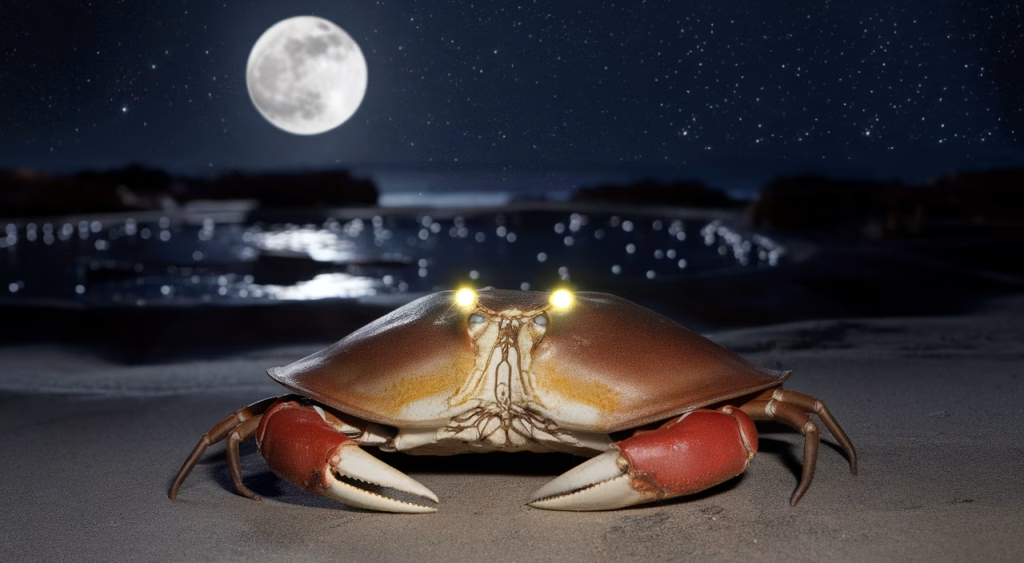
During spring high tides under a full moon, thousands of horseshoe crabs gather on beaches for their spectacular mating ritual. But how do these ancient creatures know exactly when to emerge from the depths? The answer lies in their sophisticated light sensing capabilities.
Multiple eyes contribute to this remarkable timing. The median eyes, located near the center of their shell, along with specialized ventral eyes on their underbody, detect subtle changes in lunar light that most organisms cannot perceive. These compact but highly sensitive eyes help horseshoe crabs anticipate celestial cues and align their mating behavior with optimal environmental conditions.
The median eyes are particularly important for circadian rhythms and reproductive timing. Research shows that when light detection is disrupted in these eyes, horseshoe crabs often miss their reproductive windows entirely, demonstrating how critical this vision system is for species survival.
Perhaps most fascinating are the photoreceptors on the telson (tail). When a horseshoe crab flips onto its back—a potentially fatal position—these tail eyes detect shadows and light changes, helping guide the animal as it rights itself. This tail-based light sensing can literally mean the difference between life and death.

Evolutionary Adaptations in Horseshoe Crab Eyes
Why did horseshoe crabs evolve such a complex arrangement of 10 eyes? The answer lies in their challenging habitat. These creatures inhabit dynamic tidal zones with shifting sediments, varying light levels, and multiple environmental pressures. A simple pair of eyes wouldn’t provide adequate sensory information for survival in such complex conditions.
This distributed vision system represents evolutionary redundancy at its finest. Multiple eye types ensure that horseshoe crabs can detect threats, locate food, find mates, and navigate successfully regardless of environmental conditions. Some eyes specialize in movement detection, others in light intensity changes, and still others in specific wavelengths of light.
The remarkable stability of this system over 450 million years suggests that horseshoe crabs achieved an optimal vision design very early in their evolutionary history. Unlike many species that continue evolving, horseshoe crabs found a visual solution that worked so well that natural selection has preserved it virtually unchanged.
Modern vision research owes much to horseshoe crab eyes. Their lateral compound eyes helped scientists first understand the relationship between visual stimuli and neural responses. When you observe these ancient creatures, you’re looking at the foundation of modern vision science and neurobiology.
Final Thoughts: A Living Fossil with Timeless Vision
Horseshoe crabs demonstrate how evolution can create elegant, enduring solutions to environmental challenges. Their 10 eyes represent a masterpiece of biological engineering—compound sight for movement detection, specialized light sensors for reproductive timing, and even backup vision systems in their tails.
What appears to be a simple armored creature actually possesses one of nature’s most sophisticated vision systems. Each of their 10 eyes contributes to a comprehensive understanding of their environment that enables survival in challenging marine habitats where many other species struggle.
Next time you encounter a horseshoe crab on the beach or learn about their importance in medical research, remember that you’re observing a master of light detection and environmental awareness. Their ancient wisdom lies not just in their longevity, but in their remarkable ability to see the world through 10 different perspectives simultaneously.
Frequently Asked Questions
- Which animal has 10 eyes?
Horseshoe crabs are known for having 10 eyes located across their shell, tail, and even underbody. - How do horseshoe crabs use their tail eyes?
The eyes on their tails help them detect light when flipped over, aiding in righting themselves and avoiding predation. - Are horseshoe crabs blind in the daytime?
No, they can see during the day, but their eyes become significantly more sensitive at night to pick up dim light signals. - What is the function of compound eyes in horseshoe crabs?
Compound eyes mainly detect movement and brightness, helping in finding mates and avoiding danger. - Why do horseshoe crabs come to shore at night?
Their mating is synced with tidal and lunar cycles, and their light-sensitive eyes help them detect the right time to reproduce. - Do all the eyes serve the same function?
No, each set of eyes has specialized roles—from detecting overhead light to guiding toward mates to sensing while buried in sediment. - How old is the horseshoe crab species?
They’ve existed relatively unchanged for about 450 million years, making them true living fossils.