How Can Clams Live for Over 500 Years?
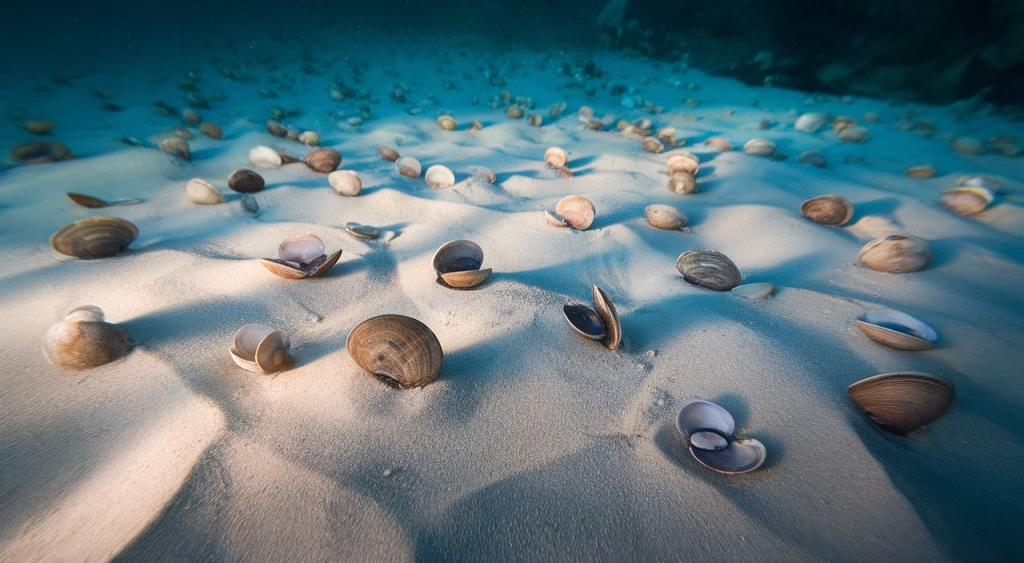
Ocean clams, particularly the famous ocean quahog, can survive for more than five centuries through remarkable biological adaptations. This incredible clams longevity results from their ultra-slow metabolism, stable deep-sea habitat, and unique cellular mechanisms that resist aging processes.
TL;DR: Clams Can Live for Centuries — Here’s Why
- Exceptional lifespan: Ocean quahogs can live over 500 years, making them one of Earth’s longest-living marine creatures.
- Longevity factors: Their metabolic rate, environmental stability, and DNA repair systems contribute to this remarkable trait.
- Ecosystem indicators: These clams act as biological time capsules, helping scientists study historical ocean conditions.
- Ocean health relevance: Long-living marine species provide long-term data on climate change and pollution impacts.
- Future research: Studying clams could unlock secrets about aging, sustainability, and marine preservation techniques.
Unraveling the Lifespan Mystery
What Makes Clams Live So Long?
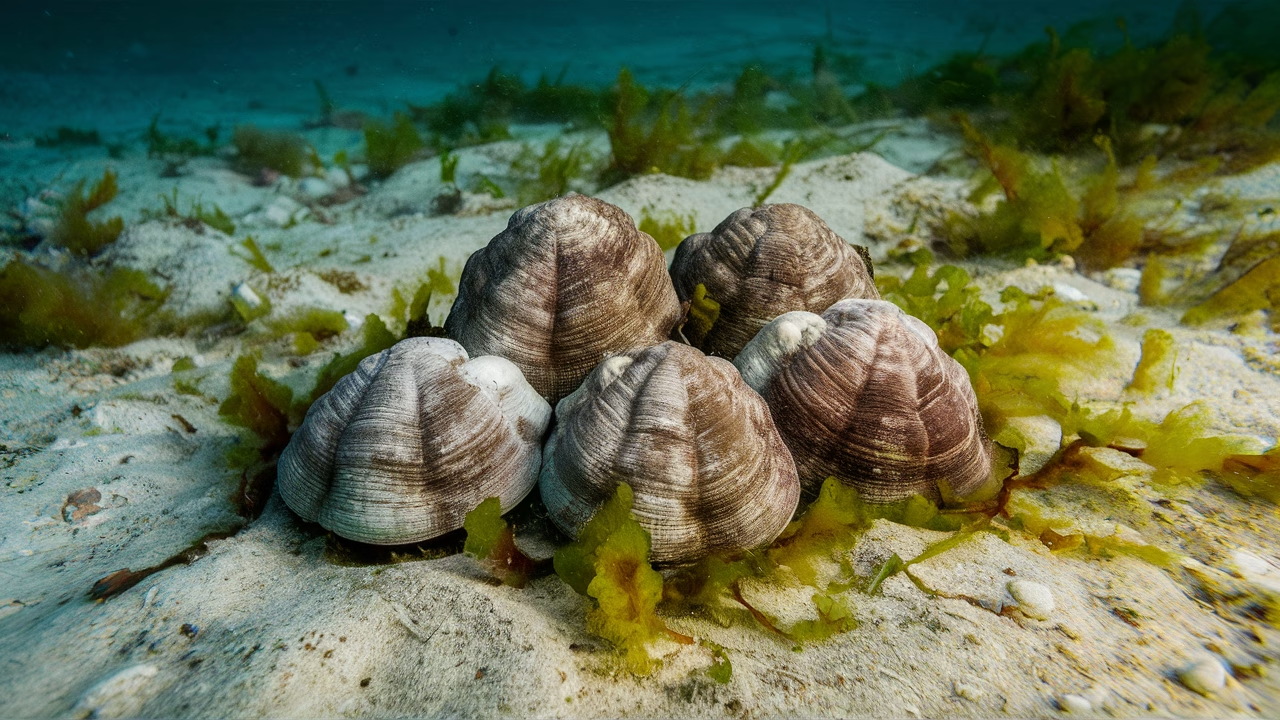
Ever wondered how a soft-bodied marine animal can outlive empires, kings, and even continents as we knew them? The answer lies deep below the ocean floor in the calm, chilled waters where quahog clams dwell.
These long-living marine creatures possess incredibly slow metabolisms, which minimizes cellular wear and tear. Think of them as the zen masters of marine life—eating slowly, moving little, and just letting life flow with the ocean currents.
Environmental Impact of Long-Living Clams
Clams as Environmental Time Capsules
These ocean-based elders aren’t just marvels of marine biology—they’re historians. By analyzing the layers in a clam’s shell, researchers can determine past ocean temperatures, salinity, and even pollution levels much like tree rings record climate data.
In practice, when scientists open a shell during clams longevity research, they’re unlocking pages from an old diary of the sea. And that diary tells stories of shifting ocean currents, changing climates, and ecological disruptions affecting ocean health.
Clam Research and Ocean Health
Helping Us Understand Marine Ecosystems
Clams longevity research is turning out to be a vital tool in marine biology. Why? Because changes in clam age distribution and shell composition reflect broader environmental shifts. If these long-living marine creatures are thriving, chances are the surrounding ecosystem maintains good ocean health too.
Consider clams as early warning buoys in the ocean’s vast highway. If something’s amiss—such as increased water acidity or temperature fluctuations—they show signs in their growth patterns, allowing scientists to act proactively to protect marine ecosystems.
How Ocean Currents Affect Clam Lifespan
Currents, Depths, and Temperature—All Play a Role
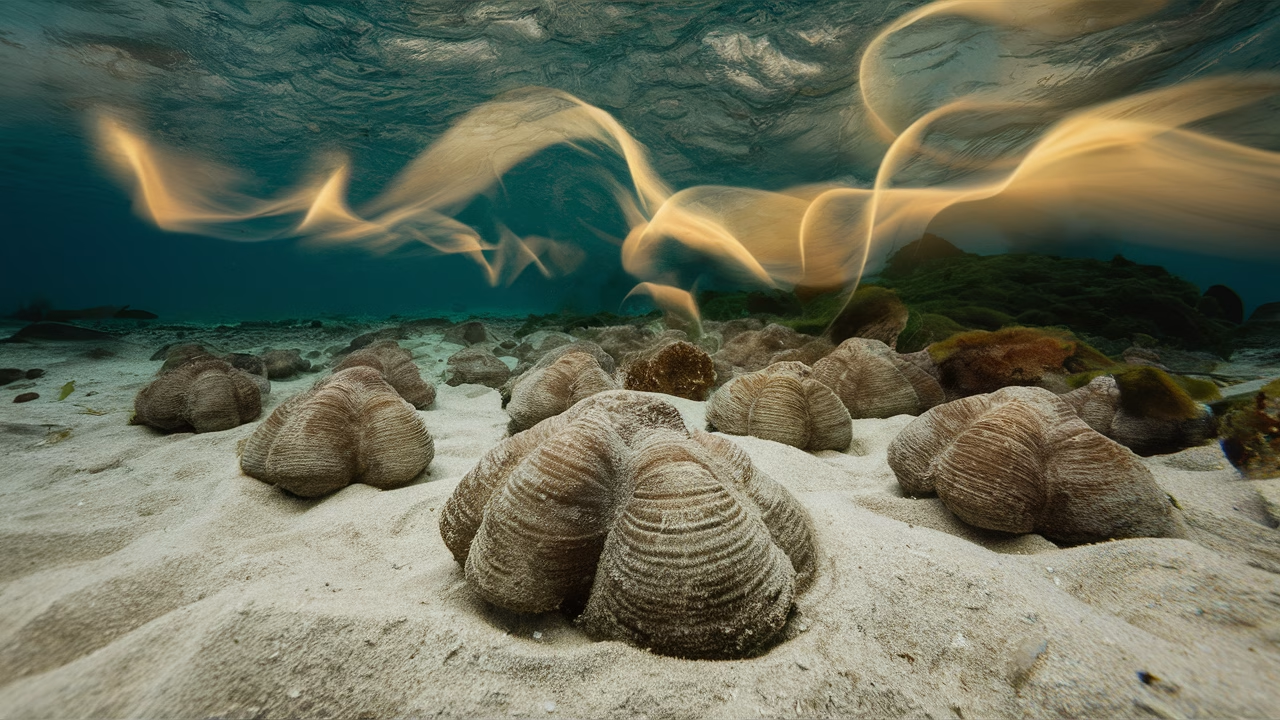
Ocean clams, particularly deep-sea species like the ocean quahog, are sensitive to the flow, temperature, and chemistry of ocean currents around them. Calm, nutrient-rich waters contribute to their exceptional longevity—much like living in a serene retirement village compared to the hustle and bustle of an urban reef.
Long-living marine creatures in turbulent or rapidly changing environments often show shorter lifespans or developmental stress. This makes their longevity an indirect gauge for ocean health and environmental consistency.
Future Prospects for Clam Research
Could Clams Unlock Secrets of Aging?
What can a 500-year-old shell teach us about ourselves? As it turns out—a lot. Scientists conducting clams longevity research are studying the cellular regeneration abilities and low cancer rates in these long-living marine creatures to inform human aging and regenerative medicine.
It’s a stretch today, but tomorrow? Understanding how some species virtually pause the biological clock might help us innovate healthier aging solutions on land, too. Plus, their role as indicators of ocean health may guide future marine preservation strategies.
Cost Guide: Comparing Marine Longevity with Other Species
| Species | Average Lifespan | Notable Features |
|---|---|---|
| Ocean Quahog Clam | Up to 507 years | Low metabolism, deep-sea dwelling |
| Bowhead Whale | Over 200 years | Thick blubber, Arctic adaptation |
| Greenland Shark | Up to 400 years | Slow growth rate, deep water |
Final Thought
We often look to the skies for timelessness—in stars and galaxies. But sometimes, the secrets of endurance are waiting under the sea, inside a half-buried shell. Ocean clams may not have eyes or brains, but they hold the wisdom of centuries. Their presence is not only a biological curiosity—it’s a signal to pay closer attention to our oceans, because their lives mirror the health of our planet and the intricate dance of ocean currents that sustain all marine life.
Frequently Asked Questions
How long can clams live?
Ocean quahog clams can live over 500 years. Most clams have much shorter lives, averaging 1–10 years depending on species.
How do scientists determine the age of clams?
Researchers examine growth rings in a clam’s shell, much like counting tree rings, to calculate age.
Do all clams live hundreds of years?
No, only specific species like Arctica islandica (ocean quahog) live that long. Most clams live less than a decade.
Why is clam longevity important?
It helps us understand marine life cycles, historical ocean conditions, and provides insights into aging processes.
Can changing ocean temperatures affect clam lifespan?
Yes. Environmental changes like rising temperatures and increased acidity can reduce clam longevity and population stability.
Are clams endangered?
Most clams are not endangered, but habitat loss, overfishing, and pollution threaten some species.
Is clam longevity beneficial for humans?
Yes. Studying their genetics and biology may help us better understand aging and environmental sustainability.