What is the relationship between pearlfish and sea cucumbers?
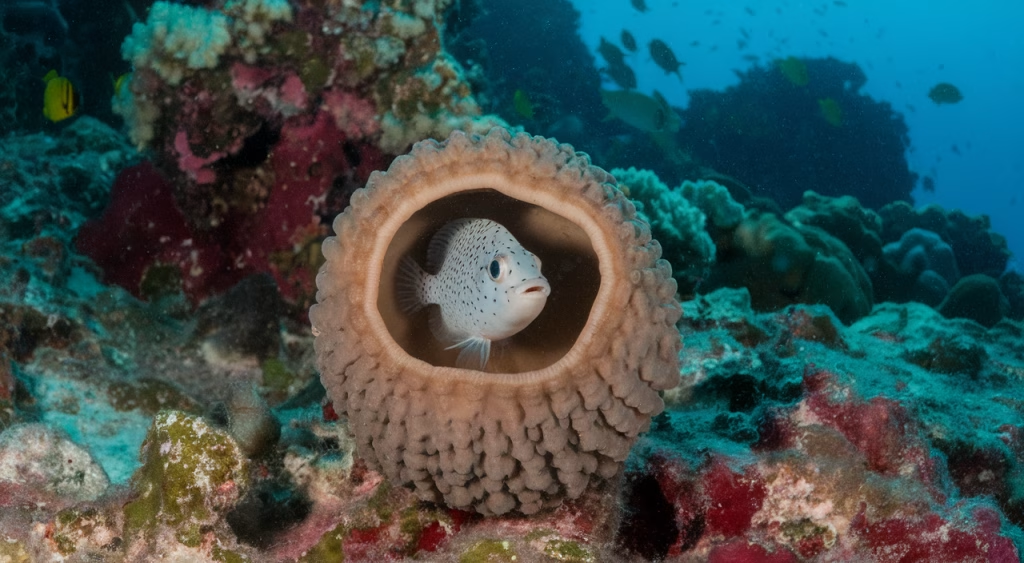
The relationship between pearlfish and sea cucumbers is one of nature’s most remarkable partnerships. Pearlfish live inside the cloaca (anus) of sea cucumbers, seeking shelter from predators and harsh conditions. This extraordinary marine relationship demonstrates symbiosis at its finest, where pearlfish use sea cucumbers as living safe houses—though the nature of this relationship can range from harmless commensalism to parasitism depending on the species involved.
TL;DR: Understanding Pearlfish and Sea Cucumbers
- Pearlfish and sea cucumbers form a unique cohabitation, with pearlfish hiding inside the sea cucumber’s body cavity for protection.
- This mutualistic relationship in nature provides the pearlfish with shelter and protection from ocean predators.
- Sea cucumbers may tolerate this intrusion, though research reveals potential parasitic drawbacks in some cases.
- This fascinating behavior influences ecosystem dynamics with pearlfish, demonstrating how diverse survival strategies shape marine life.
- The benefits of pearlfish living inside sea cucumbers showcase broader concepts of mutualistic relationships in nature, though the balance between mutualism and parasitism remains delicate.
The Intriguing Partnership Between Pearlfish and Sea Cucumbers
Have you ever wondered how marine creatures survive the harsh, predator-filled environment of the deep sea? For pearlfish, the answer lies in an unexpected hiding spot—inside their sea cucumber hosts. As shocking as it sounds, this is a naturally occurring and perfectly evolved behavior that showcases the incredible adaptability of ocean ecosystems.
While many marine relationships develop openly, pearlfish and sea cucumbers prefer a more secretive arrangement. The benefits of pearlfish living inside sea cucumbers extend beyond simple physical protection to include access to stable environmental conditions. But is this truly a balanced partnership, or does one species gain significantly more than the other? Let’s explore this fascinating mutualistic relationship in nature.
Understanding the Biology of Pearlfish
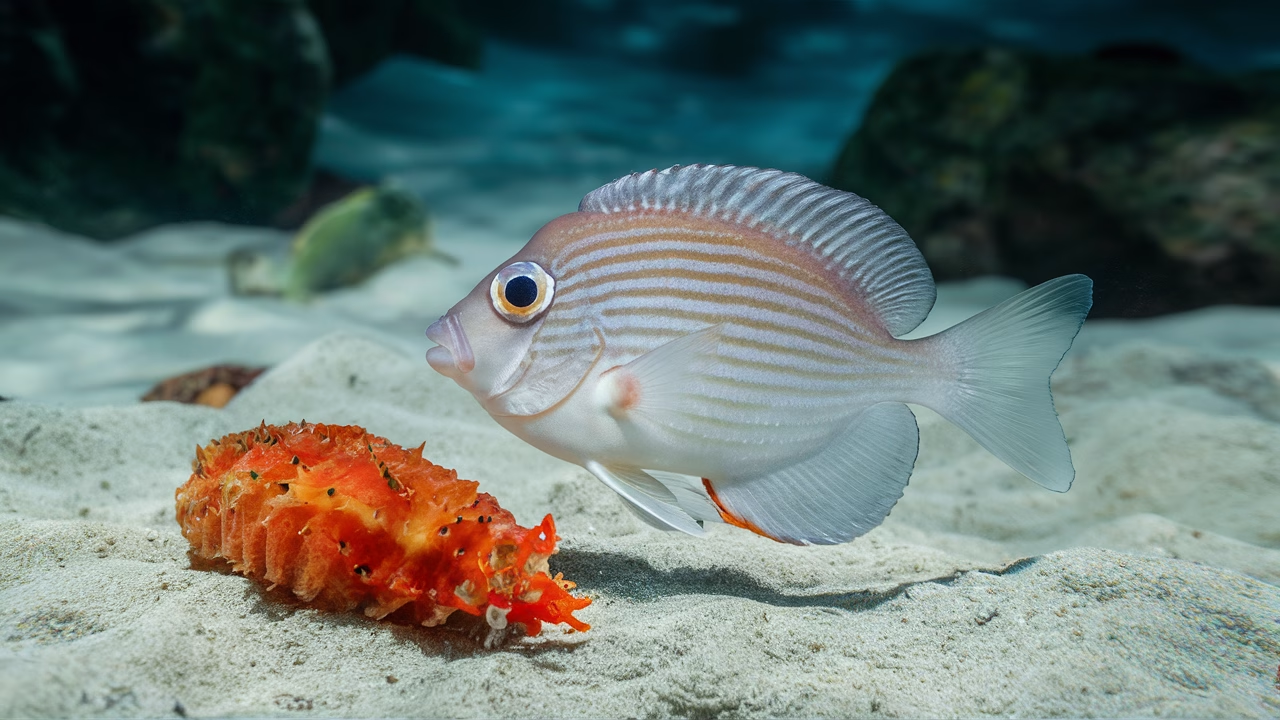
Pearlfish (family Carapidae) are remarkably adapted marine fish, typically measuring between 4 and 7 inches long. Their specialized anatomy represents a masterclass in evolutionary design for stealth and survival. With nearly transparent bodies and incredibly flexible musculature, these fish are perfectly built to slip into the tight spaces of their sea cucumber hosts.
You’ll find pearlfish and sea cucumbers together in tropical and subtropical oceans worldwide, from vibrant coral reefs to mysterious deep-sea environments. These primarily nocturnal fish have mastered the art of swift entry into their host’s cloacal opening, darting in tail-first and emerging headfirst with remarkable precision. It’s essentially nature’s version of an aquatic safehouse hidden in plain sight.
The relationship between different pearlfish species and their hosts varies significantly. Some pearlfish species maintain commensal relationships, causing no harm to their sea cucumber hosts. However, others exhibit parasitic behavior, feeding on the host’s reproductive organs or internal tissues. This variation makes the study of ecosystem dynamics with pearlfish particularly complex and fascinating for marine biologists.
The Unique Traits of Sea Cucumbers
Despite their vegetable-inspired name, sea cucumbers are sophisticated marine invertebrates belonging to the phylum Echinodermata, sharing ancestry with sea stars and sea urchins. With their soft, tubular bodies and distinctive leathery skin, these creatures serve as the ocean’s cleanup crew, processing detritus and cycling essential nutrients back into marine ecosystems.
One of their most remarkable features is the cloaca—a multipurpose opening that serves both digestive and respiratory functions. Sea cucumbers actually breathe through this opening using an internal respiratory tree, which makes them ideal hosts for pearlfish seeking shelter. This unique biological design is central to understanding how pearlfish and sea cucumbers maintain their relationship.
Sea cucumbers possess a fascinating defense mechanism called evisceration—they can expel their internal organs to confuse or entangle predators. Interestingly, this response can also be triggered if pearlfish become too aggressive within their host, highlighting the delicate balance required in this mutualistic relationship in nature.
How Pearlfish Benefit from Living Inside Sea Cucumbers
The benefits of pearlfish living inside sea cucumbers extend far beyond simple shelter. This remarkable adaptation offers multiple survival advantages that have been refined over millions of years of evolution:
- Complete protection from predators: Pearlfish become virtually invisible to ocean predators while safely tucked inside their sea cucumber hosts.
- Environmental stability: The host’s body buffers temperature fluctuations and salinity changes, helping pearlfish maintain optimal physiological conditions.
- Energy conservation: Pearlfish can rest and regenerate energy without maintaining constant vigilance against threats.
- Respiratory advantages: Some research suggests pearlfish may benefit from the sea cucumber’s respiratory system, though this requires further study.
However, the relationship between pearlfish and sea cucumbers can shift when resources become scarce. Some pearlfish species exhibit parasitic behavior, feeding on their host’s gonads or other internal tissues. This transformation from commensal to parasitic behavior demonstrates how ecosystem dynamics with pearlfish can change based on environmental pressures and survival needs.
The Future of Pearlfish and Sea Cucumbers in Ecosystems
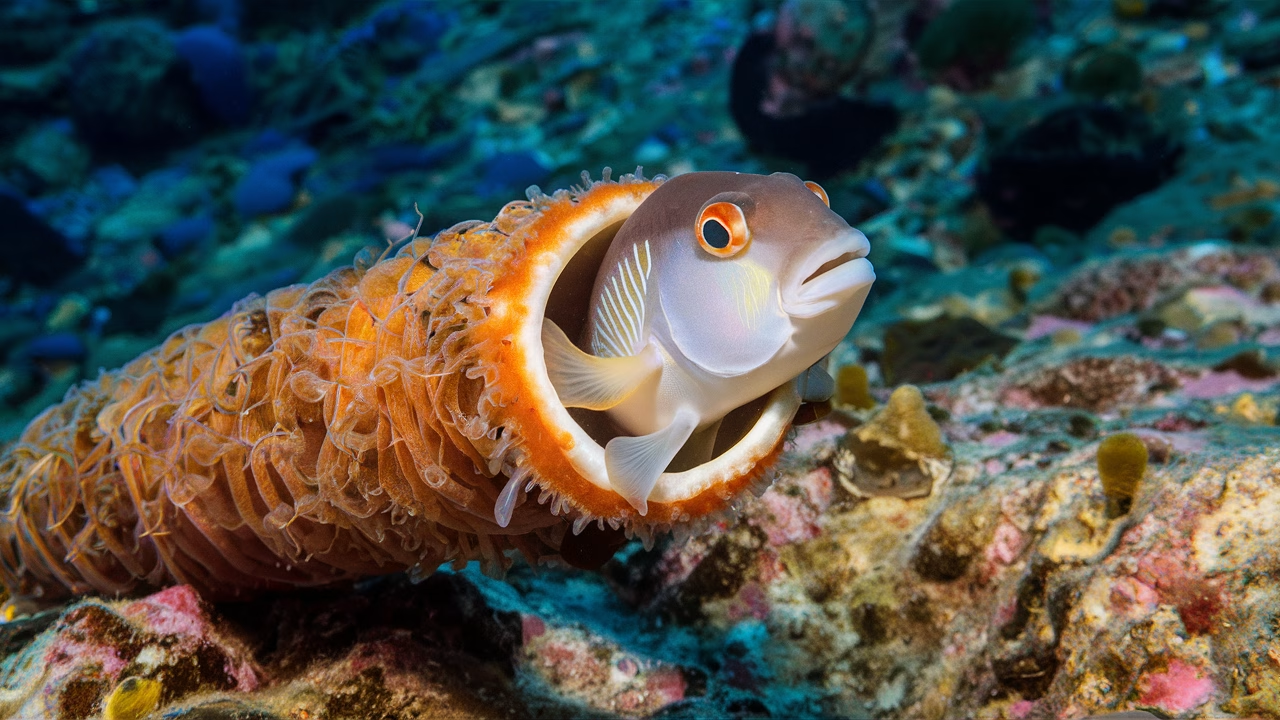
Climate change is dramatically altering the delicate balance of pearlfish and sea cucumbers relationships. Rising ocean temperatures, increasing acidification, and habitat loss are putting unprecedented pressure on both species, particularly in coral reef environments where many sea cucumber hosts live.
As marine biodiversity faces mounting challenges, these intricate relationships become increasingly fragile. When sea cucumber populations decline due to overfishing or habitat destruction, pearlfish lose their essential hosts. Conversely, environmental stress may intensify parasitic behaviors as the competition for survival becomes more desperate.
Yet there’s hope in this story. The mutualistic relationship in nature between these species demonstrates remarkable marine adaptability. This partnership reveals the intricate web of underwater cohabitation and shows how every organism, regardless of how unusual their lifestyle, contributes to maintaining healthy marine ecosystems.
The Mutualistic Relationship in Nature
We often imagine symbiosis as a perfect partnership, but the relationship between pearlfish and sea cucumbers illustrates nature’s complexity. This association can shift between mutualism, commensalism, and parasitism depending on species, environmental conditions, and resource availability.
When pearlfish simply use sea cucumbers for shelter without causing harm, we observe commensalism. If the host benefits—perhaps through protection from other parasites or predators—the relationship moves toward true mutualism. However, when hosts suffer tissue damage or lose reproductive capacity, we’re witnessing parasitism in action.
This flexibility reminds us that ecosystem dynamics with pearlfish aren’t static—they evolve continuously. What begins as a beneficial mutualistic relationship in nature may become parasitic under stress, while seemingly parasitic interactions might offer hidden benefits under different circumstances. As researchers, we must observe these relationships with nuance and appreciation for their complexity.
Final Thoughts: A Tale of Coexistence, Not Always Harmony
The extraordinary relationship between pearlfish and sea cucumbers challenges our understanding of symbiosis, survival strategies, and ecological balance. This partnership serves as a perfect example of marine diversity, showing how even the most unusual behaviors play crucial roles in the vast tapestry of ocean life.
As marine biologists and conservationists, we must look beyond surface-level curiosities to appreciate the elegant complexity of these interactions. Understanding the benefits of pearlfish living inside sea cucumbers and the broader implications for ecosystem dynamics with pearlfish doesn’t just satisfy scientific curiosity—it helps us protect these vital yet vulnerable underwater relationships for future generations.
FAQs: What is the relationship between pearlfish and the host sea cucumber?
- Is the relationship between pearlfish and sea cucumbers harmful?
It can be. Some pearlfish species are harmless, but others are parasitic and feed on the internal organs of the sea cucumber. - Do all pearlfish live inside sea cucumbers?
No, but many species of pearlfish frequent sea cucumbers as regular refuges. Others may use different hosts or shelters. - Why do pearlfish enter through the anus?
It’s the most accessible and non-lethal entry point into the sea cucumber’s internal cavity, and it’s a natural part of the host’s physiology. - Are there benefits for the sea cucumber?
Potentially. Some researchers suggest that having pearlfish inside might deter predators or unwanted parasites. - What ecosystems are affected by this relationship?
Shallow coral reefs, seagrass meadows, and deep-sea benthic zones are among the habitats influenced by this dynamic. - Can this relationship change due to climate change?
Yes. As ocean conditions shift, available hosts and safe shelters may disappear, altering the symbiosis.