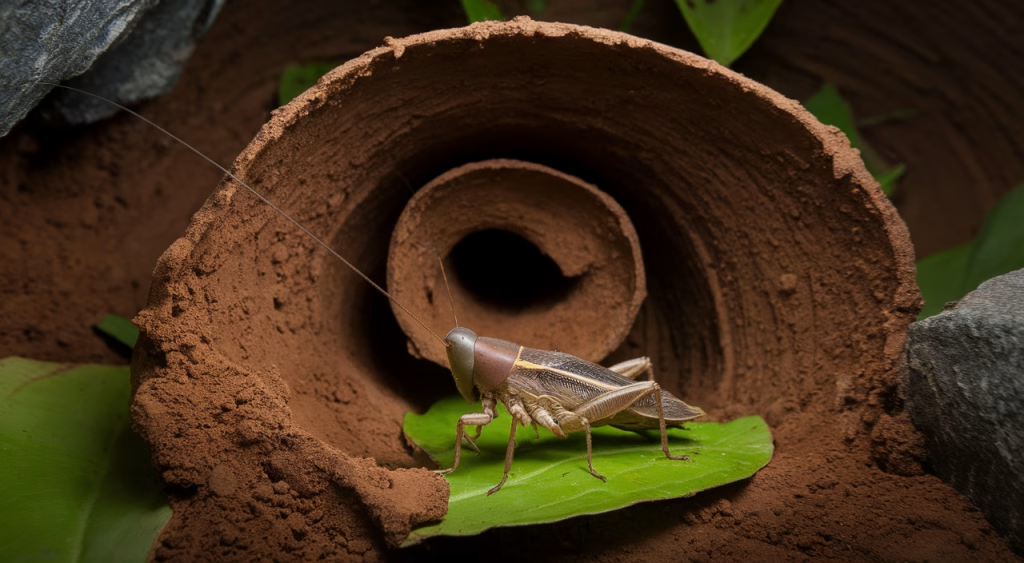

Why do 17-year cicadas stay underground for so long?
17-year cicadas remain underground for such an extended period due to evolutionary strategies aimed at avoiding predators and maximizing species survival. Their lengthy cicada life cycle is rare in the insect world and is fine-tuned to create a powerful natural spectacle of synchronized emergence every 17 years.
TL;DR: What You Need to Know About 17-Year Cicadas
- Purpose of Longevity Underground: The 17-year cycle protects cicadas from developing predictable patterns that predators could exploit.
- Cicada Life Cycle: Begins as eggs in trees, burrow underground as nymphs, and emerge almost two decades later to mate and die.
- Underground Years: Cicadas feed on tree root sap, growing slowly in the safety of soil.
- Ecosystem Impact: Their emergence feeds predators in abundance, improves soil nutrients, and aerates the earth.
- Cultural Role: Cicadas have long held symbolic meanings in literature, song, and myth, often representing rebirth or transformation.
Understanding the Fascinating Life Cycle of 17-Year Cicadas

The Science Behind the Phenomenon
Seventeen-year cicadas belong to the genus Magicicada, known for their unusually long juvenile stage. Most insects live short lives—weeks, maybe months at most, especially above ground. But cicadas? They’re the time-travelers of the insect world. From the moment they hatch, cicada nymphs drop to the ground and burrow into the soil, often several feet down. For the next 17 years, they quietly sip on tree root xylem, growing slowly as they molt through five developmental stages called instars. This remarkable cicada life cycle represents one of nature’s most patient survival strategies.
Reasons for Their Lengthy Underground Stay
This long subterranean phase might seem excessive—but it’s an excellent evolutionary trick. By emerging in prime-numbered intervals (13 or 17 years), these 17-year cicadas avoid syncing with the life cycles of their natural predators. Birds, small mammals, and reptiles can’t evolve to take advantage of a food source that appears so unpredictably. Imagine planning your dinner, but you only get fed once every couple of decades through a surprise delivery!
Studies suggest this periodicity also prevents overlap between different cicada broods (regional groups with staggered emergence years), which reduces hybridization and competition among cicada populations.
The Predators and Prey of 17-Year Cicadas
Ecosystem Impact and Survival Strategies
When 17-year cicadas emerge, it isn’t subtle. Millions erupt from the soil in a short span, creating mass emergence cicadas that fill the air with their loud buzz and thick swarms. You might call it overkill—but in truth, this is a stunning example of a predator-satiation strategy. There are too many cicadas for cicada predators to eat them all, so enough survive to carry on the population.
Here’s what often happens: cicada predators like birds initially feast with glee, stuffing themselves on cicadas. But they reach a limit—meanwhile, the rest of the cicadas continue mating, unfazed. Once their breeding is complete, the adult cicadas die shortly after, leaving behind eggs in tree branches to begin the cycle anew.
Interaction with Other Species in the Environment
| Predator | Effect of Cicada Emergence |
|---|---|
| Birds (e.g., crows, jays) | Temporary population boost due to food surplus |
| Mammals (raccoons, foxes) | Short-term dietary benefit |
| Insects (wasps, spiders) | Predation especially on nymphs and vulnerable adults |
When cicadas die off, their decomposing bodies nourish the soil with nitrogen. Their burrowing paths also aerate the soil, improving water absorption and root health for nearby plants. It’s a once-in-a-generation ecosystem upgrade—like natural composting mixed with instant aeration that benefits the entire forest ecosystem.
The Enigma of Synchronized Emergence
The Mysteries and Benefits of Mass Cicada Emergence
Mass emergence cicadas aren’t just an astounding spectacle—they represent a survival masterstroke. These 17-year cicadas coordinate their reappearance with uncanny precision—up to a specific week based on soil temperature reaching about 64°F at eight inches deep. We still don’t fully understand how they track time underground during their extended cicada life cycle, but most scientists believe it involves internal biological clocks influenced by growth cycles of host trees and changes in seasonal root sap flow.
When they emerge, cacophonous mating calls dominate forests—so loud they can rival jet engines in some spots. Males sing to attract females, using specialized structures called tymbals. Each species has its unique call, helping females of the same group locate their mates amid the harmony—well, chaos—of the mass performance during cicada emergence.
Human Reactions and Cultural Significance of Cicadas
Historical Beliefs and Modern Perceptions
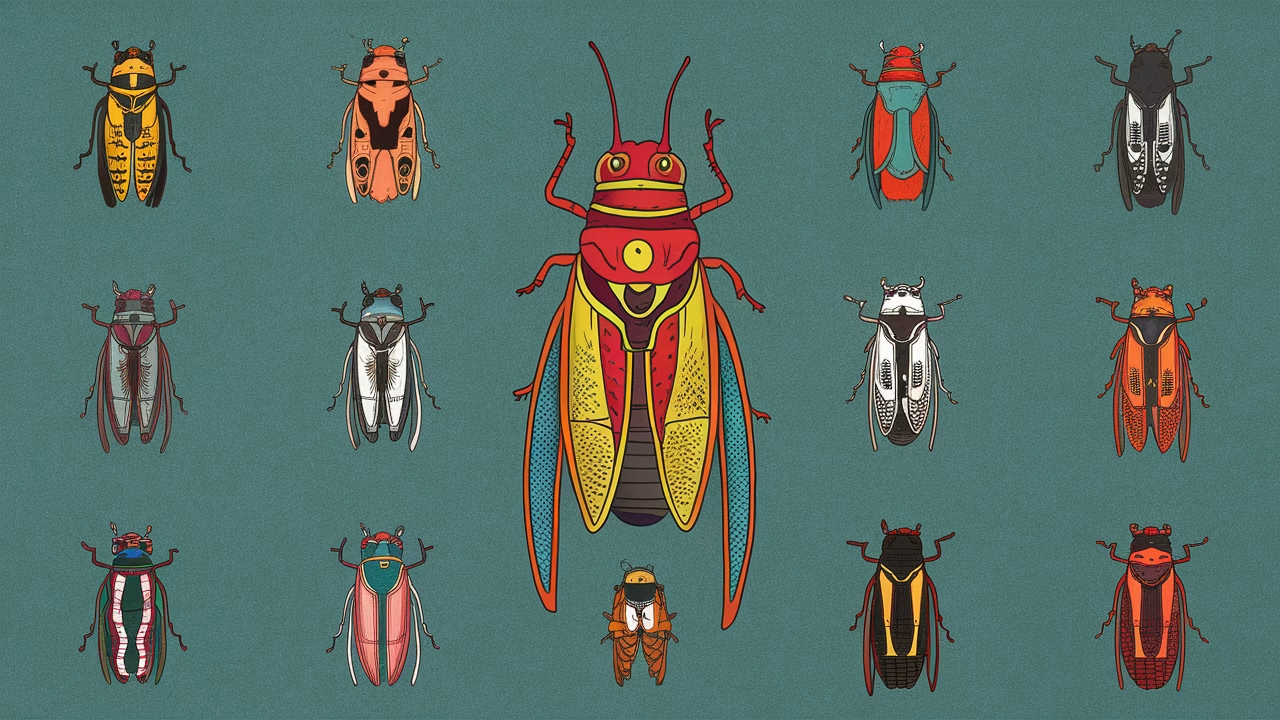
Ever wondered how ancient cultures interpreted this bizarre natural timer? Cicadas appear in Chinese, Japanese, Greek, and Native American traditions as symbols of rebirth, immortality, and resilience. Ancient Chinese poems often link their transformative molting to spiritual enlightenment, celebrating the patience required for their remarkable 17-year cicada life cycle.
Today, responses are mixed. Some marvel at the spectacle of mass emergence cicadas; others complain about the noise and cleanup. But undeniably, their appearance sparks headlines, music, local festivals, and public curiosity. In the age of social media, cicadas trend like celebrities—especially for the curious who’ve never witnessed a mass emergence event.
Role of Cicadas in Folklore and Popular Culture
In Homer’s “Iliad,” cicadas symbolized peaceful old age. In modern media, they’re used as metaphors for time, patience, and surprise returns. You’ll find them in music videos, cartoons, and even as motifs in clothing designs and tattoos during emergence years.
Their appearances verge on mythical, and that mystery helps keep humanity’s fascination alive with these 17-year cicadas. Despite being insects, their lore is immortal.
Final Thoughts
So next time you hear the distant drone of emerging cicadas, remember: what you’re witnessing is a phenomenon centuries in the making. These insects have waited 17 years for a brief summer of song, mating, and meaning. By understanding their cicada life cycle, ecosystem role, and cultural significance, we gain more than insect facts—we reconnect with nature’s deeper rhythms and appreciate the remarkable patience of 17-year cicadas.
FAQs About 17-Year Cicadas
- What triggers 17-year cicadas to emerge?
Soil temperature—when it reaches 64°F at about 8 inches deep, it’s cicada time. - Do 17-year cicadas damage plants or trees?
Not seriously. While they lay eggs in tree branches, most healthy trees recover quickly. - Are cicadas dangerous to pets or humans?
No. While they might seem overwhelming in number, they don’t bite, sting, or transmit diseases. - Why are they called 17-year cicadas?
Because that’s their underground developmental period before emerging to reproduce. - How loud can cicadas get?
Up to 100 decibels—about the same as a lawnmower or motorcycle. - Where do you find 17-year cicadas?
Mainly in the eastern and midwestern United States, each group is called a brood with a unique number. - What does the Bible say about cicadas?
The Bible does not specifically mention cicadas, but locusts (a related insect) are discussed as part of several plagues. Some may interpret cicadas symbolically, such as representing renewal or judgment.