Why Do Shrikes Impale Prey on Thorns and Barbed Wire?
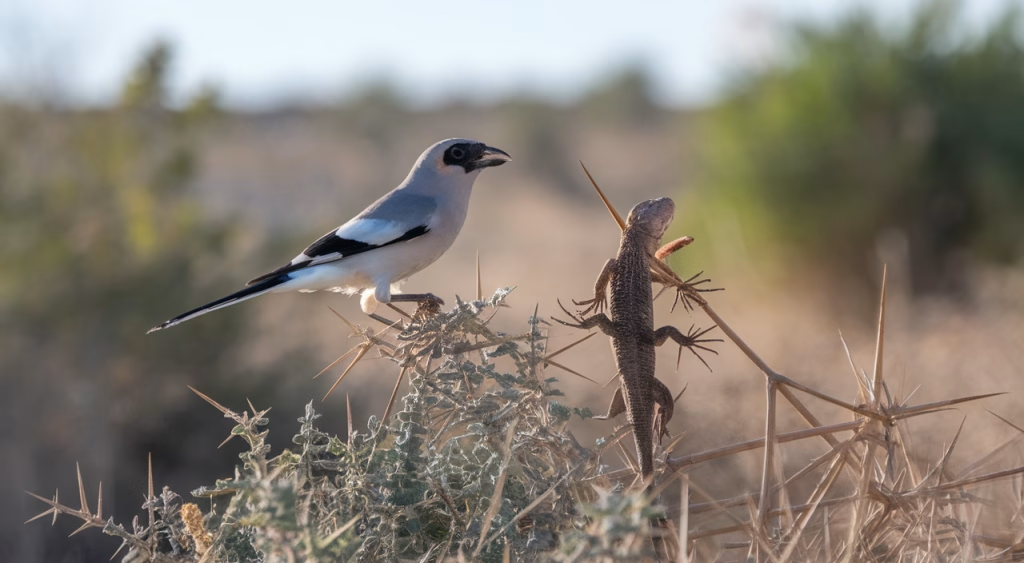
At first glance, you might assume impaling small animals on a spike is the work of a predator far larger than a songbird. But nature is full of surprises. Loggerhead shrikes—charming in appearance and brutal in behavior—have evolved a particularly unique feeding style: they impale prey on sharp objects. But why do shrikes impale prey?
Short answer: Shrikes impale prey on thorns, barbed wire, and twigs because they lack strong talons like raptors. Impalement allows them to secure food while they tear it apart with their hooked beak. Additionally, prey impaling behavior plays a role in food storage, mating displays, and even prey detoxification.
TL;DR: Quick Summary on Why Shrikes Impale Prey
- Purpose: Impalement allows shrikes to consume prey without talons by securing it using natural spikes.
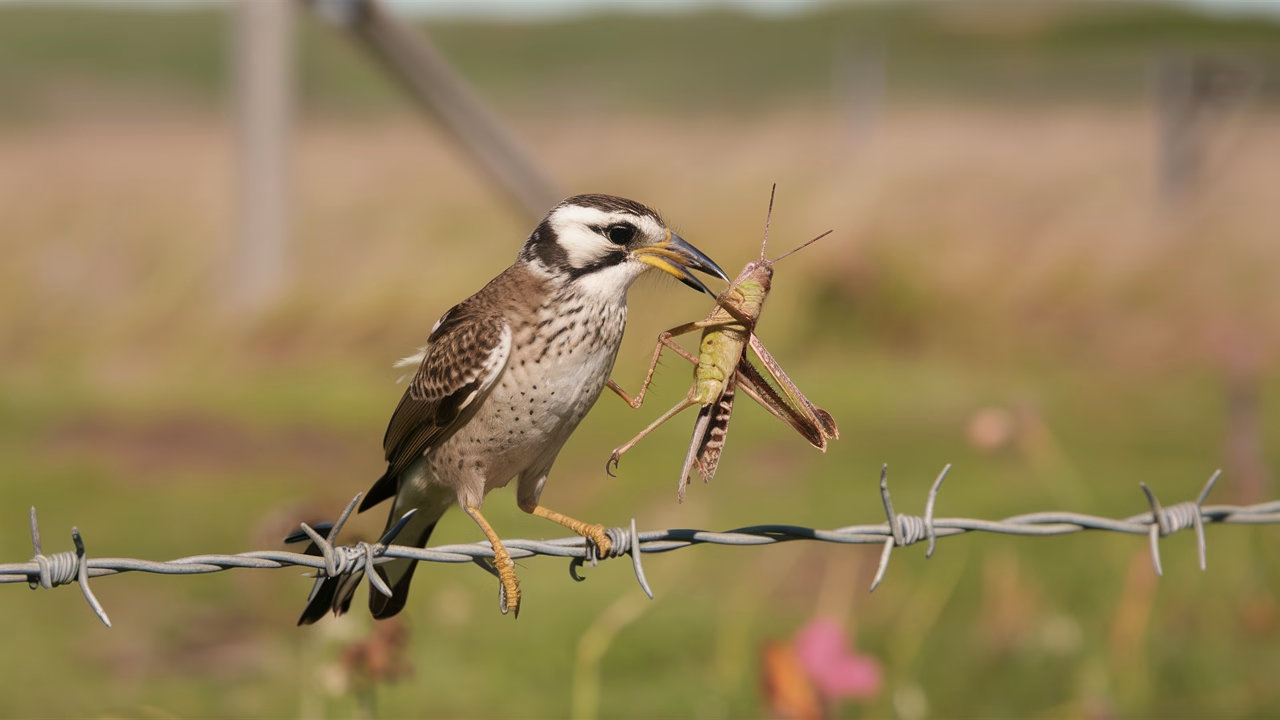
- Locations: Common impaling tools include twigs, thorns, cactus spines, and barbed wire fences.
- Evolutionary Reason: It’s a compensatory adaptation since shrikes are not true raptors but exhibit predatory behavior.
- Mating Behavior: Prey “larders” serve to attract and impress mates, signaling hunting skill.
- Detoxification: Certain toxic prey, like monarch butterflies, are impaled and left to de-toxify before consumption.
Understanding Loggerhead Shrikes and Their Unique Behavior
Let’s start with the star of our story: the loggerhead shrike (Lanius ludovicianus). Despite their small size and robin-like build, loggerhead shrikes are apex predators in disguise. Armed with a sharply-hooked beak—reminiscent of a hawk’s—they prey on a broad range of animals, including insects, lizards, small birds, rodents, and even snakes.
But here’s where their unique feeding habits reveal nature’s ingenuity. Unlike hawks or owls, shrikes don’t have powerful talons. Evolution equipped them with a predator’s instincts but left them without the typical raptor weaponry. So what does a clever bird do? They use environmental tools—thorns, briars, and even man-made barbed wire—to kill and cache food through prey impaling behavior.
This behavior earned them the nickname “butcher birds.” And it isn’t just a survival trick; it’s essential to their reproduction strategy and demonstrates remarkable wildlife behavior adaptations.
The Science Behind Shrikes’ Barbed Wire Impalement
Let’s examine the biological logic behind this fascinating yet methodical behavior. Shrikes impale prey for several key reasons, all rooted in evolutionary necessity and environmental adaptation:
1. Feeding Without Talons
The defining evolutionary trait that drives prey impaling behavior is shrikes’ lack of strong talons. As songbirds (passerines) rather than true raptors, shrikes have delicate feet not built for clutching prey during feeding. To compensate, they need an external anchor—enter thorns and wire. By impaling their catch, shrikes effectively pin it down and tear into it using their hooked beak.
2. Strategic Food Storage
Much like squirrels cache nuts, shrikes cache meat through systematic impalement. During abundant hunting periods, loggerhead shrikes may impale multiple prey items across their territory—a grasshopper on a cactus here, a mouse on a barbed fence there. These larders serve as emergency rations when prey is scarce or weather conditions prevent active hunting.
3. Mating Displays and Territory Signaling
During breeding season, male shrikes construct elaborate prey-laden larders to showcase their hunting prowess. These impaled displays function like macabre courtship gifts, advertising dominance and suitability to potential mates. A well-stocked impaling site convinces female shrikes that their suitor can provide and defend resource-rich territory.
4. Detoxification of Poisonous Prey
Some prey requires special handling. Monarch butterflies contain cardiac glycosides harmful to many predators. Shrikes have developed a sophisticated workaround through strategic impalement. By impaling toxic prey and allowing 1–2 days of decomposition, harmful toxins break down, making the meal safe for consumption. This demonstrates remarkable behavioral sophistication in songbirds.
5. Training Young Shrikes
Wildlife behavior studies suggest impalement functions as juvenile training. Young shrikes observe adult impaling techniques and practice on easier targets like insects, gradually mastering complex prey handling within their parents’ established impaling zones.
As you can see, prey impaling behavior isn’t random violence—it’s evolutionary strategy.
Wildlife Research and Studies on Shrike Behavior
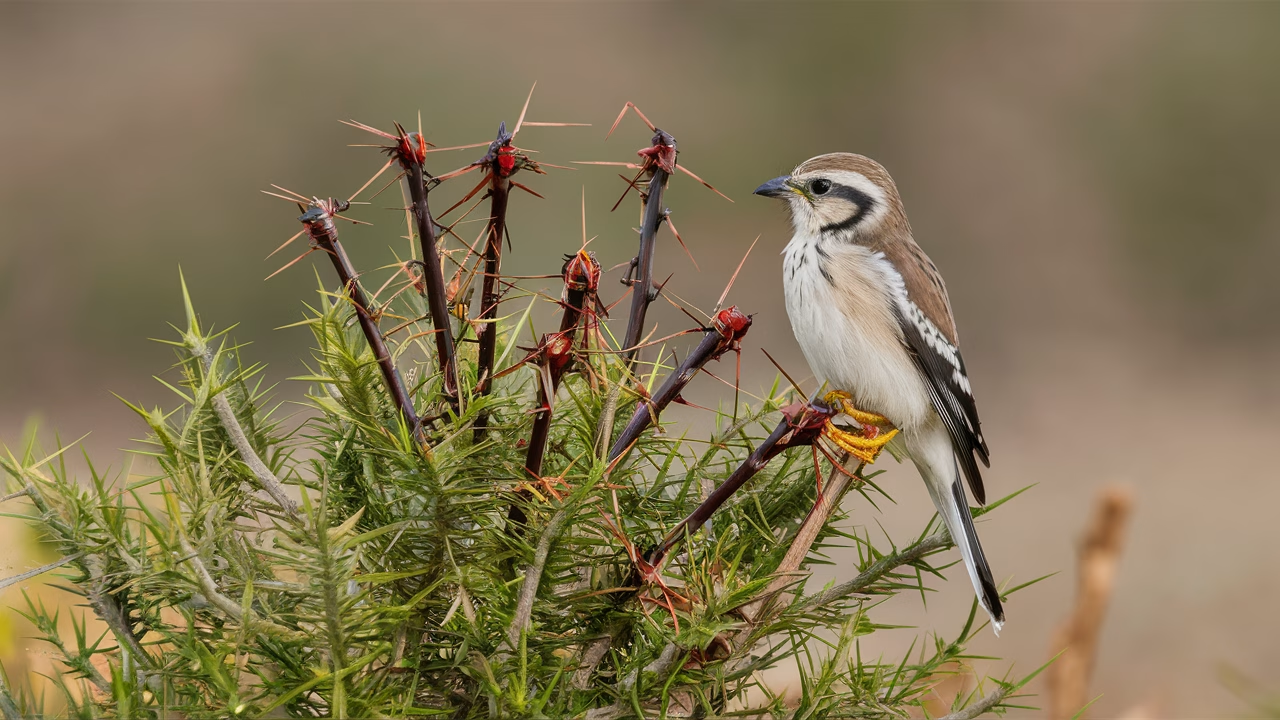
Our understanding of prey impaling behavior comes from decades of ornithological field research. Loggerhead shrikes in North America and great grey shrikes (Lanius excubitor) in Europe and Asia have been subjects of extensive wildlife behavior studies. Here’s what researchers have discovered:
| Study Focus | Findings |
|---|---|
| Feeding Mechanisms | Confirmed impalement compensates for lack of talons; impalement preferred on rigid supports. |
| Reproductive Behavior | Males with diverse and frequent impalement displays attract more mates. |
| Prey Selection | Seasonal shifts in prey types; toxic prey often impaled and delayed in consumption. |
| Environmental Interaction | Use of man-made objects (e.g., barbed wire) increasing with habitat encroachment. |
One surprising discovery is that shrikes kill vertebrate prey like young mice using precise bites to the skull base—similar to falcon techniques. Researchers term this the “cervical dislocation method.” Once killed, victims are immediately impaled for processing and storage.
Ecological Impact of Shrikes’ Unique Feeding Habits
From an ecological perspective, shrike impalement behavior provides multiple benefits while creating some conservation challenges:
- Natural Pest Control: By removing vast numbers of harmful insects and small vertebrate pests through systematic hunting and impaling, shrikes function as natural pest controllers.
- Habitat Adaptation Challenges: Agricultural development reduces natural impalement surfaces. While some loggerhead shrikes adapt by using fences, this shift disrupts traditional food-caching behaviors.
- Conservation Implications: Loggerhead shrike populations have declined drastically across North America. Understanding impaling behavior helps create environments supporting reproduction and larder-building.
- Research Value: Shrikes challenge our expectations of songbird behavior, blending beauty with predatory efficiency in nature’s most unique feeding adaptations.
Final Thoughts: Nature’s Tiny Butcher
Next time you walk a rural path and spot a lizard skewered on a thorn, know that you’re witnessing more than predatory behavior. You’re seeing evolutionary ingenuity, sophisticated survival strategy, and perhaps even a courtship display in the language of impaled prey. The shrike, with all its contradictions—small but fierce, songbird yet predator—reminds us that nature’s solutions often defy expectations.
Understanding why shrikes impale prey reveals how these remarkable birds transform environmental tools into weapons and storage solutions—natural innovation that continues to fascinate wildlife researchers and nature enthusiasts alike.
Frequently Asked Questions
- What do shrikes do with thorns?
They use thorns (and barbed wire) to impale prey, effectively replacing the talons they lack. - Why are shrikes called butcher birds?
Because of their habit of impaling prey and creating macabre larders resembling a butcher’s shop. - Do all shrikes impale their prey?
Most shrike species exhibit impaling behavior, but the frequency and prey type may vary by region and availability. - Can shrikes kill animals bigger than them?
Yes, shrikes can kill larger prey using cervically dislocating bites and then impale them for consumption. - Is impalement a form of food storage?
Absolutely. Impaling prey allows shrikes to store food for later, especially during breeding season or winter shortages. - What animals do shrikes impale?
Insects, small birds, rodents, frogs, lizards, and even spiders can end up on a shrike’s prey rack. - Are shrikes endangered?
Certain species like the loggerhead shrike are facing population declines due to habitat loss and need conservation focus.