
Why do elephants have specific alarm calls for humans?
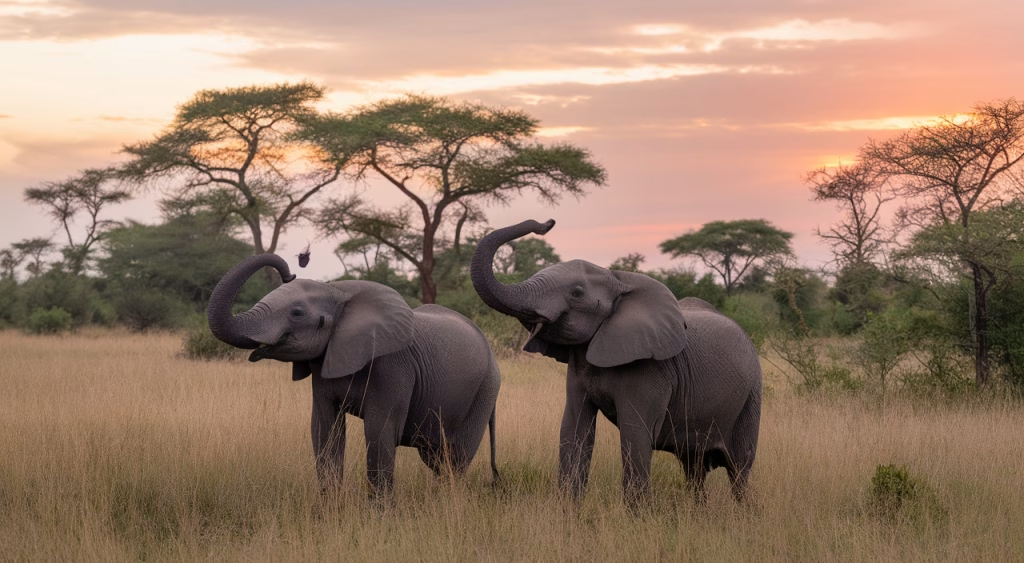
Elephants, particularly African elephants, have been observed producing a unique elephants alarm call when they encounter humans. Unlike the calls for natural predators, this vocalization suggests that wild elephants categorize humans as a distinct — and potentially more dangerous — threat. These specialized alarm calls help alert other herd members, especially calves, to human presence and demonstrate the danger of humans as perceived by elephant societies.
TL;DR: Understanding Elephants’ Alarm Calls for Humans
- Elephants have specialized alarm calls for humans — distinct from their calls for lions or other threats, showing cognitive complexity.
- These calls have been recorded in wild elephants across parts of Kenya and are likely a learned response based on past experience with people.
- The danger of humans is not based on species alone, but on perceived threat levels from previous interactions.
- Understanding these calls can transform conservation strategies and improve human-elephant conflict management.
Understanding Elephants’ Communication Behavior
The Fascinating World of African Elephants
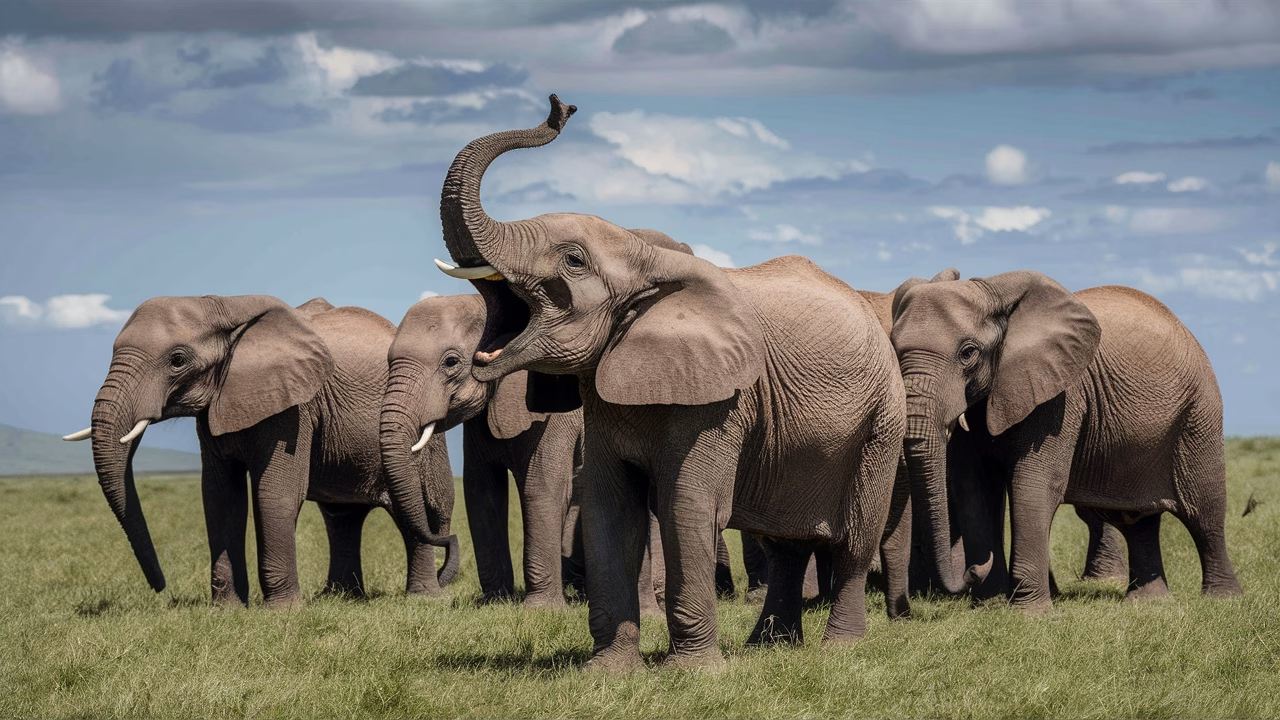
Communication in African elephants is astonishingly complex. Their vocal repertoire includes rumbles, trumpets, roars—and, astonishingly, infrasonic sounds that we humans can’t hear. These sounds travel long distances, transmitting messages from mating calls to distress signals. The elephants alarm call is one of their most critical vocal tools for survival.
Much like tribal languages in humans, elephant vocalizations vary slightly regionally, implying culture-like learning. Wild elephants living in areas under threat are more likely to exhibit specific vocal traits compared to those in safer reserves, particularly regarding the danger of humans they’ve learned to recognize.
Investigating Wild Elephants in Kenya
Kenya is home to some of the most insightful field studies on wild elephant behavior. In Amboseli National Park, for example, researchers have had the rare opportunity to follow matriarchal herds for multiple generations and study their alarm call responses.
Through observation and bioacoustic monitoring, scientists noticed an anomaly: African elephants issued a particular low, rumbling alarm when humans — particularly unfamiliar men or those in uniform — approached. This wasn’t just a random stress call; it carried acoustic patterns markedly distinct from their other alarms, showing how wild elephants have adapted to recognize the danger of humans.
Alarm Calls for Humans: A Unique Phenomenon
Unpacking the Danger of Humans According to Elephants
African elephants, like us, learn from experience. When herds stood witness to poaching incidents or aggressive encounters, they began to label humans with greater suspicion. The danger of humans became something encoded in their social memory and passed down, quite literally, in the sound of their elephants alarm call.
The human-specific alarm call often prompts different responses than calls for lions or other predators. For example, wild elephants tend to bunch up tightly and retreat quickly after a human alarm, signifying deep-seated urgency about the danger of humans they’ve learned to fear.
Analyzing the Specific Alarms
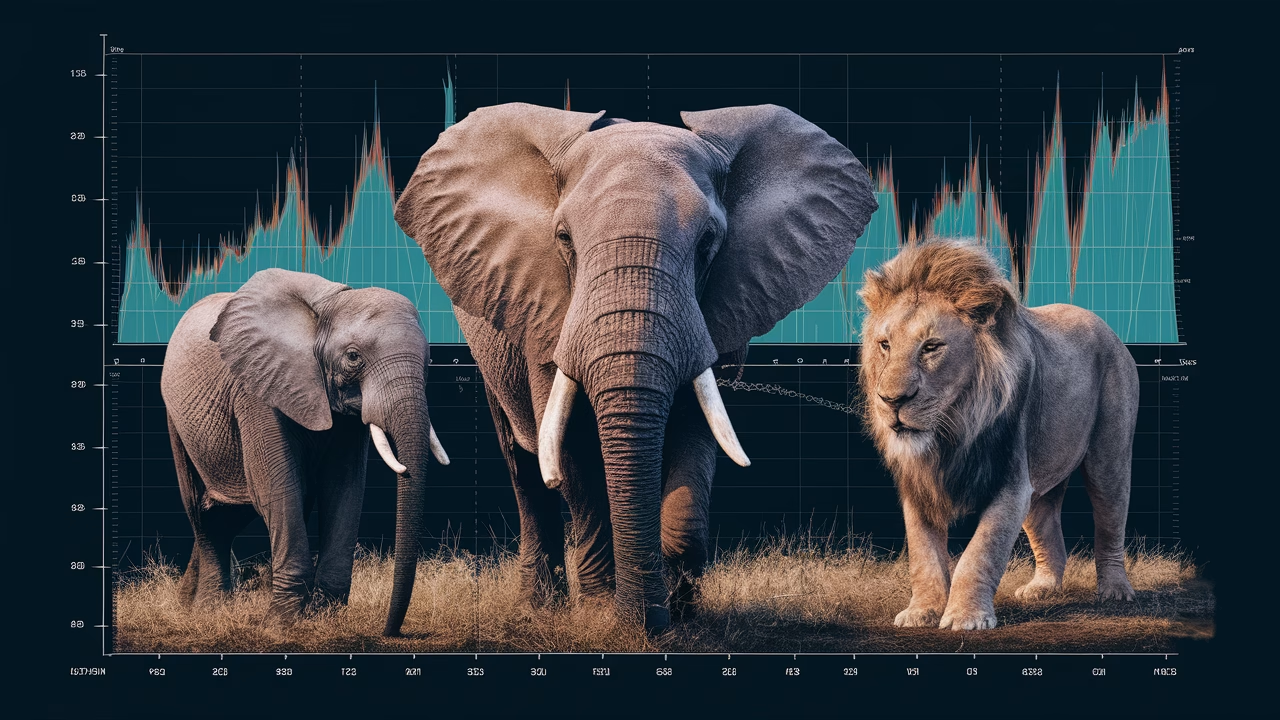
Studies utilizing spectrogram analysis (visual representations of sound frequencies) show that human-related elephants alarm call features a distinct tonal drop followed by rapid modulation — something not seen in lion alarms among African elephants.
Here’s a comparison of alarm calls:
| Alarm Type | Sound Features | Common Triggers |
|---|---|---|
| Human-Specific Alarm | Low-frequency rumble with modulated pitch | Humans on foot, unfamiliar males, uniformed figures |
| Lion Alarm | Sharp trumpet, high-frequency roar | Approaching lions, stalking predators |
| Distress Call | High-pitched, short bursts | Trapped calf, injury |
This specificity demonstrates that African elephants aren’t just reacting—they’re categorizing stimuli, a trait predominantly associated with advanced cognition in great apes and cetaceans. The elephants alarm call for humans represents sophisticated threat assessment.
Implications for Elephant Conservation Efforts
How Understanding Alarm Calls Can Benefit Conservation
If African elephants are telling us they’re afraid of us through specific elephants alarm call, we must listen—literally. Conservation strategies can incorporate acoustic monitoring to detect the danger of humans as perceived by wild elephants in real time, just like modern wildfire alert systems track temperature spikes.
Some practical advantages include:
- Conflict mitigation: Deploy early warning systems to notify communities of agitated elephant behavior nearby.
- Tailored interventions: Reduce accidental escalations by interpreting bioacoustic cues during patrols.
- Field research enhancement: Use alarm calls to map high-stress zones for better protected area planning.
Future Research Directions
We’ve only scratched the surface of understanding elephants alarm call behavior. Going forward, our focus should expand into:
- Regional dialect identification: Do African elephants in Eastern Kenya use different human alarms than those in Nigeria?
- Cross-generational learning: Are calves ‘taught’ the meaning of human calls, or do they learn through immersion?
- Sympathy patterns: How do matriarch elephants manage herd responses to perceived human threats?
These directions could revolutionize how rangers anticipate and respond to wild elephants’ needs, especially in tour-heavy zones where the danger of humans is constantly present.
Conclusion: The Importance of Protecting Elephants
At its core, discovering that African elephants have unique elephants alarm call for humans underlines their remarkable intelligence—and their fear. It’s a chilling reminder that we’ve earned that place as a unique category of threat in their minds. The danger of humans has become so significant that wild elephants have evolved specific communication to warn their families about us. For all nature lovers, researchers, and conservationists, this poses both a challenge and a responsibility. If elephants are speaking to us about their fear, perhaps the least we can do is listen—and act.
Frequently Asked Questions
- Do elephants have an alarm call for humans?
Yes, African elephants produce specific alarm calls when they perceive human threats. These are acoustically different from their calls for predators like lions. - How are human alarm calls different from other elephant sounds?
They feature lower frequencies, longer durations, and rapid modulations distinct from lion or distress calls. These differences suggest recognition and categorization of humans as high-risk threats. - Are elephants afraid of humans?
In many cases, yes. Especially in regions with poaching or aggressive human contact, elephants learn to fear people and pass that understanding through their alarm calls. - Can understanding alarm calls help conservation?
Absolutely. Bioacoustic technology can detect these calls in real-time, allowing for preventative actions in conflict areas and deeper emotional monitoring in elephant groups. - Why do elephants categorize humans separately?
Because humans represent a unique threat type—intelligent, often armed, and unpredictable—elephants have adapted their communication to specifically identify us in ways that other predators do not warrant. - Where was the human-specific alarm call first recorded?
Initial documented cases came from Kenya’s Amboseli and Samburu regions during long-term observation studies of wild elephant herds exposed to tourism and poaching. - How can tourists behave responsibly around elephants?
Stay quiet, keep distance, avoid erratic movements, and always follow local wildlife guides. Respect allows wildlife the space they need to feel secure—even around us.