Why Do Sea Hares Release Purple Ink to Confuse Predators?
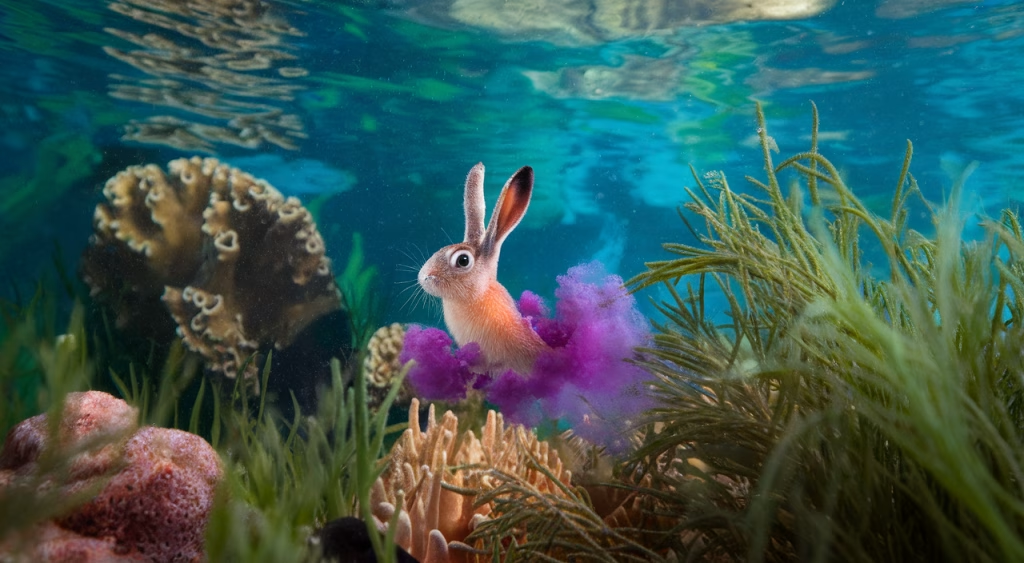
Sea hares release purple ink as their primary marine defense mechanism against underwater predators. When you encounter a threatened sea hare, you’ll witness this remarkable purple ink cloud that acts as both a visual smokescreen and chemical deterrent, disorienting potential threats and giving the sea hare precious escape time. This survival tactic represents millions of years of evolutionary refinement, making sea hares unique among marine creatures for their distinctive purple defense system.
TL;DR – Summary of Sea Hares’ Purple Ink Defense
- What is it? Sea hares are soft-bodied marine mollusks that release vibrant purple ink when threatened by marine predators.
- How does it work? The purple ink functions through visual and chemical predator confusion – disrupting hunting, tracking, and identification abilities.
- Why is it purple? The distinctive purple pigment comes from their herbivorous diet, especially red algae, which is processed and concentrated into specialized ink-producing glands.
- Is it effective? Absolutely – studies demonstrate that marine predators frequently abandon attacks once purple ink is released, providing sea hares successful escape opportunities.
- What else uses ink? While octopuses also use ink defense mechanisms, sea hares’ purple ink has distinctly different chemical properties and functions.
- Why does it matter? Understanding marine creature defense mechanisms like this provides crucial insights into marine ecology and emphasizes the importance of conservation efforts to protect species like sea hares.
The Fascinating World of Sea Hares
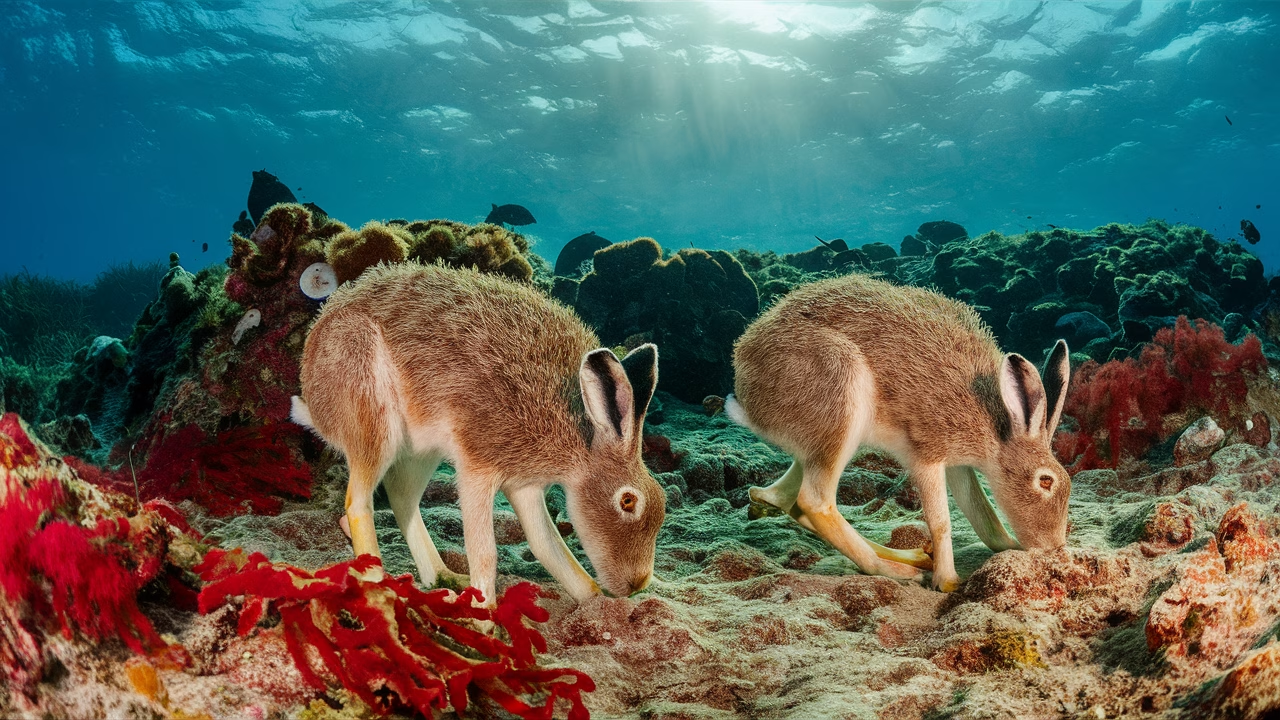
Sea hares often go unnoticed in marine wildlife discussions, yet these gentle, slug-like creatures represent one of nature’s most ingenious defense systems. As you explore coastal waters, you’ll find these unassuming marine mollusks gliding through tide pools and shallow reefs worldwide. Sea hares belong to the order Anaspidea and are herbivorous mollusks closely related to sea slugs and snails, spending their time peacefully grazing on algae.
Don’t let their docile appearance fool you. When marine predators threaten, these remarkable sea creatures execute a disappearing act worthy of marine magic – releasing dense clouds of purple ink that overwhelm predator senses through visual masking and chemical confusion.
Understanding Sea Hares’ Defense Mechanisms
When you think about marine creature defense mechanisms, you might imagine sharp claws, venomous spines, or toxic secretions. However, sea hares have evolved a sophisticated chemical warfare system. Their defense strategy centers on a dual-gland system: an opaline gland producing milky secretions, and a specialized purple ink gland filled with pigments derived from red algae. These secretions remain separate until a predator threat triggers their simultaneous release, creating a potent defensive mixture.
This purple ink mixture doesn’t simply color the surrounding water – it sends marine predators fleeing through sensory overload. The combination disrupts predators’ chemoreceptors, which many marine animals depend on heavily for prey location and identification.
This creates what marine biologists call a ‘decoy effect.’ The predator suddenly loses both visual and chemical tracking of the actual sea hare. Imagine searching for something specific in a room filled with smoke while loud sirens overwhelm your hearing – that’s essentially what marine predators experience within this purple ink cloud.
The Science Behind Their Purple Ink
What gives sea hares their signature purple ink? The answer lies in their specialized diet. Sea hares primarily consume red algae containing phycoerythrin, a vibrant pigment. As they digest these algae, specific enzymes break down and concentrate these compounds, storing the refined purple pigment in specialized ink bladders. The result is chemically active purple ink designed to interfere with the sensory systems of crustaceans, fish, and sea stars.
Different sea hare species produce varying purple ink consistencies and intensities. In Aplysia californica, one of the most extensively studied species, the purple ink appears thick and mucous-like – engineered to persist in the water column and maintain predator distraction while the sea hare escapes.
Marine researchers have discovered fascinating parallels between sea hare ink chemistry and other marine creature defense mechanisms, establishing an emerging research field: chemosensory interference in marine environments.
The Effects of Sea Hare’s Purple Ink on Predators
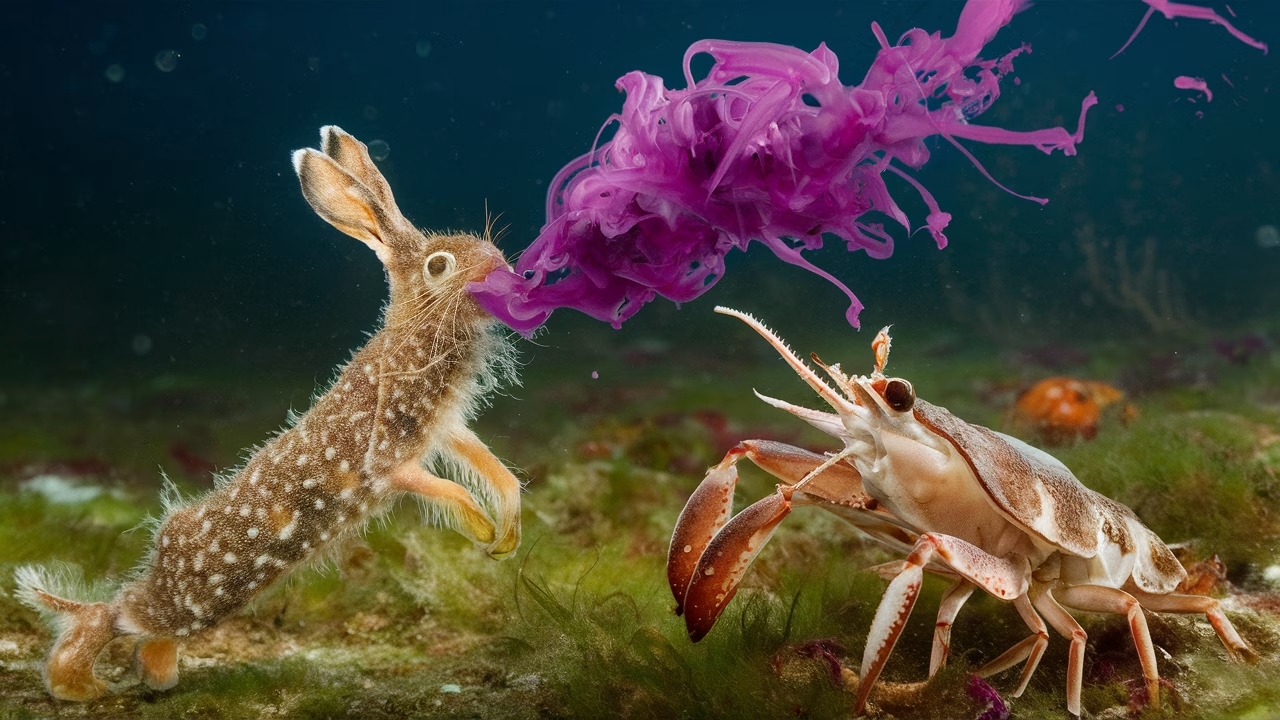
Let’s examine how this purple cloud affects potential threats. Picture a hunting crab approaching its target. As it closes in, the sea hare releases its defensive purple ink cocktail, causing the crab to retreat in complete confusion. Laboratory studies document predator behaviors following ink release, ranging from hesitation and disorientation to complete retreat.
Impact on Predator Behavior
Marine predators heavily rely on chemical cues for prey detection. Sea hare purple ink contains amino acids and compounds that mimic legitimate food signals, creating effective false trails. While predators follow these deceptive chemical signatures, the actual prey has safely escaped – marine biology’s equivalent of a magician’s misdirection.
Research shows certain fish species display visible disorientation after encountering sea hare purple ink. Crustaceans like lobsters, which depend extensively on chemical detection, find the purple ink creates an overwhelming sensory barrier that disrupts their hunting abilities.
Survival Benefits for Sea Hares
From an evolutionary perspective, this marine defense mechanism provides tremendous advantages. Sea hares are naturally slow-moving, soft-bodied creatures completely defenseless in direct physical confrontations. Without teeth, shells, or armor, their survival depends entirely on strategic evasion through purple ink deployment. Laboratory studies show this defense system allows sea hares to escape over 80% of predatory encounters.
For sea hare populations, this purple ink defense significantly increases survival rates and reproductive success – critical factors for maintaining stable populations in predator-rich marine ecosystems.
Similarities Between Sea Hares and Other Marine Creatures
Sea hares aren’t alone in using ink-based marine creature defense mechanisms. Octopuses represent another master of underwater chemical warfare, though their approach differs significantly from sea hares’ purple ink strategy.
Contrasting Ink Properties with Octopus Ink
Octopuses deploy melanin-rich black ink, creating dark underwater shadows during escapes. Unlike sea hares, octopuses combine ink release with rapid jet propulsion, adding speed to stealth. While both ink types confuse predators, octopus ink lacks the sophisticated chemical mimicry that makes sea hare purple ink uniquely effective against marine predators.
Here’s a detailed comparison of these marine creature defense mechanisms:
| Feature | Sea Hare | Octopus |
|---|---|---|
| Ink Color | Purple | Black |
| Defense Type | Chemical mimicry + visual | Visual smokescreen |
| Speed of Escape | Slow | Fast |
| Main Compound | Amino acids & mucus | Melanin |
| Predator Target | Chemoreceptors, smell disruption | Vision blockers |
Conservation Efforts for Sea Hares
While we marvel at the brilliance of purple ink defense mechanisms, we must address a pressing question – are sea hares endangered? Unfortunately, like many marine creatures, they face significant threats from habitat destruction, climate change, ocean acidification, and pollution.
Sea hares serve as vital indicators of healthy benthic (seafloor) ecosystems. Thriving sea hare populations typically signal stable marine environments. However, rising water temperatures, harmful algal blooms, and algae shortages threaten both their feeding patterns and reproductive cycles.
That’s why conservation efforts are essential – not just for preserving sea hares, but for protecting entire marine ecosystems. Key conservation strategies include:
- Supporting marine protected areas where sea hare habitats remain undisturbed
- Promoting sustainable coastal development to minimize pollution and runoff
- Encouraging responsible snorkeling, diving, and tide pool exploration practices
Everyone, from marine researchers to casual beachgoers, plays a role in protecting these incredible creatures. When you encounter a sea hare drifting peacefully through coastal waters, remember – it’s not just slow-moving, it’s evolutionarily brilliant.
Final Thought
Sea hares demonstrate that survival doesn’t always require speed, strength, or intimidation. Sometimes, success comes from evolutionary cleverness – harnessing marine chemistry to create defensive displays that marine predators won’t forget. Next time you explore sea grass beds or wander tide pools, consider the purple ink cloud as nature’s signature masterpiece of marine creature defense mechanisms.
Frequently Asked Questions
- Do all sea hares release ink?
Most sea hare species release purple ink, although color intensity and consistency vary based on species and diet differences. - Is sea hare ink toxic to humans?
No. Purple ink from sea hares is completely harmless to humans, though it can temporarily stain hands and diving equipment. - Can you keep sea hares as pets?
Some marine aquarists attempt this, but sea hares require very specific water conditions and often struggle in captivity. - What happens if a predator eats a sea hare?
While not toxic, sea hares are typically avoided by marine predators due to their chemical defenses and unpalatable taste. - How often can a sea hare produce ink?
There’s a regeneration limit. Sea hares need recovery time between purple ink releases, making multiple rapid defenses uncommon. - Why is sea hare ink being studied?
Purple ink research provides insights into chemosensory disruption, potentially inspiring biomimetic applications in technology and medicine. - How can I help sea hare conservation?
Avoid disturbing tide pools, support marine protected areas, and help reduce coastal pollution through responsible practices.