Why Do We Go Crazy Over Cute Animals?
Because evolution literally designed them to hijack our brains. From oversized puppy eyes to clumsy baby movements, these features awaken deep biological responses tied to nurturing and survival.
TL;DR:
- Your brain treats cute animals like love interests: Seeing a baby panda or kitten floods your brain with the same chemicals as falling in love—dopamine and oxytocin.
- Cute aggression is real: That urge to squeeze adorable creatures? It’s your brain trying to cope with cuteness overload.
- The ‘baby schema’ is biologically engineered: Features like big eyes and small noses trigger powerful caretaking instincts across all cultures.
- Baby animals evolved to be irresistible: From meowing kittens to big-eyed seal pups, their traits are fine-tuned survival strategies.
- Cuteness can sharpen your focus: Studies show humans perform better on tasks after looking at pictures of baby animals.
- Your brain doesn’t care if it’s real: Cartoons and robotic pets activate the same neural reward systems as live animals.
What Makes Animals Cute? The Science of the ‘Baby Schema’
How Evolution Created the Perfect Storm of Cuteness
Let’s explore something called the “baby schema,” or Kindchenschema—a term coined by ethologist Konrad Lorenz. It’s the combination of big heads, bulging foreheads, giant eyes, and round cheeks that screams “protect me!” to our ancient brains. You know that melting feeling when you see a baby penguin tumble in the snow? That’s your evolutionary wiring at work.
Why does this happen? Humans—especially our ancestors—needed a strong drive to care for helpless offspring who couldn’t fend for themselves. So evolution tapped into our reward systems. When we see infant-like features in cute animals (even in non-human species), we get a powerful hit of dopamine, the same chemical released when you eat your favorite chocolate or experience pure joy.
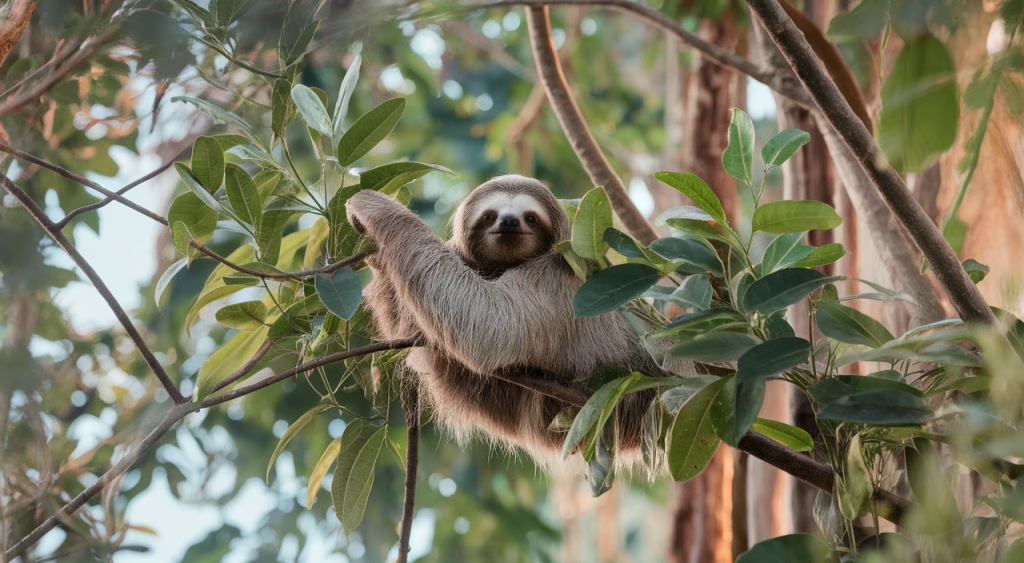
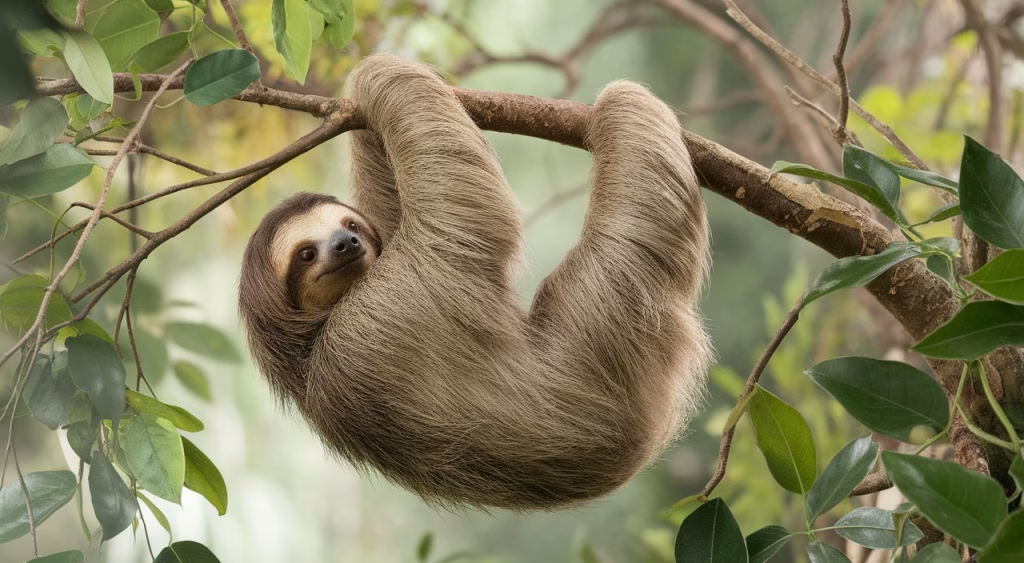
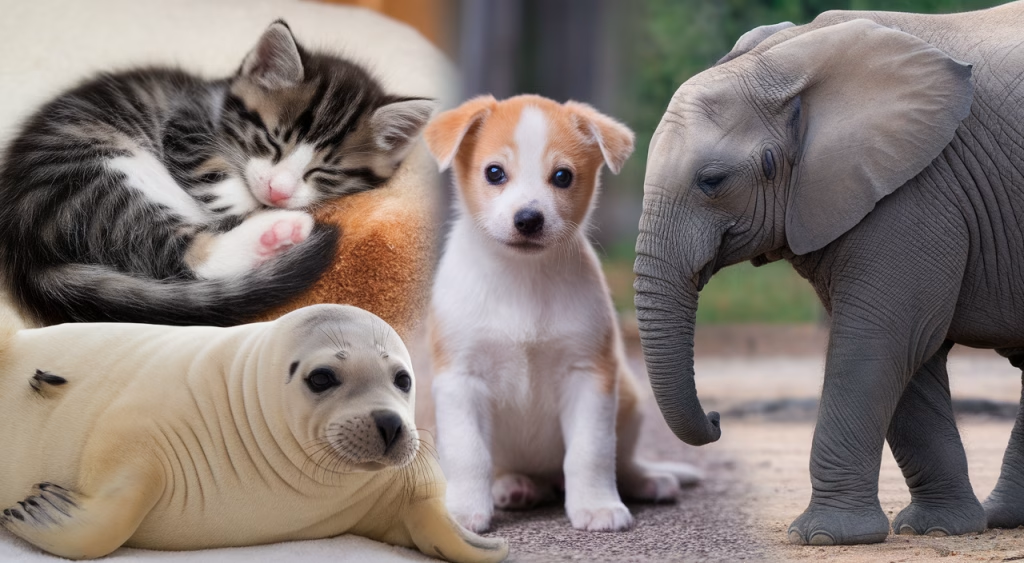
Even wildly different adorable creatures trigger this response. Think baby elephants, slow-moving sloths, or panda cubs displaying classic cute animal behavior. Evolution shaped those features not just for the species’ own social signals—but also because they tug at our deepest nurturing instincts.
What Happens in Your Brain When You See Cute Animals?
Cuteness Is a Love Drug, Literally
Here’s what happens: You stumble across a video of a baby otter wrapping its tiny hands around a bottle. Suddenly, you’re smiling uncontrollably. That ‘aww’ reaction isn’t just emotional—it’s a full neurological response to these adorable creatures.
Functional MRIs show that viewing cute animals activates the brain’s mesolimbic pathway—our pleasure center. Dopamine lights up, oxytocin flows (that’s the cuddle hormone), and suddenly, you’re as emotionally attached to that kitten gif as you are to your best friend.
| Chemical | Effect |
|---|---|
| Dopamine | Increases pleasure, curiosity, bonding |
| Oxytocin | Promotes love, trust, and bonding |
Japanese scientists discovered that looking at pictures of baby animals enhanced participants’ focus and task performance—because these images put our brains in a “parental mode,” heightening our attention to detail and creating a powerful connection to these adorable creatures.
Why Do We Feel the Urge to Squeeze Cute Things?
Ever clutched a teddy bear a little too tightly? That urge to squish something adorable is called cute aggression. It sounds like an oxymoron, but it’s actually your brain trying to cope with being overwhelmed by the sweetness of cute animals.
Cute aggression helps bring emotional balance when we encounter adorable creatures. Your brain essentially says, “Whoa! This is too much cuteness! Let’s temper this joy with a little mock violence so we don’t short-circuit.” Weird? Yes. But totally normal.
This reaction is part of an evolved system—helping you stay protective and alert rather than immobile from sensory overload. You’re not a monster if you clench your fists when a kitten yawns—it means your brain cares deeply about these cute animals.
Why Baby Animals Look the Way They Do
Adorability as a Survival Strategy
Let’s peel back another evolutionary layer of cute animal behavior. Baby animals have adapted features that amplify their likelihood of receiving care—not just from their own species, but even from ours.
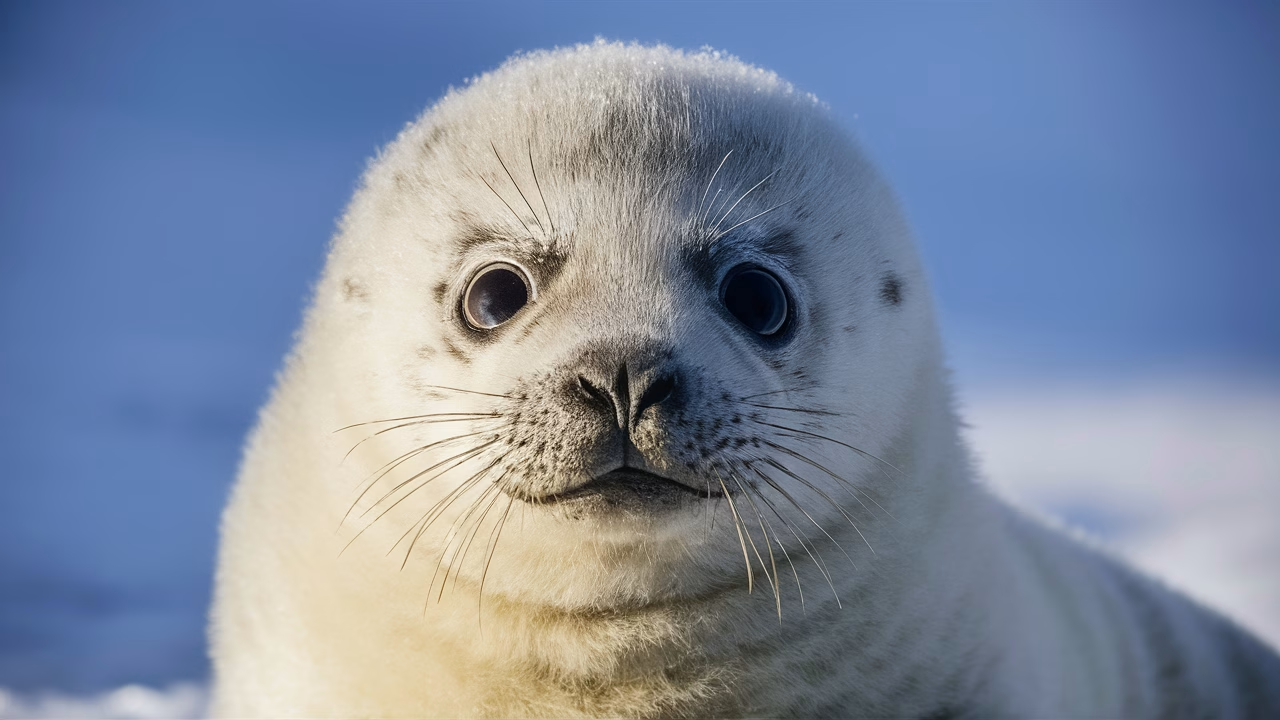
- Seal pups have eyes bigger than adult humans—a perfect tug on our emotional strings and prime example of adorable creatures.
- Kittens meow like human babies—adult cats rarely meow to each other, but use baby-like cries to communicate with us.
- Puppies raise their inner eyebrows—an evolved expression that increases eye size, making them look more infant-like to humans.
Nature wasn’t playing around—these cute animal behaviors and features weren’t random. They’re evolutionary tactics designed to keep them safe. If humans or their own kind feel empathy or protective instincts toward these adorable creatures, they’re more likely to survive to adulthood.
Can Cuteness Improve Cognitive Performance?
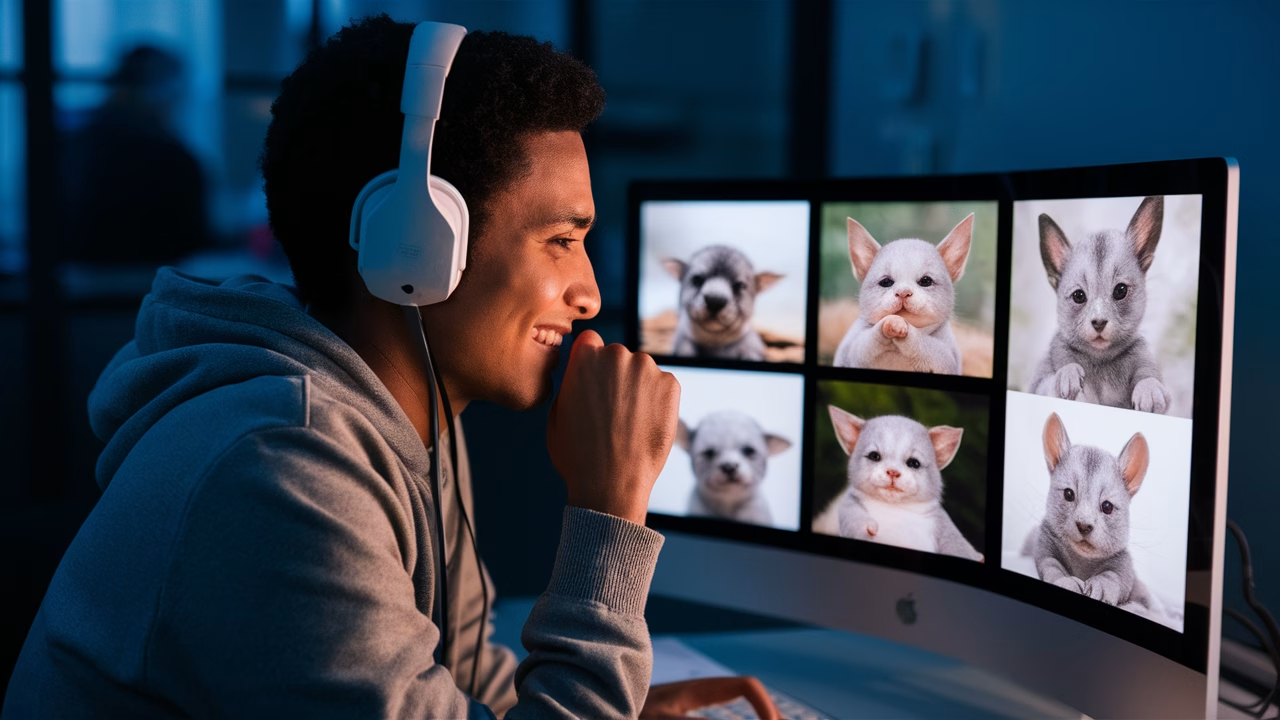
Yes—and Science Says So
In a fascinating study, participants who looked at baby animal pictures performed significantly better on repetitive, detailed tasks than those who viewed adult animals or neutral images. It’s as if the nurturing circuit in our brain wakes up when we see these cute animals, making us more cautious and intentional.
What does that mean for you? If you’re prepping for a high-focus task, taking a minute to scroll through some adorable creatures might actually prime your brain. No, it’s not procrastination—it’s pre-task optimization powered by cute animal behavior!
Do All Humans React the Same Way to Cute Animals?
Mostly yes—with some fascinating cultural quirks. Across all cultures, baby features in cute animals tend to provoke positive emotional reactions. That’s universal. But what’s labeled as ‘adorable creatures’ might vary based on familiarity and societal norms.
Nonetheless, even people who say they “aren’t animal lovers” often show involuntary signs of delight—like smiling or pupil dilation—when shown pictures of cute animals. These reactions to adorable creatures aren’t conscious. Your brain responds before your logic can object.
Evolution Made Us Suckers for Cuteness—for Good Reason
The biological drive to protect the young—ours or others’—is hardwired because it improves survival. Anthropologists suggest that early humans who were most attuned to offspring needs were more likely to pass on their genes. In short: being sensitive to cute animals may mean you’re biologically wired for empathy, parenting, and community care.
Even stuffed animals and animated characters trigger these pathways when they mimic cute animal behavior. The design of popular toys and mascots? Not accidental. Companies invest in research to nail down the perfect proportions to tap our “cuteness radar” for adorable creatures. It’s not about manipulating us—it’s about harmonizing with ancient instincts.
| Real Baby Animal | Cartoon Equivalent Features |
|---|---|
| Giant eyes, round face | Exaggerated eyes, soft shapes |
| Clumsy motion | Bouncy animation, floppy limbs |
Frequently Asked Questions
- Why do we find baby animals cute?
Because evolution has taught our brains to associate baby features with caregiving and protection instincts. When we see cute animals with infant-like traits, it triggers our nurturing system, just like when we parent human infants. - Is cute aggression something to worry about?
Not at all. It’s a healthy neurological response to intense emotion from seeing adorable creatures and helps us regulate our reactions to extreme cuteness. - Does looking at cute animals really boost focus?
Yes! Studies show that viewing baby animal images can enhance concentration and task accuracy by activating our protective instincts toward these adorable creatures. - Are our reactions to cuteness culturally learned?
Some aspects of cute animal appreciation are cultural, but the base biological response to adorable creatures seems universal across humanity. - Can other animals find babies cute too?
There’s emerging research suggesting that some animals, like dogs, also respond to distress signals from young—even those of other species, showing cross-species recognition of cute animal behavior. - Why do cartoons look so cute?
They’re designed with baby schema proportions—big heads, small mouths, big eyes—to trigger the same emotional wiring in your brain that responds to real cute animals. - Do animals ‘know’ they’re being cute?
Not in the way humans understand, but many animals have evolved behaviors through selective interaction with humans that increase their chances of care and survival, creating what we perceive as cute animal behavior.